
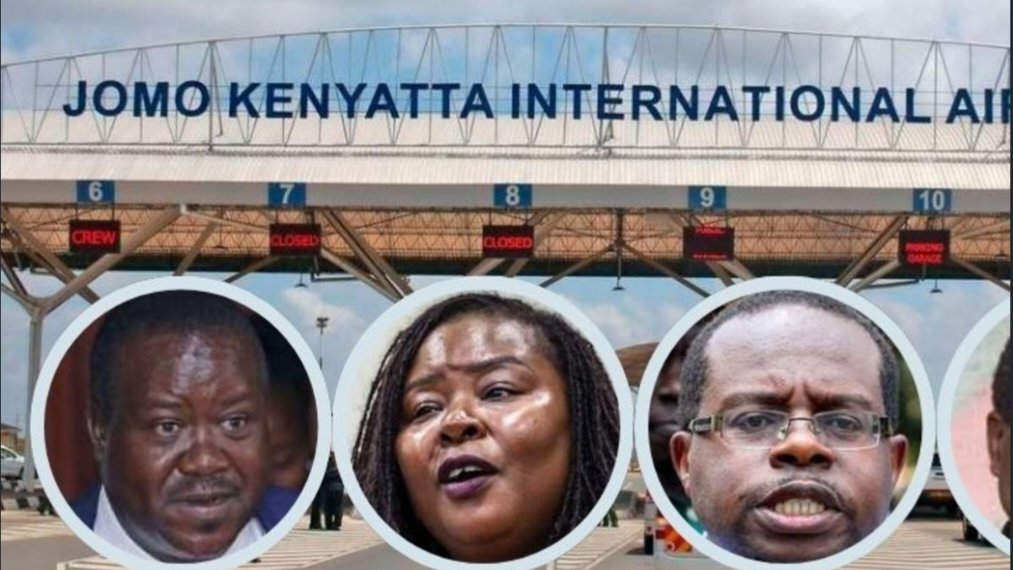

A massive controversy has erupted following revelations of a secretive Sh180 billion agreement involving the lease and modernization of Kenya's primary aviation hub.
Civil society groups, legal professionals, and political leaders have strongly criticized the state, expressing outrage over how the transaction has been handled behind closed doors.
The growing opposition highlights deep public concern regarding the lack of transparency in infrastructure concessions.
Critics argue that entering into privately negotiated agreements for vital public utilities without public participation violates constitutional provisions.
The government faces intense pressure to disclose the full details of the transaction, which involves Jomo Kenyatta International Airport (JKIA).
According to initial reports and documents circulated in public spaces, as seen in the digital news brief 257197.png, the deal touches on a highly strategic national asset.
Legal experts warn that the state has bypassed standard procurement guidelines, creating an unfair playing field.
The Kenya Airports Authority (KAA) has come under intense scrutiny for its role in overseeing the preliminary stages of this privately initiated proposal.
Several civil society organizations have already prepared court papers, aiming to halt any further implementation of the agreement.
They argue that the airport is a public asset that cannot be leased out without rigorous stakeholder engagement, parliamentary oversight, and citizen input.
Political leaders from the opposition have joined the fray, demanding that the Ministry of Roads and Transport table all documents related to the Sh180 billion proposal.
They contend that masking such large-scale infrastructure projects in secrecy raises serious questions about accountability and governance.
The main concern is whether the public will receive fair value from a long-term lease.
Aviation sector workers have also expressed anxiety over potential job losses and changes to working conditions, should a private entity take over operations.
The government, however, maintains that the country's aviation infrastructure requires urgent modernization to remain competitive in East Africa.
Defenders of public-private partnerships state that the national treasury lacks the capital required to build new terminals and refurbish aging runways.
Even so, the pushback from the legal fraternity suggests that the administration will have a difficult time defending the process in court.
Lawyers state that any contract signed under a veil of secrecy remains vulnerable to constitutional challenges.
The high-stakes dispute comes at a time when Kenya is seeking external investment to finance its ambitious infrastructure development agenda.
How the state responds to these legal threats will determine the future of private participation in the country's transport sector.
For now, the standoff has created uncertainty around the immediate upgrade plans for the regional gateway.
Further updates are expected as civil society groups file their formal petitions in the High Court.
Comments (0)
Leave a Comment
No comments yet. Be the first to share your thoughts!