

The National Treasury has unveiled a comprehensive fiscal shift, which aims to end the country's perennial reliance on emergency donor appeals, and ad hoc budget reallocations whenever climate disasters strike.
The Disaster Risk Financing (DRF) Strategy 2026–2030 establishes a proactive framework for national and county governments, so that public infrastructure can be repaired quickly, and vulnerable communities protected from increasingly severe climate disruptions.
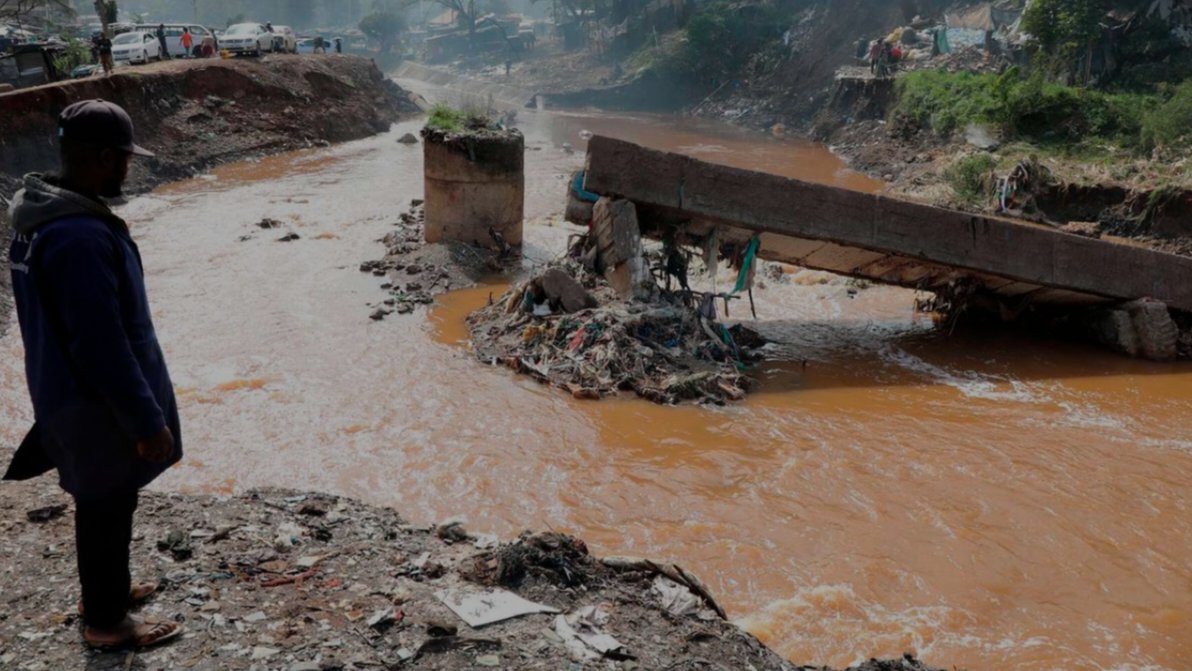
This policy shift comes after successive years of devastating floods, which destroyed critical infrastructure and slowed down national economic growth.
According to government data, the heavy downpours experienced during the March-April-May season in 2024 alone caused economic damages totaling Sh187 billion, while claiming 315 lives and displacing over 410,000 people across the nation.
National Treasury Cabinet Secretary John Mbadi stated that the new framework intends to secure funds before crises escalate, which reduces the immediate fiscal pressure on development budgets.
Historically, the state has been forced to divert resources from ongoing construction and infrastructure projects to fund emergency humanitarian response.
Under the newly introduced model, the state will implement a risk-layering framework, which separates disaster responses based on the severity and frequency of the environmental events.
Smaller, more regular occurrences will be handled through contingency funds and budget reserves, while large-scale emergencies will trigger pre-arranged risk-transfer mechanisms.
The National Treasury designed the document with technical support from the United Nations Office for Disaster Risk Reduction (UNDRR), which provided analytical tools to help tag climate change budgets accurately.
It updates the previous strategy that covered the 2018–2022 period, but expands the scope to cover hazards like landslides, fires, and epidemics.
Previous protection measures focused heavily on drought mitigation in the Arid and Semi-Arid Lands (ASAL) regions, leaving urban infrastructure exposed to flood hazards.
To resolve the coverage gap, Kenya Reinsurance Corporation (Kenya Re) has proposed a public-private partnership, which would establish a national flood insurance pool.
This pool would bring together private insurance firms, international reinsurers, and capital market investors, with Kenya Re serving as the primary administrator and residual reinsurer.
Property insurers would be able to transfer flood risks to this specialized scheme, ensuring that industrial zones and residential developments receive standardized protection against water damage.
The financial strategy complements the broader Disaster Risk Management (DRM) Strategy 2025–2030, which outlines the long-term institutional roadmap for enhancing local resilience.
This overhaul aligns with major legislative updates, including the National Disaster Risk Management Act 2026, which President William Ruto signed into law in May.
That statutory framework established the National Disaster Risk Management Authority, which works alongside county committees to coordinate early warnings and accelerate resource deployment.
Furthermore, the Division of Revenue Act 2026 guarantees that decentralized units receive predictable funding, which helps local authorities manage risks directly.
Consultations for the strategy took place between 2025 and 2026, involving civil society groups, private sector stakeholders, and experienced construction practitioners.
By formalizing these lines of credit and insurance pools, the government aims to create a highly predictable environment for long-term national development goals.
The technical framework introduced the government to an advanced five-step financing tool, which guides national institutions in mobilizing capital from international markets.
Infrastructure experts note that having pre-arranged reconstruction funds will prevent delays in restoring broken bridges, severed roads, and damaged civic utilities.
Ultimately, the National Treasury expects this institutional shift to shield public finances from unpredictable macroeconomic shocks while building durable national infrastructure.
Comments (0)
Leave a Comment
No comments yet. Be the first to share your thoughts!