
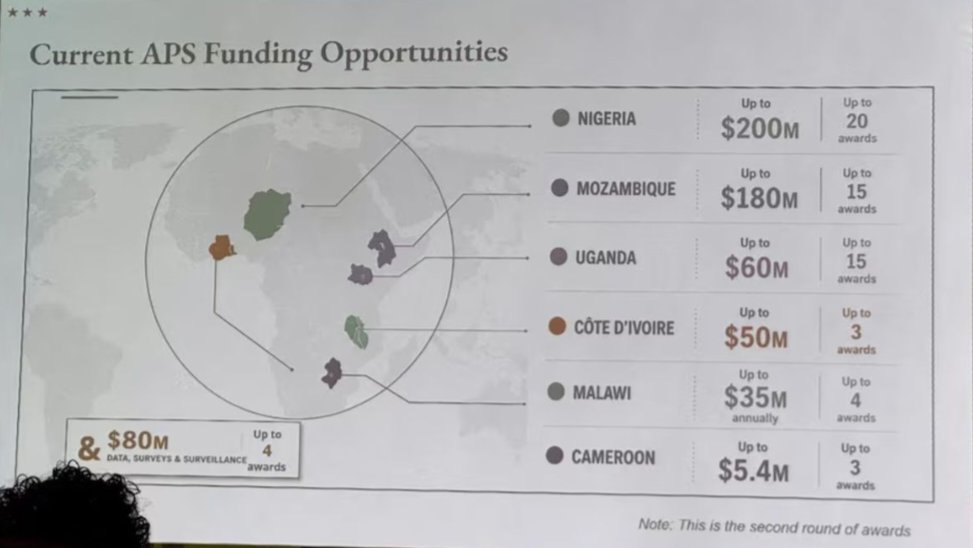

Officials from United States (US) Department of State presented a distorted map during a global health summit in Rio de Janeiro, Brazil. The slide displayed at the AIDS 2026 conference mislabeled every African country highlighted on the screen.
Senior health envoy Jeff Graham displayed the slide while discussing funding under President's Emergency Plan for AIDS Relief (PEPFAR). Attendees quickly noticed that geographic boundaries, and labels were completely inaccurate.
An analysis of the presentation footage revealed an Artificial Intelligence (AI) watermark embedded in the graphic. The mark indicated that the image had been generated using OpenAI tools, before being inserted into the slide deck.
Geographical errors were severe across the continent. Nigeria appeared as a landlocked nation in the Sahara Desert, although it borders the Gulf of Guinea. Mozambique was relocated to the Horn of Africa, while Côte d'Ivoire was shown on the opposite side of Africa.
The errant graphic first gained public attention when health advocate Emily Bass published screenshots on Substack. The images spread rapidly across professional networks, where one post on LinkedIn attracted tens of thousands of views within hours.
Atlantic Council analyst Matt Petit criticized the oversight on social media platforms. He noted that whoever created the slide failed to verify basic geography, which showed a lack of care regarding international partners.
Responding to the fallout, officials accepted responsibility for the error. The State Department stated that a staff member hastily altered the slide deck immediately prior to the presentation, which created confusion among foreign delegates.
The incident occurred during discussions regarding Annual Program Statement (APS) funding allocations for health grants. Slide details outlined proposed grant amounts for several nations, including up to $200M for Nigeria and $180M for Mozambique.
The funding proposals listed on the conference slide included:
* Nigeria: Up to $200M across 20 awards
* Mozambique: Up to $180M across 15 awards
* Uganda: Up to $60M across 15 awards
* Côte d'Ivoire: Up to $50M across 3 awards
* Malawi: Up to $35M annually across 4 awards
* Cameroon: Up to $5.4M across 3 awards
Delegates expressed surprise when examining the graphic during the official briefing. The slide also indicated up to $80M allocated for data, safety, and surveillance across four planned awards.
Representatives emphasized that despite the technical error, bilateral discussions with African delegation heads remained constructive. They maintained that Washington remains committed to global health initiatives, even as administrative processes face ongoing scrutiny.
External observers noted that sloppy presentation materials undermine diplomatic engagements. When international agencies present incorrect national boundaries, it creates friction with host governments, especially when regional development and health programs require precise planning.
The State Department affirmed that future presentation materials will undergo strict verification procedures. Officials expressed regret for the misrepresentation caused to international partners, but reaffirmed their intention to proceed with scheduled grant agreements.
Analysts argue that reliance on unverified next-generation digital tools poses operational risks for public agencies. Verification protocols must remain mandatory for high-level briefings, as minor errors can distract from substantive discussions.
Delegates concluded the session while reviewing revised program documents. US officials assured attendees that formal funding documentation will reflect accurate geographic data and administrative details.
Comments (0)
Leave a Comment
No comments yet. Be the first to share your thoughts!