
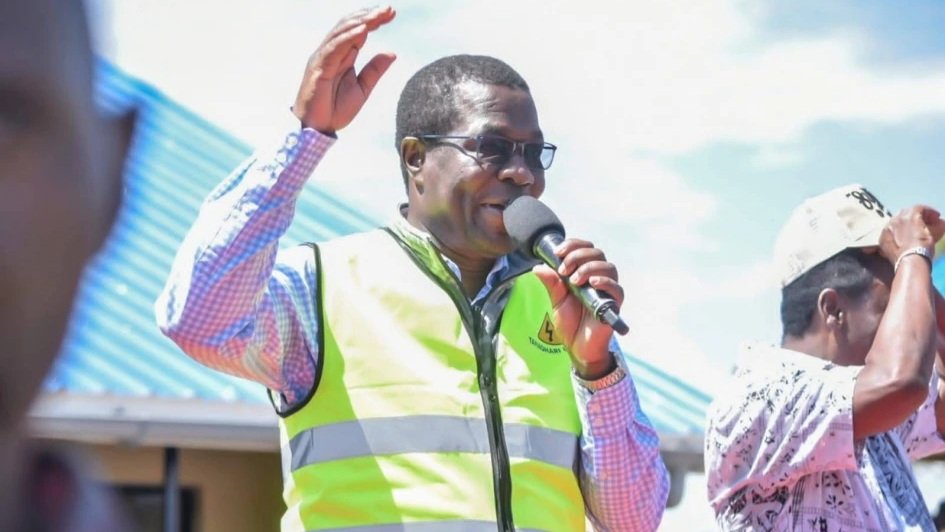

Energy and Petroleum Cabinet Secretary (CS) Opiyo Wandayi has urged public and private institutions across Kenya to accelerate their transition to green power. Speaking at an official function, the official noted that a widespread adoption of clean alternatives remains vital to lowering high retail electricity costs for consumers.
The policy directive follows the formal launch of a newly installed Solar-Powered Hybrid System at the Nairobi Remand and Allocation Maximum Security Prison. Prior to the installation of this green infrastructure, the correctional facility frequently suffered from power outages, which disrupted essential day-to-day operations.
These power grid disruptions regularly affected the institution's extensive virtual court technology. The prison facility coordinates between 200 and 500 virtual court sessions each day, which link inmates to regional legal hubs in Milimani, Makadara, Kiambu, Kibera, Ngong, Thika, Kisumu, and Mombasa.
According to correctional administrators, the decentralized solar installation has successfully lowered monthly utility expenditures at the station. The capital saved from the reduced electricity bills will now be redirected toward internal inmate rehabilitation programs, but also toward funding critical vocational training initiatives.
The development of the prison clean energy infrastructure project received technical and financial backing from the European Union (EU). The international body partnered with the United Nations Office on Drugs and Crime (UNODC) to deliver the hybrid generation system to the state facility.
Development partners noted that maintaining a reliable energy supply strengthens the overall administration of justice in Kenya, if it directly safeguards the constitutional rights of inmates. Uninterrupted power prevents lengthy legal delays, which often occur when electronic court systems disconnect mid-hearing.
Principal Secretary (PS) for Correctional Services Dr. Salome Beacco attended the commissioning event alongside several energy ministry experts. Dr. Beacco observed that investing in sustainable infrastructure improves inmate dignity, while encouraging technological innovations across the state department.
The institutional shift toward solar arrays coincides with a broader strategy by the state to manage volatile consumer tariffs. In June 2026, the government lowered retail power rates by Sh0.2685 per kilowatt-hour, when lower fuel generation costs and reduced foreign exchange adjustment fees aligned.
That tariff reduction followed structured discussions between the ministry and the Kenya Association of Manufacturers (KAM). Industrial stakeholders have consistently argued that unstable grids and high power bills hurt industrial competitiveness, although recent hydropower generation increases have provided temporary relief to local factories.
To address supply gaps outside major urban centers, the ministry is working with the Rural Electrification and Renewable Energy Corporation (REREC) to scale up regional infrastructure. The state agency is currently rolling out 53 separate power projects in areas like Kajiado County.
These localized rural electrification initiatives focus on maximizing grid connections for households, but they also deploy solar-powered street lighting to secure commercial trading centers. The projects rely on matching funds provided by local legislators to ensure timely distribution of construction materials.
Engineering assessments indicate that upgrading the aging national transmission network remains critical to capitalize on these institutional solar investments. The country's distribution infrastructure currently suffers from system losses of approximately 24 percent, which must be systematically reduced to lower overheads.
Ministry officials remain confident that combining state-funded distribution upgrades with private renewable installations will stabilize the national network. Transitioning large public facilities away from total reliance on the national grid alleviates peak demand pressure, which helps prevent widespread system blackouts across the country.
Comments (0)
Leave a Comment
No comments yet. Be the first to share your thoughts!