
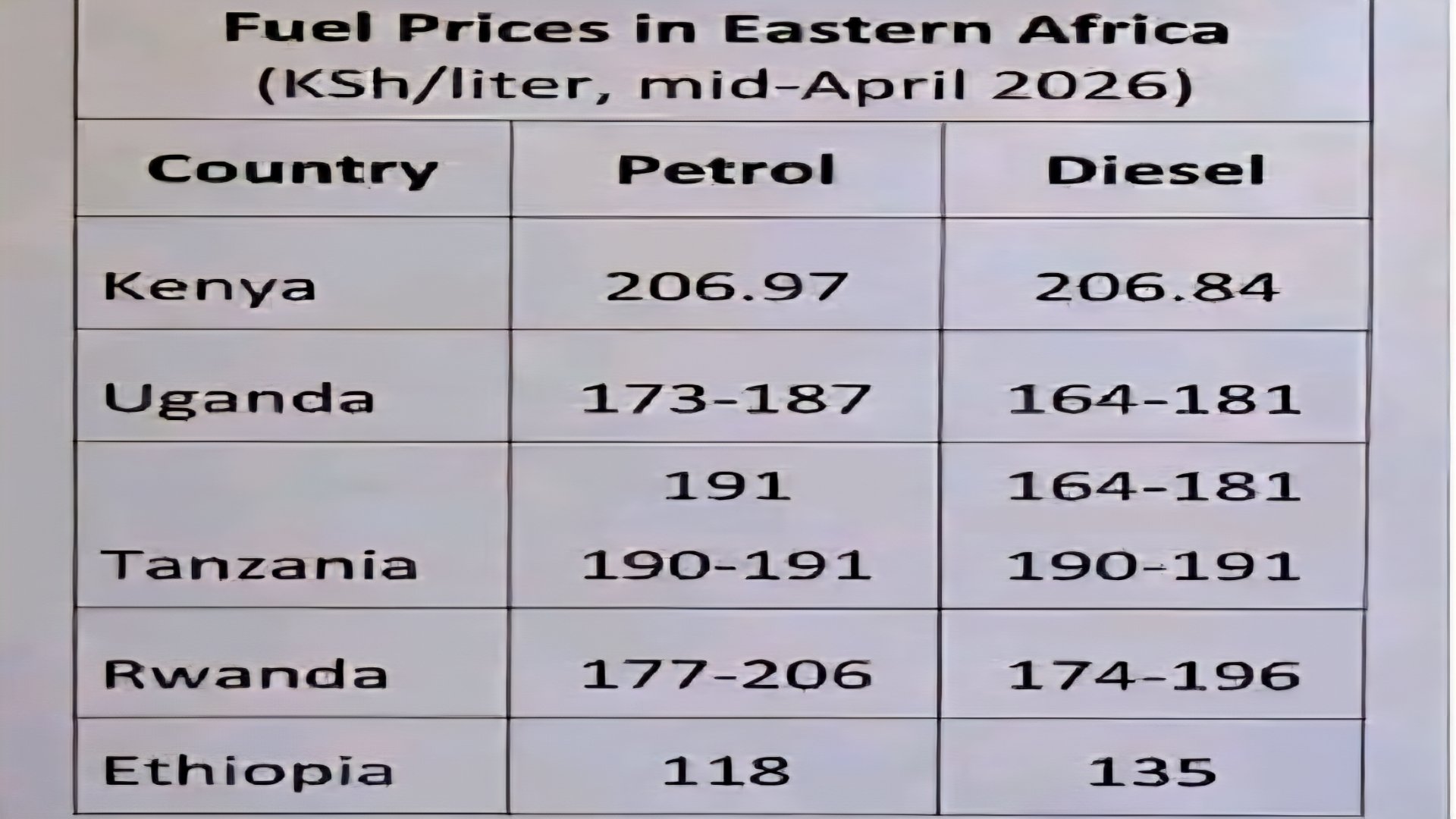

A comparison of fuel prices across the East African region for mid-April 2026 has highlighted a growing disparity between Kenya and its landlocked neighbors. Despite possessing the port of Mombasa, which serves as a primary entry point for regional petroleum, Kenya currently maintains the highest pump prices in the territory.
According to data circulating among industry stakeholders and recently highlighted on social platforms like Reddit, Kenyan motorists are paying 206.97 shillings for a liter of petrol. Diesel, which is the primary fuel for the heavy machinery used in the construction and transport sectors, is retailing at 206.84 shillings.
In contrast, landlocked Uganda, which relies on Kenyan infrastructure for its imports, sees petrol prices ranging between 173 and 187 shillings. Ethiopia remains the most affordable in the region, with petrol priced at 118 shillings and diesel at 135 shillings, despite the logistical challenges of its geography.
The price gap has raised questions regarding the efficiency of Kenya's current fuel procurement strategies. Critics and industry observers point toward the government-to-government oil deal, often referred to as the G-to-G deal, as a contributing factor to the sustained high costs.
The G-to-G arrangement was initially intended to ease pressure on the Kenyan shilling by deferring payments for fuel imports. However, allegations of corruption and cronyism surrounding the deal have persisted, with claims that it primarily benefits a small group of well-connected individuals.
Beyond procurement, the taxation regime under President Ruto has significantly altered the price structure of petroleum products. When global oil prices showed signs of softening, the administration introduced a 16% Value Added Tax on fuel, which doubled the previous rate.
Additional levies, such as the Road Maintenance Levy, have further insulated the pump price from downward global trends. These fiscal measures have been described by some as a burden that affects all sectors of the economy in equal measure.
The construction industry is particularly sensitive to these fluctuations, as the cost of moving materials and operating site equipment is directly tied to diesel prices. High fuel costs often lead to project delays or budget overruns as contractors struggle with rising overheads.
The data suggests that the logistical advantage of being a coastal state is being offset by internal policy decisions. While Tanzania manages to keep its diesel prices as low as 164 shillings in some regions, Kenya's uniform pricing remains stubbornly above the 200-shilling mark.
As the country moves toward the 2027 general election, the cost of living and fuel energy policies are expected to remain central themes of public discourse. For now, businesses must navigate a high-cost environment that shows little sign of immediate relief.
Comments (0)
Leave a Comment
No comments yet. Be the first to share your thoughts!