
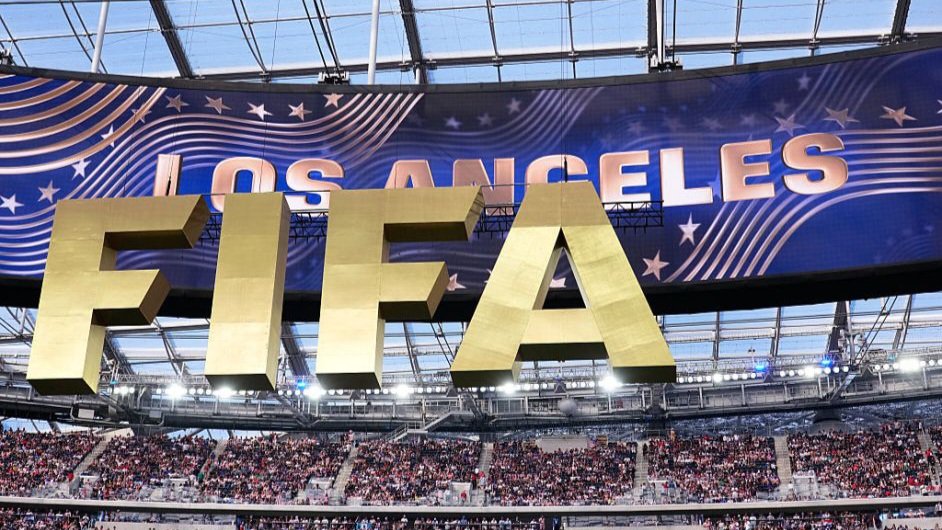

The strict brand protection guidelines enforced by the Federation Internationale de Football Association (FIFA) have forced massive commercial infrastructure assets to temporarily shed their lucrative naming rights during the ongoing 2026 World Cup.
Among the most prominent venues affected is the architectural marvel in Inglewood, California, which has been stripped of its commercial title and officially designated as the Los Angeles Stadium.
Despite the corporate erasure, the financial institution that holds the naming rights is refusing to sweat the regulatory adjustment.
Representatives from the digital personal finance company stated that corporate branding extends far beyond a physical sign mounted on a stadium facade, indicating that their market presence remains fully secure.
To maintain its high-profile visibility, the institution hosted a large number of celebrities and high-net-worth guests inside its luxury hospitality suite during recent tournament matches.
This aggressive corporate hospitality strategy allowed the brand to bypass the strict signage restrictions, which are intended to safeguard official tournament partners from ambush marketing.
Under the current "clean stadium" policy, venues are required to eliminate all non-sanctioned corporate visibility for thirty days before and during the tournament.
This commercial stripping has heavily impacted several multi-million-dollar stadiums across North America, as venue operators adapt to the rigid international guidelines.
Other major infrastructure assets have undergone similar transformations, with New Jersey's prominent arena being renamed the New York New Jersey Stadium for the duration of the global event.
Similarly, the massive retractable-roof sports complex in Texas has temporarily dropped its energy corporate sponsor to operate under the simpler title of Houston Stadium.
These temporary renamings have drawn widespread attention from construction experts and stadium operators, because all matches are being hosted in existing corporate-sponsored venues rather than purpose-built arenas.
Managing these complex brand overhauls requires extensive physical adjustments, though some facilities faced significant structural limitations when trying to mask large-scale embedded corporate iconography.
For instance, the Mercedes-Benz Stadium in Atlanta was unable to cover the massive luxury automaker logo built directly into its complex, rotating eight-panel aperture rooftop structure.
Fearing structural damage to the intricate engineering mechanism, officials permitted the roof logo to remain visible, but crews still obscured over one thousand interior signs before matches commenced.
Conversely, the telecommunications sponsor of Seattle Stadium embraced the restriction by creating a satirical video campaign, which inadvertently highlighted its brand while showing staff searching for hidden logos.
The Los Angeles Stadium itself features a passively cooled design covered by a translucent Ethylene Tetrafluoroethylene (ETFE) canopy, which ensures the iconic architectural silhouette remains instantly recognizable on television.
Local sports fans and commentators have largely ignored the temporary municipal monikers, frequently using the original commercial names during live television broadcasts and viral social media discussions.
Market analysts note that this grassroots resistance has turned the debranding policy into a source of free publicity, which ultimately amplifies the original sponsor brands.
The venue will have to undergo another comprehensive brand removal process in two years, when it hosts the opening ceremony for the 2028 Los Angeles Summer Olympic Games.
This continuous alternation between commercial and clean configurations highlights the growing operational challenges that modern infrastructure managers face, when hosting premier international sporting spectacles.
Comments (0)
Leave a Comment
No comments yet. Be the first to share your thoughts!