
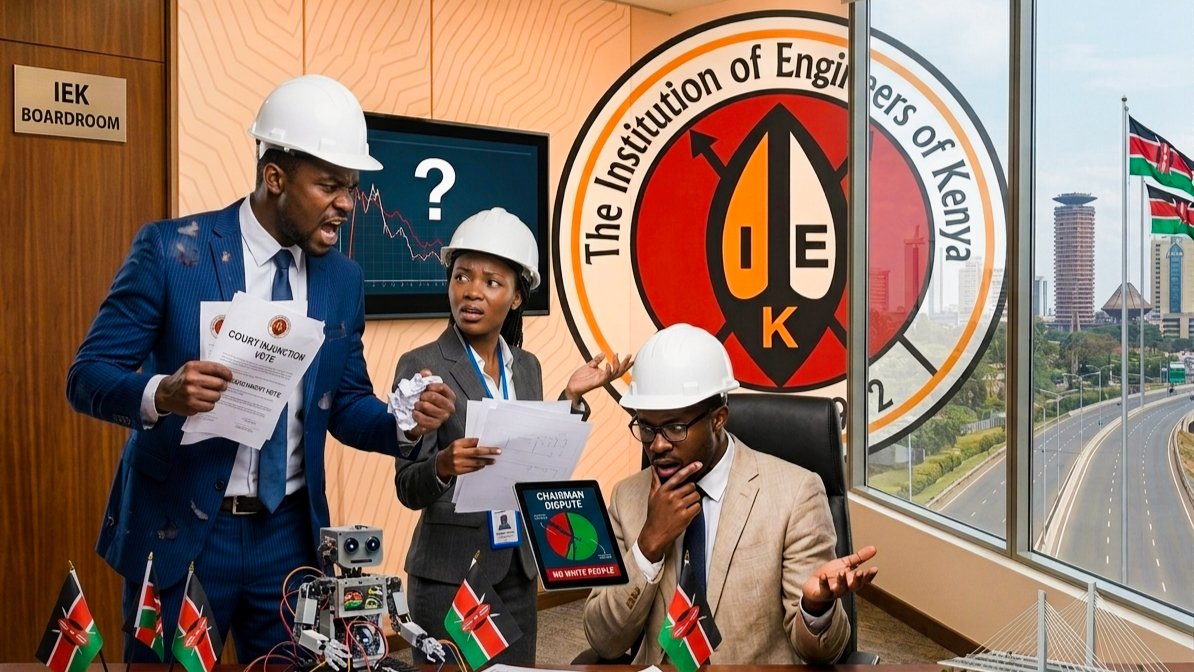

The Institution of Engineers of Kenya has seen its 2026 council elections grind to a halt amid accusations of internal manoeuvring, rumour campaigns on professional forums and court petitions that critics say were not always what they appeared.
Eng Howard A. M'mayi, a fellow member who was elected unopposed as 1st Vice President before the suspension, laid out his account in a long-running series of posts titled "Who stopped Reggae?". He presented it as a personal narration from someone deeply involved in the constitutional review, the elections and the court processes, while stressing he spoke not in his capacity as vice president elect but as an ordinary member in good standing.
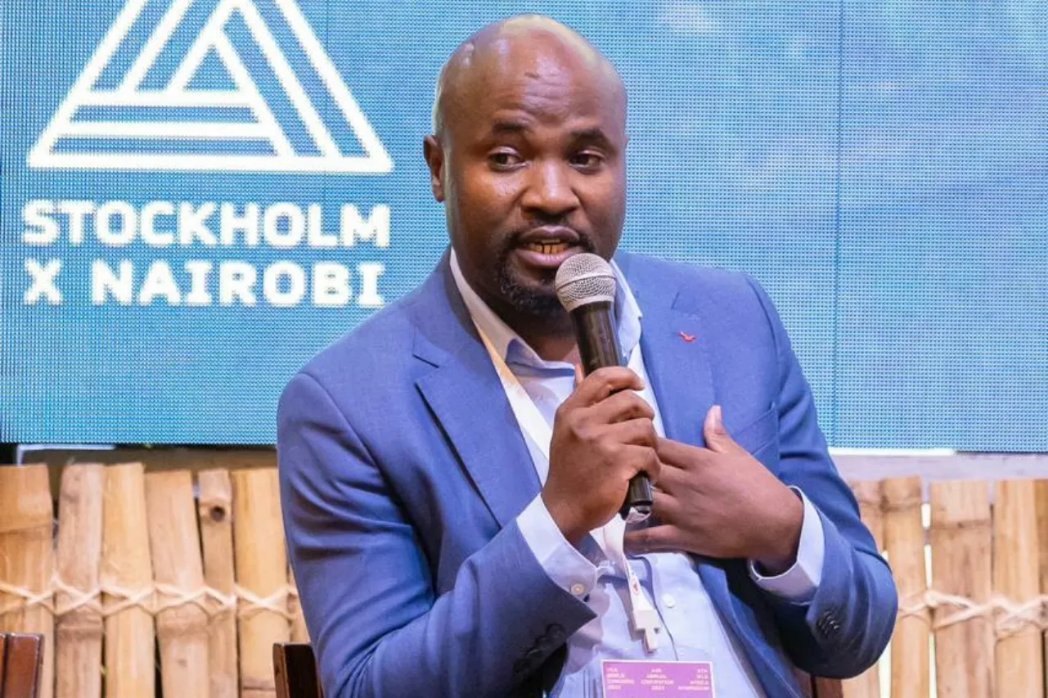
Eng. Howard M'mayi (KeNHA)
The story traces back to the 2024 AGM, one of the best attended in IEK history with numbers breaching the 1,000 mark both physically and online. That meeting installed President Eng Shammah Kiteme and passed a resolution for a full review of the 2015 constitution. The goals were clear: bring harmony to articles that sometimes contradicted each other, improve inclusivity especially for growing disciplines and branches, tighten election processes after past chaotic votes, and create better internal dispute resolution so matters did not always end up in court.
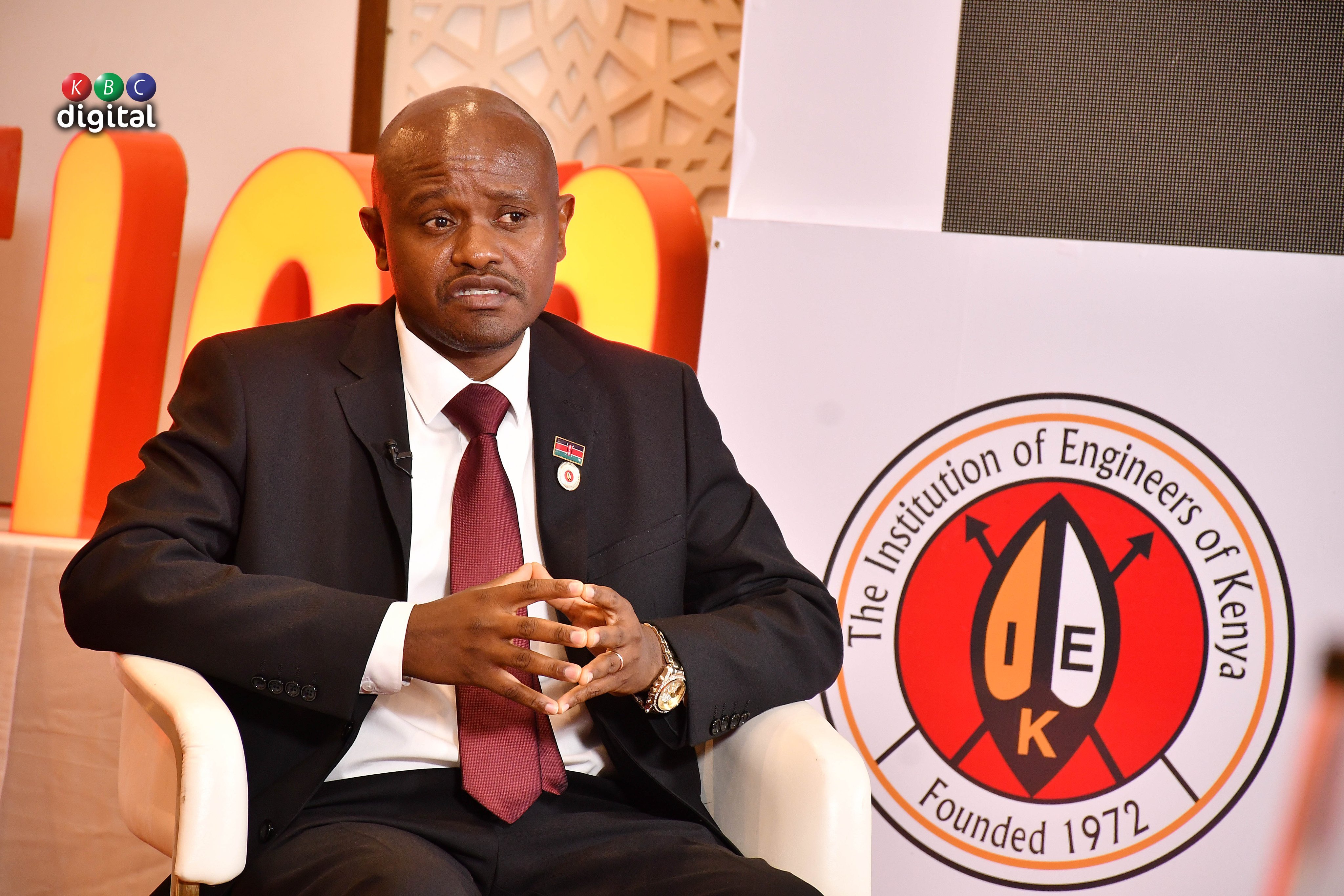
IEK President Eng. Shammah Kiteme
A 12-member Constitutional Review Committee was appointed. M'mayi was initially asked to chair but the role shifted to Eng Harrison Keter after council guidance that the chair should be a council member for accountability. M'mayi became deputy. The team prepared a roadmap, circulated it for adoption, and set about gathering views through a tool sent to all members, discipline-based webinars and stakeholder mapping.
Meetings, mostly virtual, numbered close to 40 with attendance consistently at 90 to 100 percent. M'mayi described the early work as cohesive and collaborative, with ideas debated openly and ruthlessly yet objectively. A first draft went to council in March 2025. Council asked for a comparative matrix showing changes and justifications, which the committee provided.
Then things shifted. Rumours began circulating that the CRC was blocking graduate members from gaining voting rights. Other claims suggested the committee was an agent of the Eminent Engineers Forum and planned to impeach the president or make that group too powerful. M'mayi named Ndugu Butichi Khamisi Ramadhan and Ndugu Abdifatah Jama as the main drivers, with others later joining in what he called steroid-pumped messaging, sometimes 50 posts in two hours repeating the same lines and tagging CRC members.
Council members who doubled as CRC members were reportedly barred from attending certain council discussions on the draft. Not long after, the committee received a thank-you letter and was released even though planned engagements with stakeholders had not taken place. Those engagements were meant to include institutional groups such as IEK Council itself, EBK, ACEK and EEF, plus webinars and an OGM for other interests. None had happened when the committee was disbanded.
M'mayi argued that a constitutional review needs openness and consensus building. Secrecy, he said, breeds suspicion and hardens positions. The roadmap had deliberately scheduled collection of views, synthesis, re-engagement, adjustments, final draft, civic education and a referendum. The first draft and matrix were ready, but the process moved behind closed doors.
He narrowed the controversy to two issues: voting rights for graduate members and the position of eminent engineers. On the first, he maintained that graduates belong in the house and deserve a formula for coexistence, but so do eminents who deserve respect. He shared his own past difficult experiences with some eminent engineers, including threats in a formal meeting, yet insisted the review was not a revenge mission. "Even if your father or uncle treats you unfairly, they don’t cease to be your relatives," he wrote, adding that problems should not be solved with the same consciousness that created them.
Most CRC proposals on harmonisation of articles, election hygiene and dispute resolution were later adopted unchanged, he noted. Those areas faced little rumour-mongering and could have been easy sells in member forums and a referendum.
A parallel petition by corporate member Dennis Desmond Nyagwoka Barongo at Milimani challenged the review process on constitutional grounds. The Registrar of Societies informed council that registration of any new constitution would wait for the case outcome and that the 2015 document remained applicable. Council then prepared elections under the 2015 rules. Vacancies were declared, scrutineers appointed, a timetable issued, candidates nominated and cleared, a voter register published, and campaigns began. All communications, including letters signed by the president, referenced the 2015 constitution.
Then the Kiambu petition arrived. Graduate member Sam Aberi Okemwa (G.11943) filed it under certificate of urgency, challenging the exclusion of graduates, technicians, technologists and students from voting. He sought to stop the elections. M'mayi learned of it through social media where Abdifatah Jama was actively mobilising graduates and attacking Harrison Keter over his CRC role.
M'mayi applied to be enjoined as a third respondent to help defend the case. His advocate arrived at the hearing to find that the named respondents IEK and the president had filed nothing. The application faced opposition from the respondents themselves. The judge directed submissions on joinder and later allowed M'mayi as an interested party while granting conservatory orders suspending the elections.
M'mayi highlighted the cost of such petitions, noting his own past experience with instruction fees averaging half a million shillings and urgency deposits of 100-200 thousand. He questioned how a recent graduate member, part of a category often complaining about subscription and CPD costs, could shoulder that burden for voting rights in one election cycle when the constitutional review offered a longer-term path. When asked on forums, Aberi reportedly replied that the Lord had blessed him.
He also pointed to what he called forum shopping, noting related issues were already before Milimani courts. The choice of Kiambu and the judge drew comment, though M'mayi stopped short of direct accusations. The IEK response affidavit, filed late, was described as concealing material facts, skirting issues and covertly supporting the petitioner rather than defending the constitution. An advocate appearing for respondents in both Milimani and Kiambu reportedly failed to disclose the parallel proceedings.
Just before the Kiambu ruling, the president circulated a letter cancelling the 23 March elections. This followed a letter from another graduate member, Anthony Murigu, who was not in good standing at the time. Council convened quickly, aligned with the letter's contents and reversed its earlier resolution. M'mayi saw this as working from a predetermined answer.
The Kiambu orders suspended the elections. Scrutineers later issued formal notice ending all campaign activities. A members meeting at Daystar University on 15 April, convened by Honorary Secretary Eng Jackton Mwembe, carried a notice that omitted references to specific constitutional articles a break from tradition that drew criticism. The agenda lacked items on scrutineers' report or election results announcement, which the 2015 constitution ties to the AGM under articles covering election management and assumption of office.
Attendance at recent constitutional gatherings had dropped: 788 at the 2025 AGM, 312 at an August 2025 SGM, and 46 at the November 2025 meeting. The Daystar session allowed venting, repeated calls for constitutionalism, and clarification that only the 2015 constitution currently applies. It adjourned with plans for a later special general meeting to handle financial reports and a properly constituted AGM.
M'mayi warned that removing constitutional anchors risks creating a vacuum. The constitution creates the institution, the council, offices, membership categories and meetings. Operating without clear reference raises questions about legitimacy of actions and continuity.
He credited the president for allowing extended discussion at Daystar instead of rushing decisions or using casting vote powers as a veto. He also thanked members who spoke passionately without descending into chaos.
As of 17 April the Kiambu court deferred the full judgement, scheduling directions for the following Monday. The delay leaves the suspension in place and the institution in uncertainty. Informal campaign materials still appear in some groups despite official halts.
M'mayi framed the entire sequence as cycles of stopping the reggae first through rumours and disbandment, then through court actions where defence appeared lacking. He preserved recordings, minutes and reports from CRC meetings, offering them for verification through secretariat with council permission.
The disputes have played out on engineering WhatsApp forums with repetitive postings, personal attacks and counter claims. Some see prudent risk management by leadership; others view deliberate creation of crisis to delay elections and shift power dynamics.
IEK represents engineers across disciplines and has historically advised on national infrastructure. Prolonged governance paralysis diverts energy from professional development, standards and input into Kenya's roads, energy, water and urban projects.
What comes next depends on the eventual Kiambu ruling, any clarifications sought, and whether members can rebuild consensus on the constitutional questions that sparked the review in the first place. Voting rights for graduates remain central, but so do election hygiene, dispute mechanisms and harmonious provisions that all categories can live with.
M'mayi ended many of his posts calling for live and let live within one house. He urged fidelity to the registered constitution to avoid deeper crisis. The reggae, for now, stays quiet while dancers wait for the next beat and the court speaks again.
Comments (0)
Leave a Comment
No comments yet. Be the first to share your thoughts!