

A version of this commentary appeared on X by Juma G.
A public discussion regarding personal capital allocation in housing highlights an ongoing debate over constructing rural family homes across Kenya.
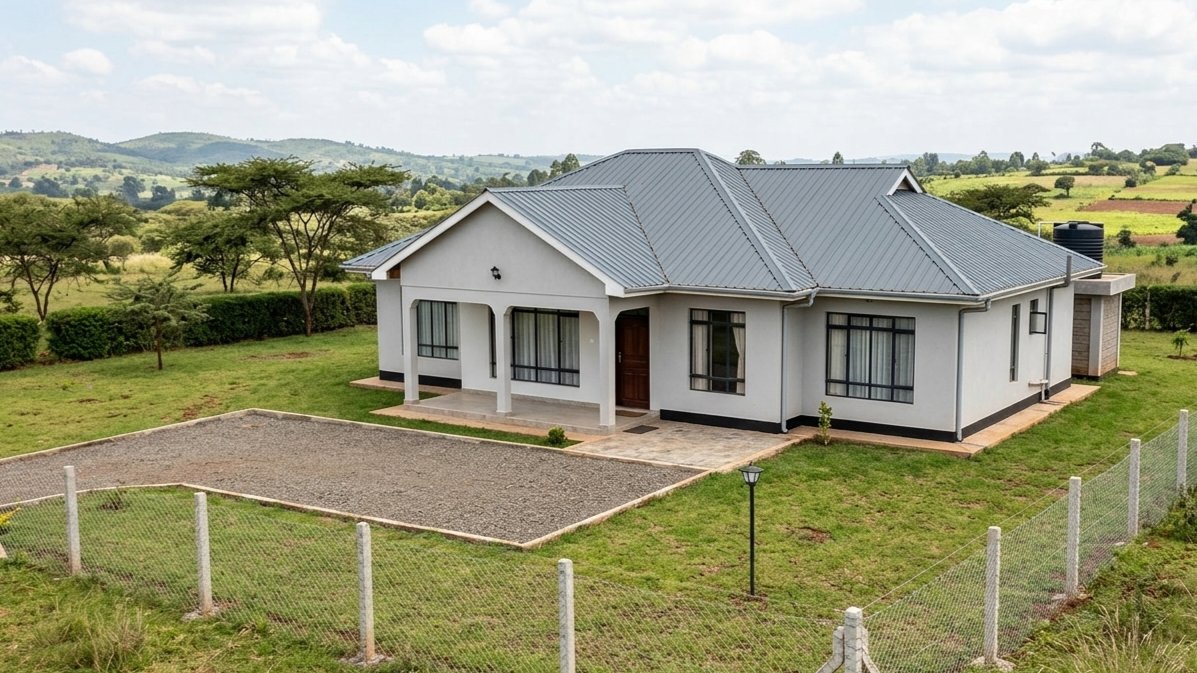
The debate centered on the widespread custom known as "kujenga nyumbani", which involves constructing private single-family homes in ancestral villages.
Young professionals frequently face heavy societal expectations to build upcountry residences, even when those structures remain empty for nearly the entire year.
Allocating early savings toward non-income generating residential structures in rural regions consumes substantial capital during foundational financial years.
Property owners often realize later, that funds tied up in idle brick and mortar could have generated superior compounding returns in regulated financial markets.
The core economic challenge stems from the sharp distinction between income-generating assets, and illiquid dead capital. While urban residential or commercial real estate yields reliable rental income, rural private houses continuously incur maintenance expenses while returning zero cash flow.
Investment managers at financial institutions like Sterling Investment Bank (SIB) routinely emphasize asset productivity over non-yielding personal developments.
Low-risk capital instruments, such as government bonds issued by the Central Bank of Kenya (CBK), deliver predictable yields without physical structure upkeep costs.
Similarly, equities traded on the Nairobi Securities Exchange (NSE) offer market liquidity that fixed upcountry real estate cannot provide. Liquid financial assets allow young earners to deploy capital flexibly, whereas ancestral land holdings lock up net worth in non-tradable, non-yield assets.
Real estate investors seeking property exposure can also utilize Real Estate Investment Trusts (REITs) to gain access to prime commercial portfolios. These collective investment schemes distribute regular dividend returns, unlike rural homes, which constantly demand money for security, painting, and structural repairs.
Building in ancestral home areas retains immense social prestige across many Kenyan communities. However, professional wealth advisors argue, that building primarily to satisfy cultural norms often compromises long-term personal net worth growth and economic mobility.
The public dialogue highlights a generational shift in how young working professionals evaluate residential real estate versus productive investment options.
Increasing numbers of earners prioritize liquid investment growth portfolios over building large upcountry houses, that sit vacant for most calendar months.
High urban housing demand in major cities continues to create real estate opportunities for focused property investors. By contrast, constructing private rural dwellings yields no recurring investment income, making capital timing and allocation strategy essential for long-term wealth creation.
Economic experts recommend that rural residential construction should happen later in an investor's career timeline, when passive income streams are already established.
Delaying upcountry residential builds allows individuals to construct robust financial assets, which can eventually fund personal lifestyle construction projects.
Furthermore, property development in remote areas often suffers from higher supply chain logistics costs for basic building materials like cement and steel.
Transporting heavy building materials to distant village plots inflates overall construction costs, further reducing the prospective economic efficiency of such private builds.
Ultimately, achieving financial independence requires drawing a clear line between social expectations, and sound asset management strategies.
Prioritizing income-generating investments over seldomly used village homes remains a decisive financial choice for young professionals building long-term wealth.
As financial literacy expands, more property buyers evaluate opportunity costs before breaking ground on rural land. Choosing productive assets over idle upcountry construction ensures, that capital works continuously to build sustainable personal financial security.
Comments (0)
Leave a Comment
No comments yet. Be the first to share your thoughts!