
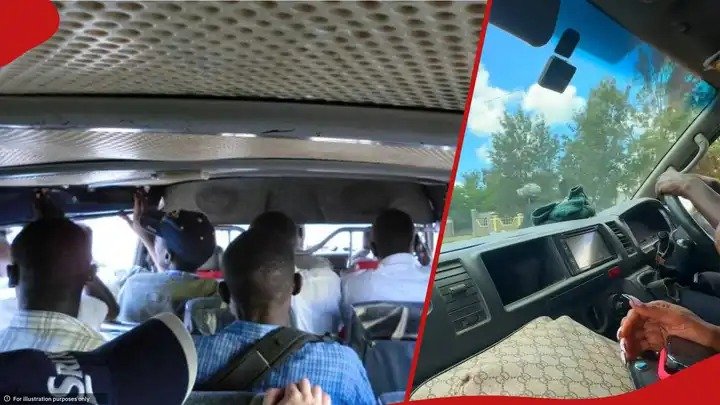

A driver of a public service vehicle, commonly known as a matatu, recently went viral after a video captured him driving at a walking pace. The incident reportedly occurred after passengers inside the vehicle raised concerns about the speed at which he was initially traveling.
In a display of passive-aggressive compliance, the driver dropped his speed to approximately 20km/h. This drastic reduction occurred on a stretch of road where the standard flow of traffic moves significantly faster, creating a peculiar scene for both the occupants and other road users.
Public transport in Kenya is often defined by the "Matatu Culture," which frequently prioritizes speed to maximize the number of trips completed in a day. Passengers often find themselves caught between the need to arrive at their destinations quickly and the desire for personal safety.
In this specific instance, the passengers’ attempt to enforce road safety resulted in an unexpected stalemate. While the driver technically adhered to the request to slow down, the extreme nature of the response was viewed by many as a form of protest against the commuters.
Social media reactions to the footage have been divided. Some observers commended the passengers for speaking up against reckless driving, noting that many road accidents in the country are attributed to high speeds and driver negligence.
However, others pointed out that driving significantly below the minimum required speed on a highway can be just as dangerous as speeding. Such actions can lead to rear-end collisions or cause unnecessary traffic congestion, affecting hundreds of other motorists.
The National Transport and Safety Authority (NTSA) has frequently urged passengers to report cases of speeding or reckless behavior. Despite these calls, the power dynamic between drivers and passengers often remains tense, as seen in this viral encounter.
Critics of the driver's actions argued that professional conduct should have led to a moderate adjustment of speed rather than a retaliatory crawl. The incident highlights the ongoing friction within the informal public transport sector, where regulation and individual behavior often clash.
For many commuters, the event serves as a reminder of the challenges faced daily on Kenyan roads. While safety is paramount, the lack of standardized training and professional accountability in the matatu industry continues to lead to such bizarre confrontations.
Infrastructure developments and stricter enforcement of speed governors have been implemented to curb road carnage. Yet, the human element, specifically the attitude of the person behind the wheel, remains a critical factor in the safety of the traveling public.
As the video continues to circulate, it raises questions about whether more formal mechanisms are needed to handle passenger grievances in real-time. Without a clear protocol, commuters may continue to face either the risk of high-speed travel or the frustration of deliberate delays.