
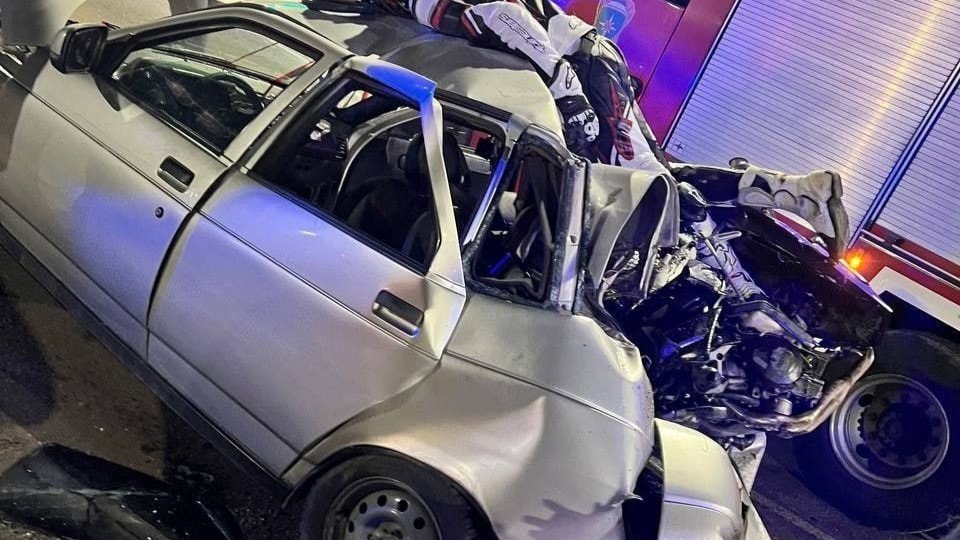

The extreme speeds reached by modern sports bikes bring into play physical forces that the human body is simply not designed to withstand. When a motorcycle traveling at 200 kilometers per hour strikes a stationary object, the resulting energy transfer occurs with such violence that safety gear and structural engineering offer almost no protection. To understand why these incidents are almost universally fatal, one must look at the magnitude of kinetic energy involved.
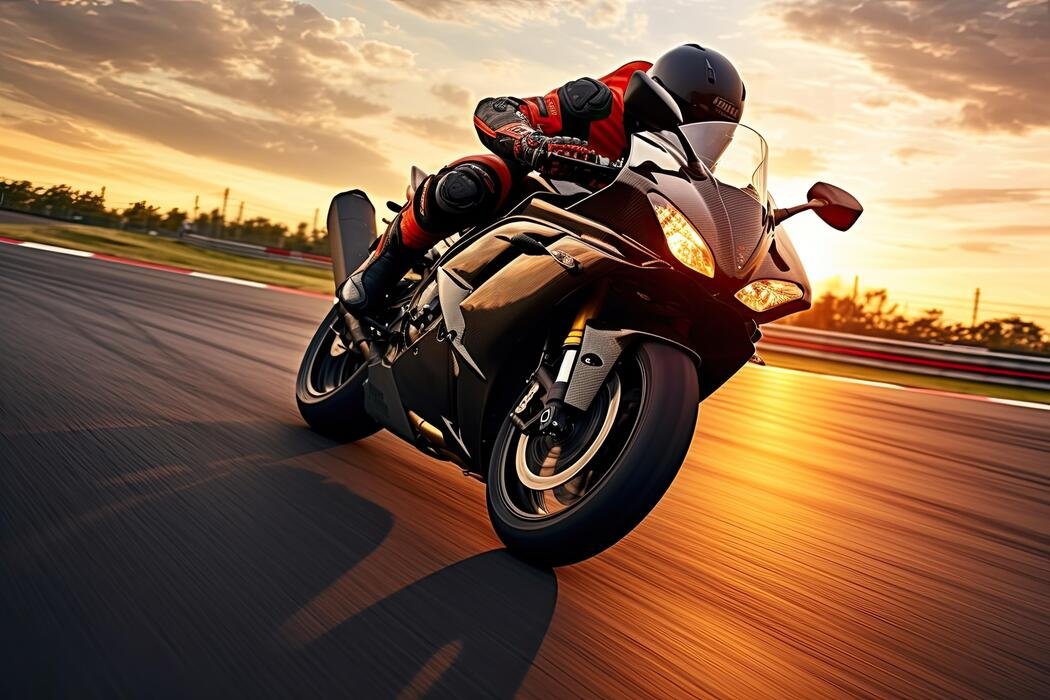
At 200kph, a rider is moving at approximately 55.56 meters per second. For a combined mass of 280 kilograms, which accounts for a standard sports bike and an average adult rider, the kinetic energy (Ek) is calculated as:
Ek = 1/2 x mass x velocity squared
Ek = 0.5 x 280 x (55.56 x 55.56) = 432,100 Joules.
This energy must be dissipated instantly upon impact. In a collision with a stationary car, the stopping distance is limited to the combined crumple zones of the vehicles, typically estimated at 0.8 meters.
Calculating the average impact force over that distance:
Impact Force (F) = Energy / Distance
F = 432,100 / 0.8 = 540,125 Newtons.
To put this in a perspective familiar to the construction industry, this is equivalent to the weight of a 55-metric tonne hydraulic excavator, such as a CAT 349, being dropped onto the rider's body in less than the blink of an eye. No consumer-grade helmet or leather suit is rated for this level of stress. Standard safety testing for helmets usually involves impact speeds of around 30kph, which does not reflect the reality of highway speeds.
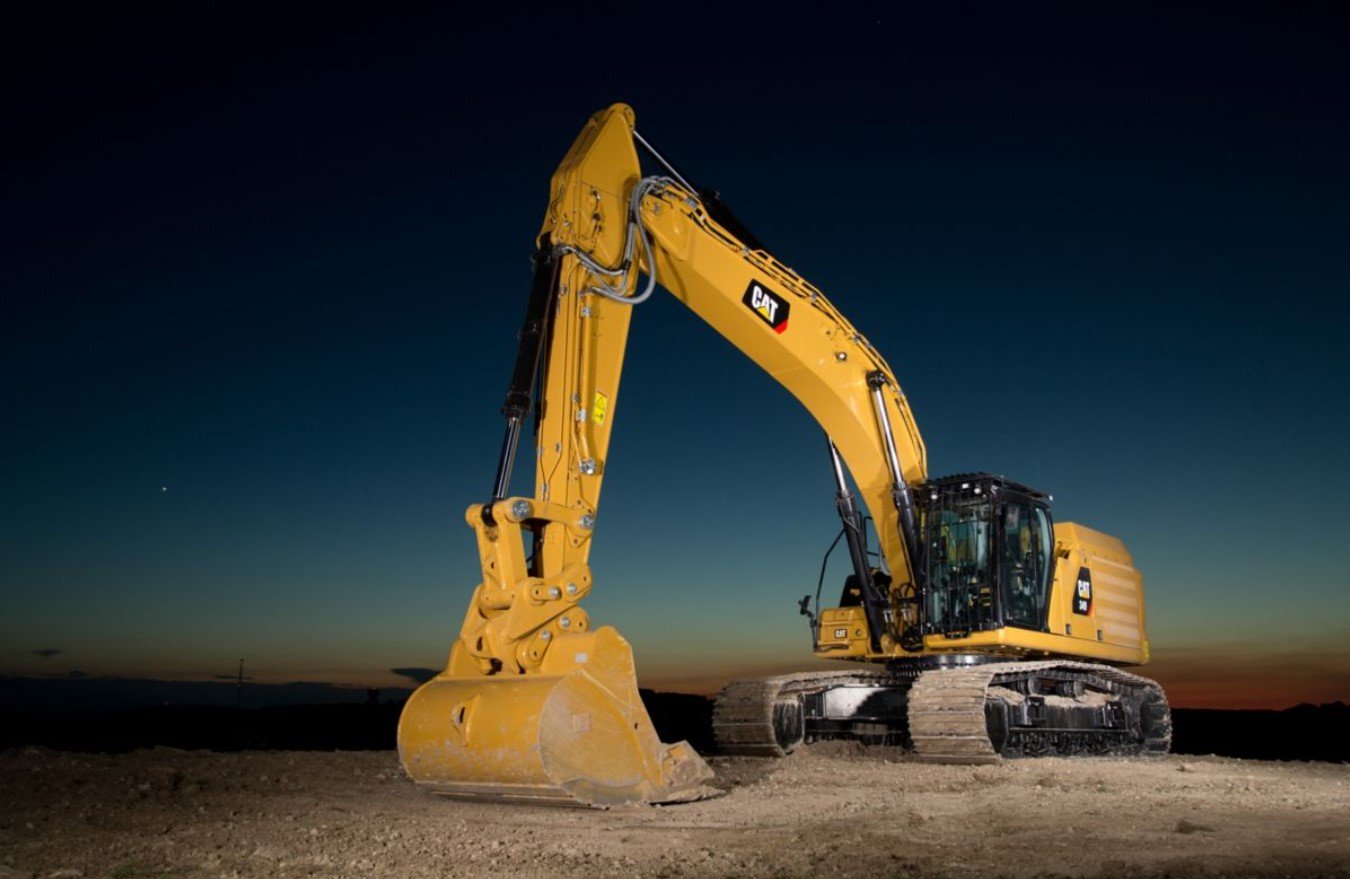
A 49T CAT 349
The primary cause of death in these high-speed decelerations is often internal. While external trauma is severe, the "third collision" is what proves most lethal. This occurs when the motorcycle and the rider's skeleton stop abruptly, but the internal organs continue moving forward at the original speed. At an estimated 200g of deceleration, organs like the heart and brain can tear away from their connective tissues and blood vessels.
It is a common misconception that professional racers survive these speeds because of better gear alone. In MotoGP, riders survive crashes at high speeds only because they slide across asphalt and gravel traps. This allows the energy to dissipate through friction over hundreds of meters and several seconds. A street collision with a stationary car removes this luxury of time and space, forcing all that energy into a stop that lasts only about 0.028 seconds.
The stationary vehicle acts as a rigid barrier. Because of the high center of gravity on a motorcycle, the rider is often catapulted over the bars, leading to secondary impacts with the car's pillars or the pavement. Even without a direct head-on strike, the rotational forces and the sudden halt of the torso make the likelihood of surviving such an event statistically negligible.
#ShareBarabara
Mjengo Hub.
Comments (0)
Leave a Comment
No comments yet. Be the first to share your thoughts!