
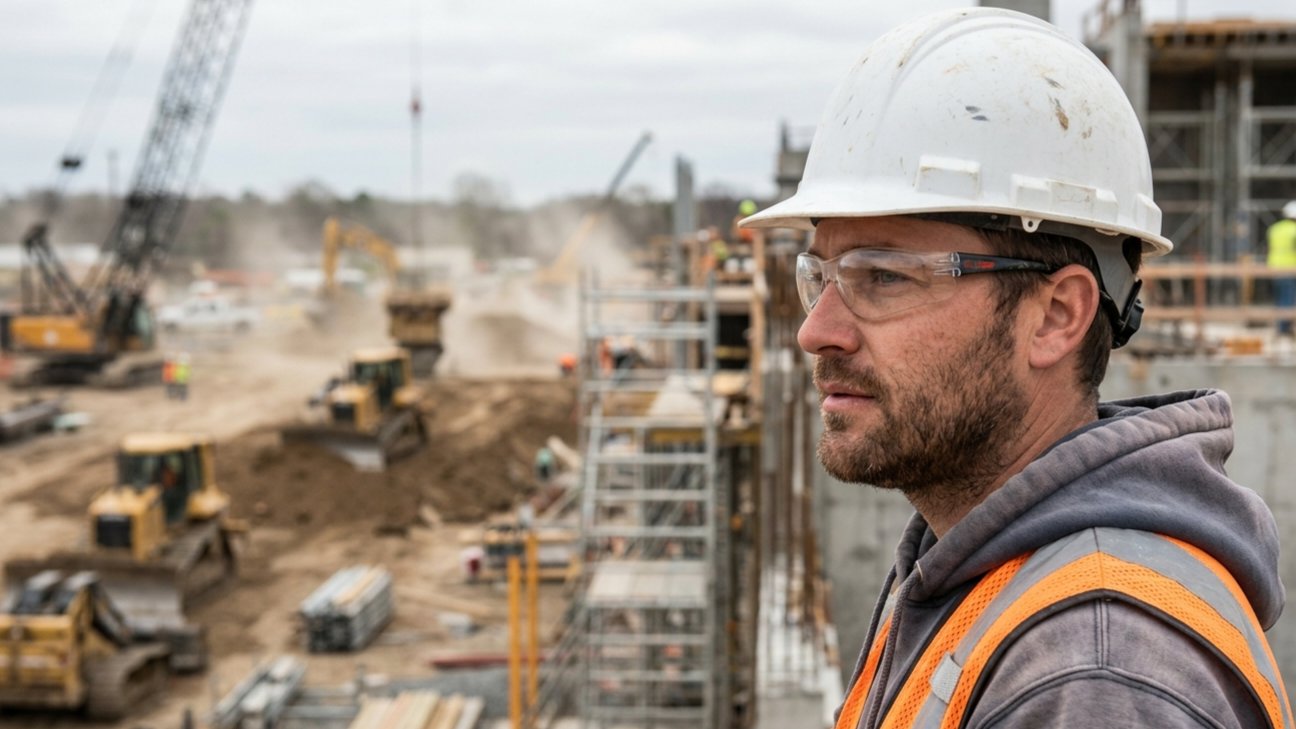

The most dangerous word on a construction site is silence.
Not the silence after a crane stops moving or a drill powers down. The silence of a worker who spotted something wrong but could not find the words to say so.
DPR Construction, one of the largest general contractors in the United States, made headlines this month when it formally classified language barriers as an eliminable safety hazard, placing them in the same category as fall risks, electrical exposure and struck-by incidents. The decision followed years of internal data showing that communication failures were not a peripheral concern but a direct precursor to serious injuries and fatalities on site.
The numbers behind that decision are significant. Nearly one in three construction leaders in the US currently oversee crews that speak multiple languages. Of those, more than three-quarters report difficulty giving clear instructions, confirming task understanding or discussing safety concerns in real time. The National Institute for Occupational Safety and Health (NIOSH) estimates that language barriers are a contributing factor in 25 percent of all on-the-job accidents globally.
DPR's Chris Bell described the core problem plainly. Workers who struggle with the dominant language on a site often do not speak up when they spot a problem, not because they failed to notice it, but because they cannot communicate it or fear embarrassment if they try. That silence, Bell said, is the most dangerous consequence of a language gap on a jobsite. His firm's response was to treat language the way occupational safety law treats any other hazard: something to be systematically eliminated, not merely managed.
The wider industry is arriving at similar conclusions through different routes. The Construction Safety Research Alliance found that workers identify only 45 percent of the hazards they face during pre-job safety planning. The gap between what is present on a site and what gets flagged before work begins is already substantial before language is factored in. When it is, the gap widens further.
A separate report published this year by preconstruction software firm STACK found that 78 percent of construction supervisors want real-time translation tools to better engage workers for whom English is a second language. Only 50 percent currently have access to multilingual toolbox talk materials. Safety data sheets, job safety analyses and pre-task plans are still written exclusively in English on most US sites, despite a workforce that has been multilingual for decades.
The Hispanic workforce is projected to account for 80 percent of new construction labour in the US by 2030. That figure makes the language question not a niche concern but a structural one for an industry that is simultaneously struggling with labour shortages and stubbornly flat fatality rates.
For Kenya and much of sub-Saharan Africa, the framing is different, but the underlying risk is the same. Construction sites in Nairobi routinely bring together workers from different counties, ethnic communities and educational backgrounds, each carrying different levels of familiarity with technical safety vocabulary in either English or Kiswahili. Safety briefings delivered in one language to workers who operate in another create the same conditions that DPR has now formally identified as a hazard. The terminology may differ. The silence is the same.
Comments (0)
Leave a Comment
No comments yet. Be the first to share your thoughts!