
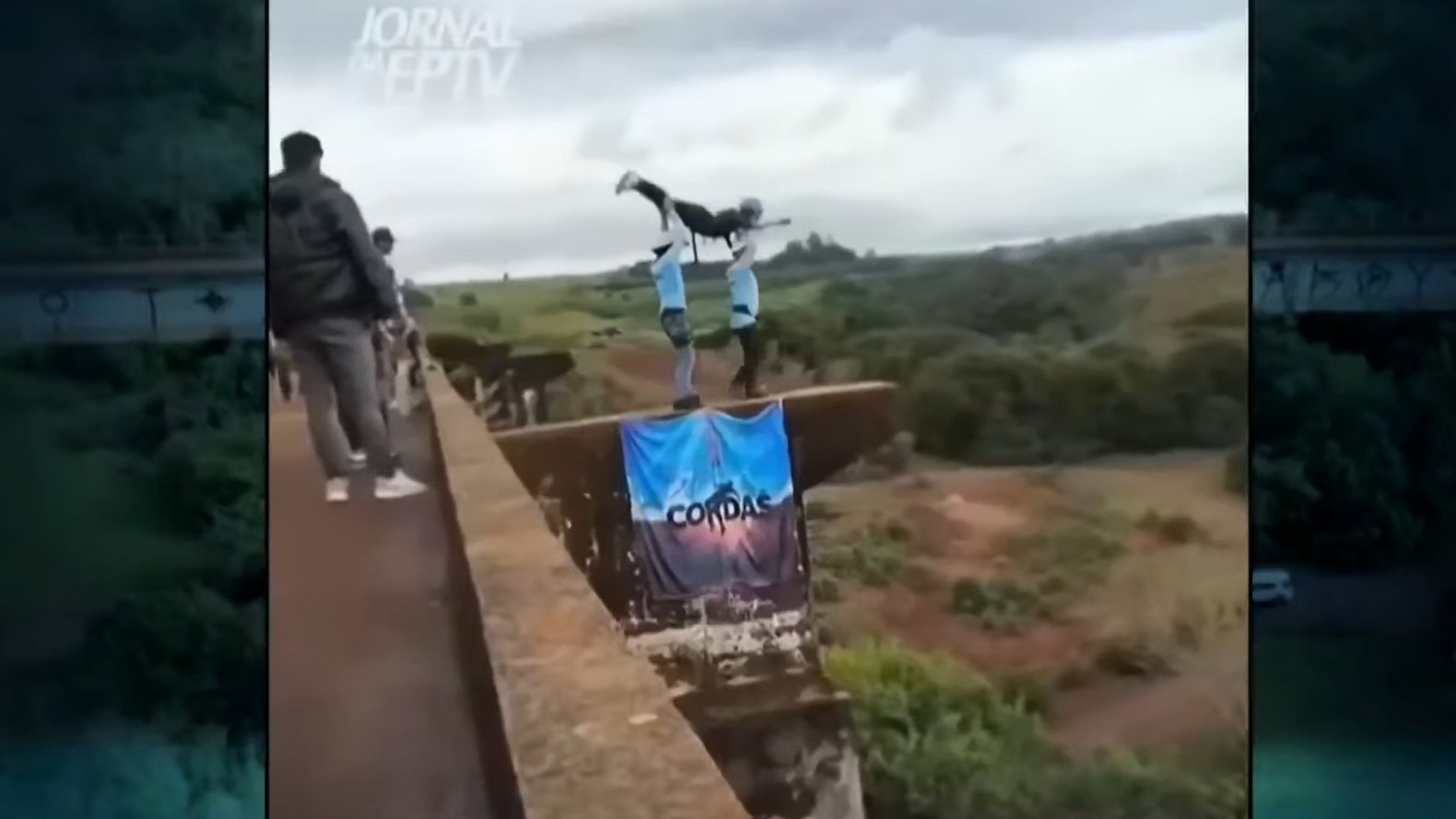

A 21-year-old woman died instantly after plunging from an abandoned bridge in São Paulo state when the crew running her commercial rope jump forgot to connect the safety cord. Video of the incident has circulated widely, exposing glaring lapses in basic safety procedures.
Maria Eduarda Rodrigues de Freitas had booked the guided tour expecting an adrenaline-filled experience on the Ponte do Esqueleto, known locally as Skeleton Bridge, in Limeira. She wore a helmet and harness but was launched in a Superman pose with the bungee rope left coiled on the platform.
Witnesses can be heard shouting in alarm moments after she fell approximately 40 metres. Emergency responders arrived by helicopter but could only confirm her death at the scene. She had recently graduated in physical education and sports management.
Police arrested three men directly involved in the operation on charges of homicide with eventual intent. The individuals lacked proper authorisation to conduct activities at the disused site. Further arrests and questioning are underway.
The bridge has seen informal use for extreme sports in recent years despite its long-abandoned status. Reports suggest previous safety issues at the location, yet commercial operators continued to run tours there without formal licensing or oversight.
Operators presented the activity as a controlled, guided package. Participants trusted standard equipment checks would be performed. In this case, fundamental verification steps were missed entirely.
The tragedy has renewed scrutiny of adventure tourism on repurposed infrastructure across Brazil. Abandoned bridges and industrial relics often attract low-cost operators, but many function outside regulatory safety standards.
Bungee and rope jumping demand meticulous equipment inspection, trained staff and redundant safety systems. International best practices require clear attachment confirmation and real-time supervision. A single oversight here proved fatal.
Local authorities have promised stricter enforcement following public outcry. The victim’s funeral drew large crowds, with many describing the death as entirely preventable.
This incident fits a broader pattern of accidents at unregulated extreme sports venues. Similar cases have highlighted weaknesses in contractor screening, gear maintenance and emergency planning.
Professionals involved in infrastructure reuse stress that converting old structures for public use requires the same engineering and safety diligence as new projects. Without certification and licensing, risks to participants remain unacceptably high.
Investigators are now tracing responsibility across the tour company, on-site crew and local oversight bodies. The outcome could shape future rules for adventure activities on public infrastructure.
Comments (0)
Leave a Comment
No comments yet. Be the first to share your thoughts!