
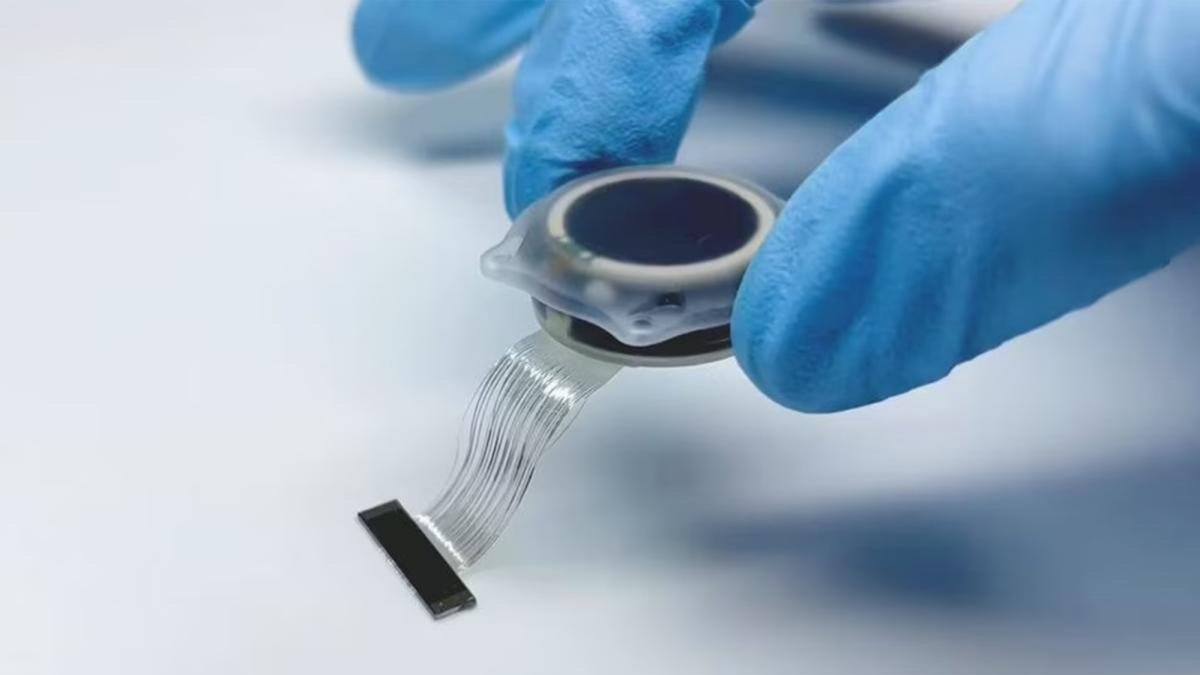

China has approved the NEO brain-computer interface for commercial sale. The coin-sized implant, developed by Shanghai-based Neuracle Technology with researchers from Tsinghua University, marks the first invasive brain chip cleared for market use.
The National Medical Products Administration granted approval for patients aged 18 to 60 suffering paralysis from cervical spinal cord injuries. The initial version targets restoration of hand and arm function. It is expected to enter mass production for China’s public health system.
The device sits between the skull and brain. It presses eight sensors against the dura mater, the outer protective membrane, without penetrating brain tissue. A central processor translates neural signals into commands for external devices like a robotic glove. Wireless connectivity links it to nearby computers.
Clinical trials covered 36 patients. Reports from the trials describe successful restoration of some motor functions. One participant was reportedly able to write his name for the first time in years following the injury.
This approval positions China ahead in the race for practical brain-computer interfaces. Elon Musk’s Neuralink has been conducting human trials with its N1 implant since 2024. That system uses threads that penetrate the cerebral cortex. It has yet to secure full regulatory approval for broader commercial use in the United States.
Observers attribute the quicker Chinese path partly to the NEO’s less invasive design. Neuralink’s approach requires deeper insertion into brain tissue. The N1 is currently in trials with a small number of participants, including one who described regaining the ability to write.
The technology carries potential for treating paralysis, epilepsy, Parkinson’s, stroke and other neurological conditions. More than three billion people worldwide live with some form of neurological disorder that could eventually benefit. Market projections value the sector at about $490 million now, with growth expected to $1.7 billion by 2035.
Cybersecurity experts have raised concerns. Griffith University’s Dr David Tuffley pointed to risks of hackers accessing sensitive neural data such as thoughts and memories. Potential interference could affect cognitive or motor functions, though such scenarios remain theoretical for now.
Questions around data ownership and privacy also emerge as these devices collect highly personal information. Broader visions for the technology extend to enhanced human-AI interaction, digital telepathy concepts and medical restoration, though many applications lie further ahead.
The NEO focuses initially on practical motor recovery for paralysis patients. Its path to market contrasts with Neuralink’s ongoing trial phase. Musk has spoken publicly about the promise of such implants for restoring function in tetraplegics and even sight, describing them as significant advances.
Development in China reflects strong state and academic investment in neurotechnology. Neuracle and its partners aim to integrate the system into routine care. Future phases could expand capabilities and amenities around the core implant.
International competition in this field is intensifying. While Neuralink refines its trials, the Chinese device has crossed into commercial availability domestically. This milestone adds momentum to global efforts in merging neuroscience with computing.
Comments (0)
Leave a Comment
No comments yet. Be the first to share your thoughts!