
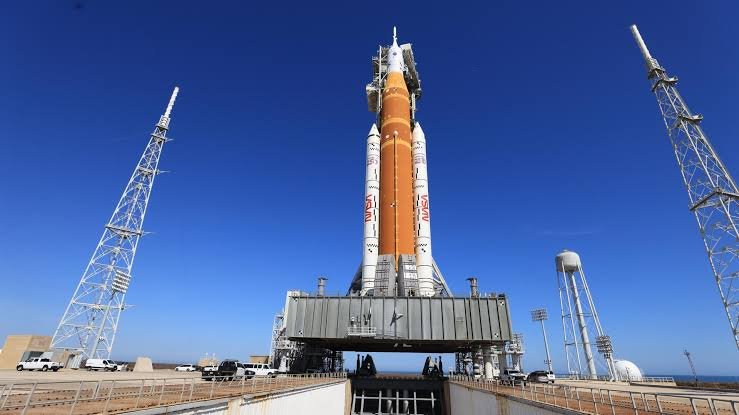

Engineers at the Kennedy Space Center are preparing to roll the Artemis II Space Launch System rocket back to its assembly hangar after a critical helium flow interruption was detected. The technical failure, which emerged late last week, has forced NASA to abandon its March 6 launch target. Agency officials confirmed on Saturday that the 322-foot-tall rocket must be returned to the Vehicle Assembly Building to address the fault, as the necessary repairs cannot be safely conducted while the vehicle remains at Launch Complex 39B.
The issue is centered within the Interim Cryogenic Propulsion Stage, which serves as the upper portion of the rocket. Helium is a vital component for the launch sequence, used to purge the engines and maintain the pressure of liquid hydrogen and liquid oxygen propellant tanks. While the system appeared to function normally during recent wet dress rehearsals, data reviewed overnight on Friday indicated a blockage or interruption in the flow. NASA Administrator Jared Isaacman noted that the failure signature bears similarities to a problem encountered during the uncrewed Artemis I mission in 2022.
Current assessments suggest the fault may lie within a failed check valve, a blocked filter between the ground equipment and the rocket, or a faulty connection plate. Because these components are located deep within the propulsion hardware, a rollback is the only viable path to gain the physical access required for a permanent fix. This maneuver involves moving the massive mobile launcher and the fully stacked rocket approximately four miles back to the hangar, a process that is highly dependent on local weather conditions and wind speeds.
The delay is a blow to the timeline for the first crewed flight to the lunar vicinity in more than half a century. The mission is designed to carry four astronauts on a ten-day journey around the Moon to test the Orion spacecraft's life-support systems. Before this latest glitch, the mission had already faced setbacks related to liquid hydrogen leaks that occurred during earlier fueling tests. Although those leaks were largely managed during a second rehearsal on February 19, this new helium-related complication has effectively closed the March launch window.
NASA is now eyeing several potential launch dates in April, specifically focusing on a window that opens at the beginning of the month. By initiating the rollback preparations immediately, the agency hopes to preserve the possibility of a flight in early April, provided the repairs and subsequent data analysis proceed without further complications. The mission crew, who had entered a mandatory two-week quarantine just as the problem was discovered, will now have their schedule adjusted to align with the new timeline.
While the delay is frustrating for the international teams involved, safety remains the primary driver for the decision. The Space Launch System is a complex piece of infrastructure, and the high-pressure helium system is essential for the structural integrity and performance of the fuel tanks during the intense forces of liftoff. Project managers are now focusing on a thorough inspection of the umbilical interfaces and internal valves once the rocket is secured inside the Vehicle Assembly Building. Further updates on the specific cause of the flow interruption are expected once the engineering teams complete their initial teardown and inspection in the coming days.
Comments (0)
Leave a Comment
No comments yet. Be the first to share your thoughts!