
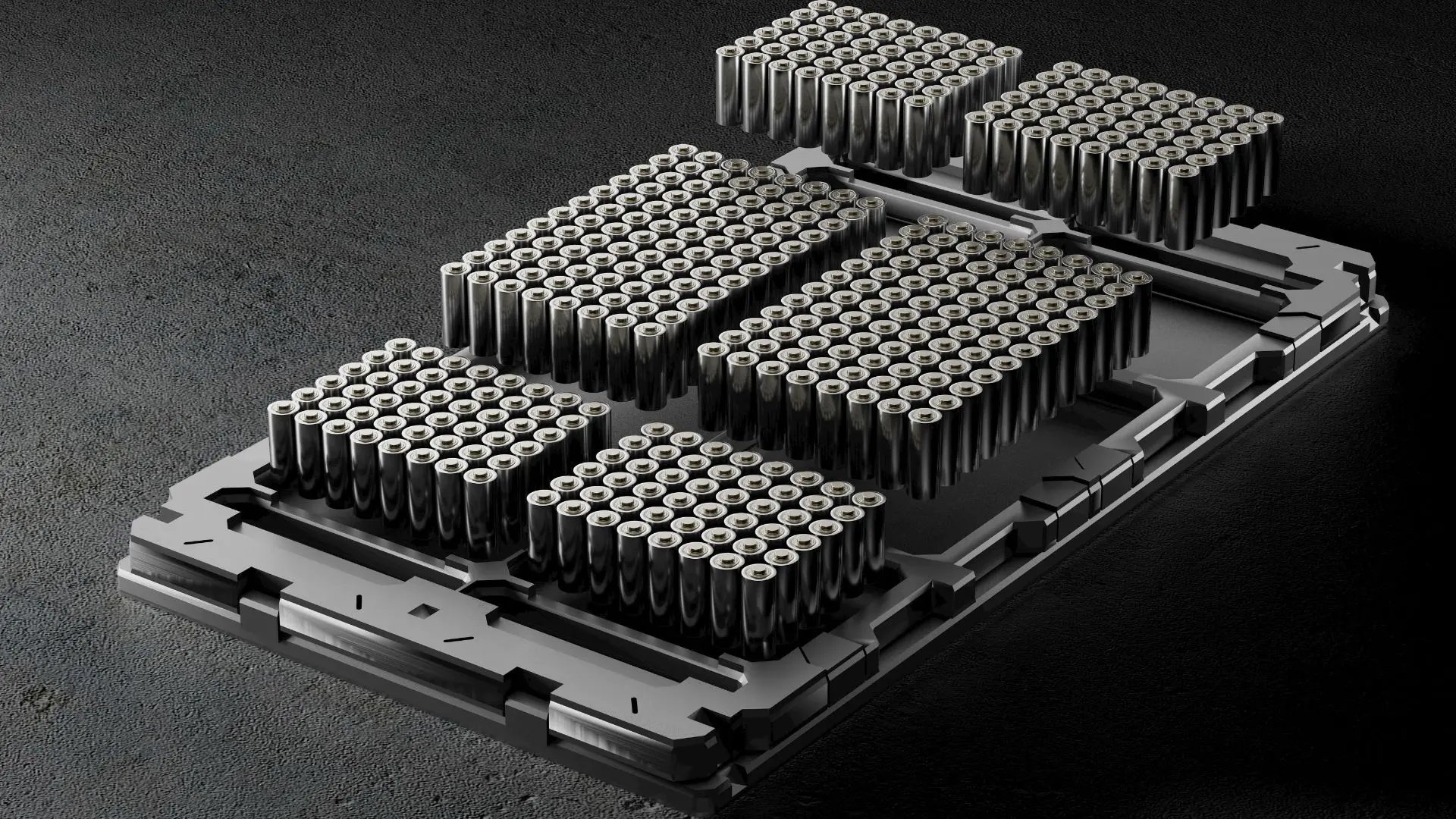

South Korean researchers have designed a novel material for Electric Vehicle (EV) batteries that prevents internal structural degradation during heavy usage. The material solves a long-standing manufacturing challenge associated with making energy storage cells thicker and more power-dense.
A joint research team led by Sungkyunkwan University (SKKU) and Seoul National University (SNU) created the binder for thick-film electrodes. Their findings demonstrate that lithium-ion battery cells built with this chemistry retain 86 percent of their original capacity after 200 charging cycles.
Traditional lithium-ion batteries rely on Polyvinylidene Fluoride (PVDF) as a primary binding agent to anchor active materials to internal metal foils. However, during the drying phase of manufacturing thick-film electrodes, PVDF tends to migrate toward the surface.
This migration causes the electrode active layer to crack or crumble, which drastically reduces overall mechanical durability. It also degrades internal lithium-ion transport, when heavy vehicle operations demand continuous high energy delivery over extended periods.
To resolve these structural flaws, engineers combined Spandex (SPDX), an elastic textile polymer, with Poly(acrylic acid) (PAA). The resulting mixture forms what researchers term a Dual-Acting Hybrid Polymer (DHP) binder.
Laboratory test data shows that DHP nearly doubles the adhesive strength of conventional PVDF coatings. The combination creates a highly resilient framework, which prevents structural detachment during repetitive charge and discharge sequences.
Researchers also observed that the binder forms a specialized lithium-ion conducting interface during initial operational cycles. This spontaneous chemical layer accelerates ion transport through dense electrode coatings, when electric vehicles demand rapid power delivery.
By stabilizing thicker electrode architectures, battery manufacturers can increase energy density without altering existing cell container dimensions. Industry analysts note that thicker active layers allow battery packs to store significantly higher energy per unit volume.
Higher energy density directly translates to longer driving ranges for heavy commercial electric trucks and utility vehicles. Construction fleets transitioning to electric equipment rely heavily on high-capacity battery packs to sustain demanding daily operational duties.
The new binder chemistry also eliminates the need for expensive dry-process manufacturing line overhauls. Factories can integrate the hybrid polymer using existing wet-coating infrastructure, which significantly lowers adoption barriers for global industrial battery manufacturers.
Researchers successfully tested the DHP material on high-loading nickel-manganese-cobalt cathodes. These cathode formations represent the standard energy chemistry used across mainstream commercial electric vehicle platforms today.
Long-term testing indicates that cells featuring this new polymer architecture maintain structural integrity under high current loads. The breakthrough offers a practical path toward commercial battery packs capable of achieving energy densities near 450 watt-hours per kilogram.
The research team plans to collaborate with industrial battery manufacturers to scale production of the DHP binder. Commercial deployment could begin once large-scale manufacturing protocols are finalized over the coming years.
Comments (0)
Leave a Comment
No comments yet. Be the first to share your thoughts!