
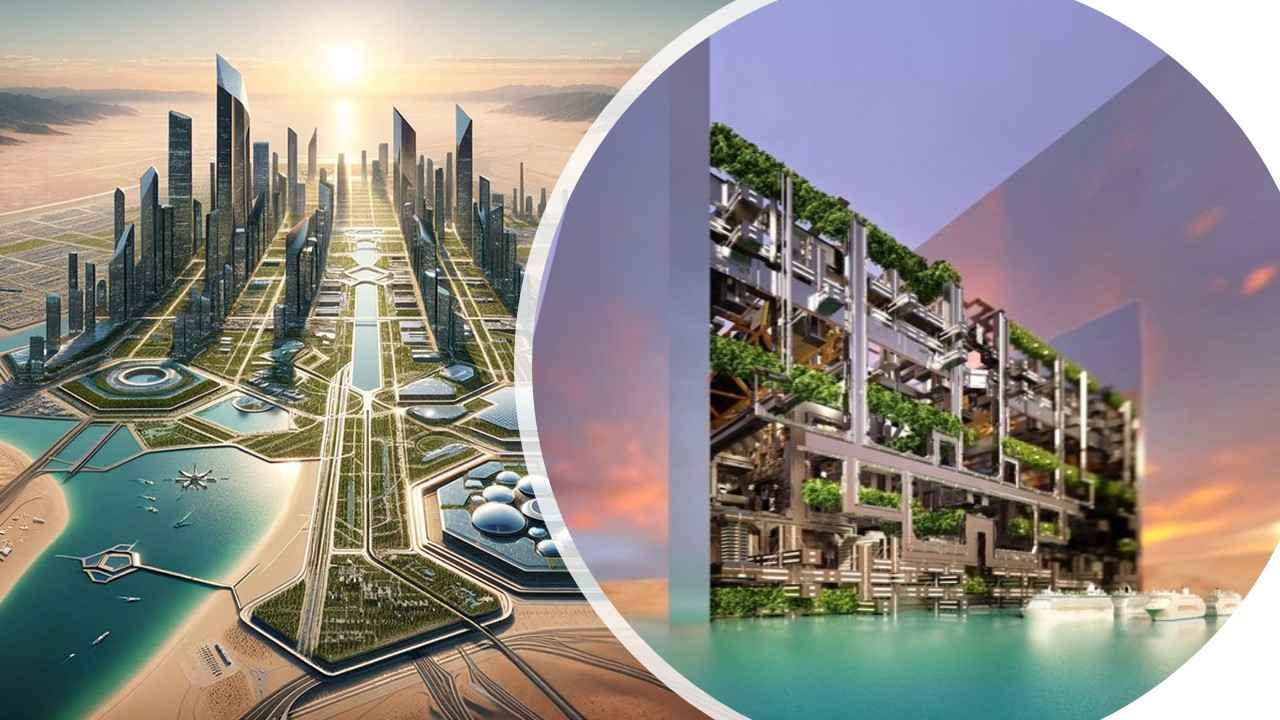

Saudi Arabia's Public Investment Fund is dialling back some of the boldest elements of Neom, the desert megaproject once billed as the centrepiece of the kingdom's economic transformation, in favour of a slower, profit-driven rollout.
The fund, chaired by Crown Prince Mohammed bin Salman, was created to help wean the Saudi economy off oil by building out finance, tourism and technology sectors. Neom carried much of that weight, but years of delays have forced a rethink of how fast the vision can move.
Riyadh has already pulled out of hosting the 2029 Asian Winter Games, an event that would have used artificial snow at a still-unfinished mountain resort inside Neom. Meanwhile The Line, the project's 112-mile horizontal skyscraper, has quietly emptied out, with large numbers of workers leaving the site over the last year.
A newly released annual report for 2025 confirms the fund has not dropped any of Neom's individual components. Oxagon, The Line, the Trojena mountain resort, the Nature Region, the Magna coastal zone and the Islands of Neom all remain on the books. What has changed is the method: each piece will now be built in stages and greenlit according to whether it can turn a profit, rather than on a fixed master timeline.
Alongside the Neom update, the fund is also steering money toward artificial intelligence infrastructure, with data centre construction now folded into the site's broader plans.
The financial picture behind the shift looks stronger than the construction slowdown might suggest. Total shareholder return climbed 5.8 per cent last year, revenue grew 9 per cent to reach $120 billion, and net profit jumped past $17 billion, more than double the prior year's figure. Domestic holdings account for 76 per cent of the fund's total assets, with international investments and treasury reserves making up the rest.
Money troubles have dogged The Line specifically. Its original price tag ran close to $1 trillion, with planners counting on private and foreign backers to cover roughly half. That capital never fully showed up, as doubts mounted over whether the design was buildable and over how the project was being run under former chief executive Nadhmi Al-Nasr.
Al-Nasr lost his job in 2024 after the crown prince reportedly grew frustrated with the underwhelming debut of Sindalah, a yacht resort island built as part of Neom despite its high cost. Aiman Al-Mudaifer, a longtime PIF insider, took over and has since tightened spending controls across the development.
Fund officials now describe Neom's direction in terms of staged execution and commercial discipline, with priority given to artificial intelligence, logistics and clean energy work.
Some Saudi commentators say the retreat proves out concerns they raised years ago, arguing that parts of Neom were never grounded in realistic engineering or financing and left the kingdom open to mockery abroad. Even so, the crown prince has not abandoned his broader goal of turning Saudi Arabia into a financial and tourism rival to the UAE, and insiders suggest he set the bar deliberately high so that even a partial version of the plan would count as a win.
Comments (0)
Leave a Comment
No comments yet. Be the first to share your thoughts!