
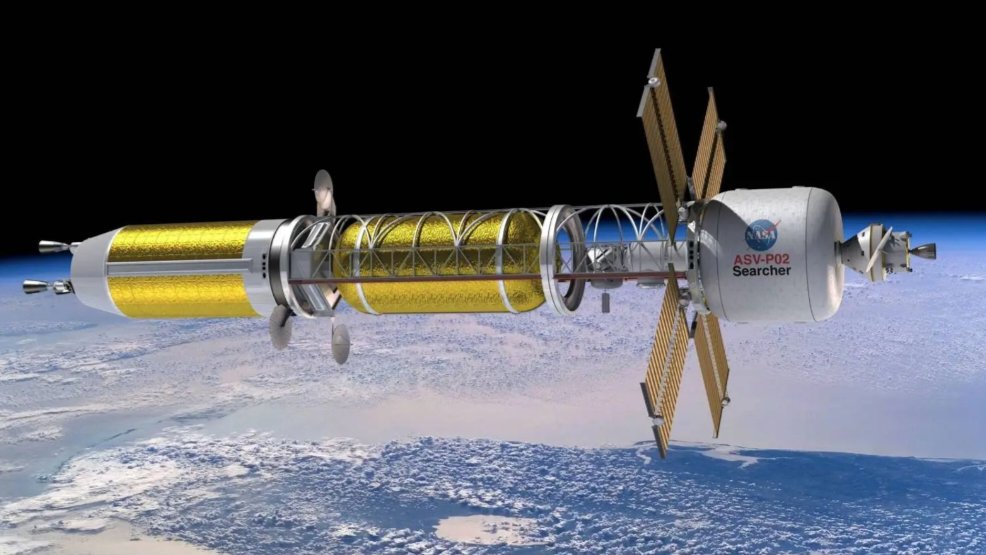

A new engineering study has introduced a specialized tracking concept designed to secure global aerospace infrastructure against potential orbital radioactive contamination.
Researchers developed a Micro Black Box (MBB) concept, which is specifically tailored for nuclear propulsion spacecraft.
This compact device is engineered to survive severe rocket crashes, while continuously recording critical flight data.
By maintaining its integrity during catastrophic failures, the system can transmit the exact location of nuclear spacecraft debris, which helps prevent hazardous radioactive leaks on Earth or in the atmosphere.
As international space agencies expand their development of high-speed nuclear propulsion systems for long-distance exploration, the infrastructure required to monitor these platforms has become a primary safety concern for global regulators.
Traditional flight data recorders are often built for conventional aviation or standard satellite missions, but they lack the heavy reinforcement needed to withstand the extreme thermal and structural impacts associated with nuclear rocket failures.
The newly proposed MBB addresses this critical gap by introducing a resilient shell capable of shielding internal tracking components from immense kinetic impacts.
According to the published study, the unit remains operational, even if the primary propulsion infrastructure undergoes a total breakdown during launch or atmospheric re-entry.
Preventing radioactive material from contaminating terrestrial zones requires immediate tracking, because recovery teams must secure debris before containment shields breach.
With this tracking system, salvage operators can locate scattered wreckage in remote terrestrial or oceanic zones within minutes of an incident.
The tracking architecture relies on automated transmission networks that send localized signals immediately after a crash occurs, which ensures continuous tracking.
Engineering teams emphasize that tracking nuclear components requires high precision, because traditional telemetry networks often fail during catastrophic breakups.
The integration of specialized telemetry units like the MBB represents a shift toward proactive risk mitigation in global aerospace engineering.
While early space systems relied mostly on passive ground radar tracking, modern infrastructure demands onboard solutions that remain active independently of the main spacecraft power supply.
The development aligns with broader international efforts to standardize safety protocols for next-generation propulsion technologies, which are currently being evaluated by various spacefaring nations.
Kenya, which has been expanding its regional aerospace cooperation through the Kenya Space Agency (KSA), continues to monitor global framework discussions on space safety.
As localized space initiatives grow across Africa, the adoption of strict safety benchmarks ensures that future orbital infrastructure projects do not pose environmental threats to regional territories.
The study details that the micro-scale footprint of the recorder allows it to be mounted onto existing rocket designs without requiring significant structural modifications to the primary fuselage.
This small form factor minimizes weight penalties, which is a crucial consideration for long-range space transport logistics.
By securing data retention and signal transmission under extreme stress, the technology provides a practical blueprint for future regulatory compliance in nuclear aerospace manufacturing.
Analysts suggest that implementing independent tracking modules will become standard practice, as commercial and state entities accelerate their nuclear-powered flight schedules over the coming decade.
Ultimately, the research underscores the necessity of building parallel safety infrastructure alongside advanced propulsion systems, ensuring global environmental protection remains a priority during exploration.
Comments (0)
Leave a Comment
No comments yet. Be the first to share your thoughts!