
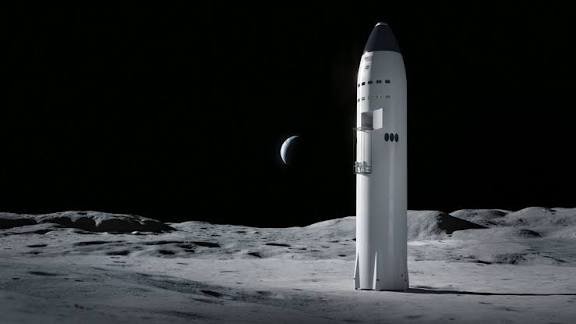

Elon Musk has announced a strategic shift in SpaceX development priorities, centering the company’s immediate infrastructure goals on the Moon. In a series of public statements this week, the CEO detailed plans to build a transportation and habitation system intended to make lunar travel accessible to a broader demographic. While long-term ambitions for Mars remain, the current focus has moved toward establishing what Musk describes as a self-growing city on the lunar surface within the next decade.
The pivot reflects a practical assessment of orbital mechanics and logistics. Musk noted that while the alignment of Earth and Mars allows for launch windows only every 26 months, travel to the Moon is possible every 10 days. A transit to the Moon takes approximately two days, whereas a journey to Mars requires six months. These shorter cycles allow for a significantly higher frequency of hardware testing and infrastructure deployment.
The technical foundation for this lunar system remains the Starship spacecraft and Super Heavy rocket. This fully reusable transportation framework is designed to deliver more than 100 tons of cargo or crew to the lunar surface. SpaceX is currently operating under a contract with NASA to provide the Human Landing System (HLS) for the Artemis program. This variant of Starship is being refined specifically for landing at the lunar south pole, where it will support astronaut surface operations and the potential construction of a permanent base.
Construction of such a settlement involves unique engineering hurdles. Reports indicate that the concept of a self-growing city may lean on autonomous robotic systems and potentially integrated AI technologies to handle resource extraction and habitat assembly. The goal is to create a sustainable presence that can eventually serve as a launchpad for deeper space exploration.
While previous timelines emphasized an uncrewed Mars mission as early as late 2026, those plans appear to have been recalibrated. Current projections suggest an uncrewed lunar landing may take place in March 2027 to align with evolving program requirements. This phased approach allows the company to establish a functional logistics chain to the Moon before tackling the more complex 20-year timeline estimated for a similar Martian colony.
SpaceX continues to expand its production and testing facilities at Starbase in Texas to support the increased launch cadence required for these goals. The development of Starship Version 4 tankers is also underway, which are expected to deliver over 200 tons of propellant per flight to orbital depots.These refueling stations are critical infrastructure components that will allow Starship to reach the Moon with the heavy payloads necessary for large-scale construction.
Despite the change in immediate targets, the company maintains that its core mission of extending life to other planets is unchanged. The lunar focus is viewed as a necessary precursor that provides a more manageable environment for refining the systems needed for long-term human survival in space.
Industry analysts suggest that the emphasis on the Moon also aligns with a growing international race to secure lunar presence. Both government agencies and private firms are increasingly looking at the Moon not just for scientific research, but as a strategic location for industrial resources and communications hubs. By establishing a reliable transportation system now, SpaceX aims to position its infrastructure at the center of this emerging lunar economy.
Comments (0)
Leave a Comment
No comments yet. Be the first to share your thoughts!