
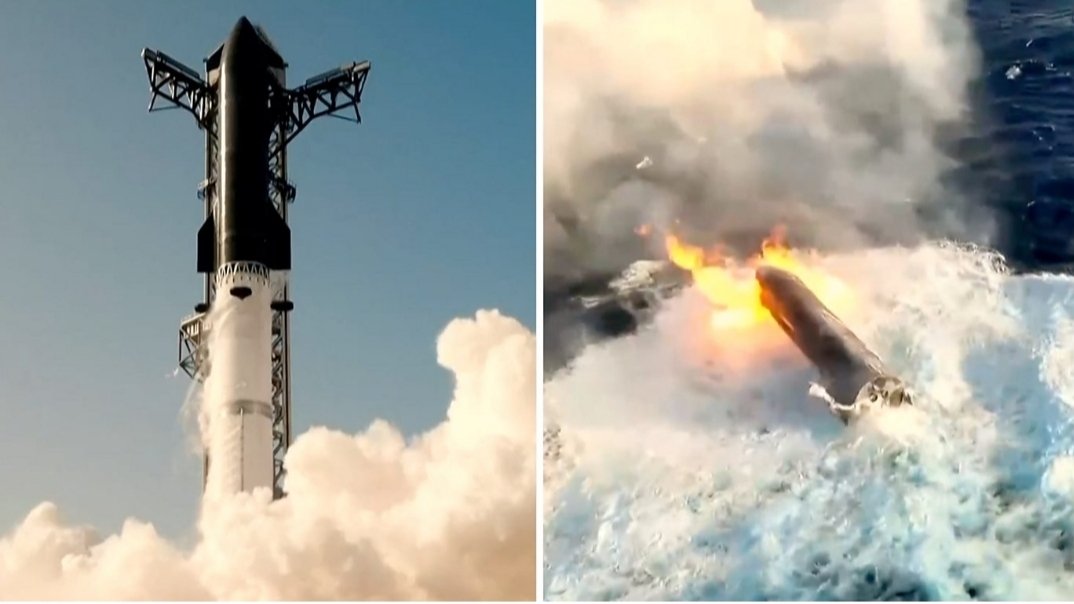

SpaceX launched its Starship megarocket on July 24 from Starbase in Texas for the 13th integrated test flight. The flight marked the second outing for the V3 version of the vehicle and the first since SpaceX became a publicly traded company.
The fully stacked rocket lifted off successfully. The Super Heavy booster separated after about two minutes and performed a controlled splashdown in the Gulf of Mexico. The upper Starship stage continued its suborbital trajectory.
During the mission, Starship deployed 20 next-generation Starlink V3 test satellites. Engineers confirmed contact with all of them using radio frequency and laser links before the satellites re-entered the atmosphere.
The upper stage also achieved a key objective by successfully relighting one of its Raptor engines in space. This capability supports future complex manoeuvres required for orbital operations and lunar missions.
Re-entry proved another highlight. Starship survived the intense heat of atmospheric plunge, producing the characteristic pink plasma glow around the vehicle. It then executed a landing flip manoeuvre and performed a soft splashdown in the Indian Ocean. The spacecraft remained intact long enough for post-landing inspection of its heat shield tiles.
SpaceX described the outcome as a strong result. The flight followed an aborted attempt the previous week due to engine ignition issues. Engineers replaced several engines and made software adjustments ahead of the successful launch.
This test advances Starship toward more ambitious goals. NASA plans to use a version of the vehicle for its Artemis lunar landing programme, with crewed flights targeted for the coming years. The company still needs to demonstrate orbital refuelling and full reusability for operational flights.
The V3 design incorporates upgrades over previous iterations. Engineers continue to refine the heat shield, which protects the spacecraft during high-speed re-entry. Data from this flight will help assess tile performance under real conditions.
Starship stands nearly 400 feet tall and represents the most powerful rocket in development. Its progress draws international attention as both a commercial venture and a partner system for government space programmes.
Elon Musk, SpaceX founder, has emphasised rapid iteration through test flights. Each mission gathers data that informs the next round of improvements.
The successful splashdown provided clear views of the vehicle floating in the ocean. Teams will recover data and hardware where possible to analyse performance in detail.
SpaceX operates an aggressive testing schedule at its Texas facility. Regulatory approvals and technical readiness determine the timing of future flights.
This latest test comes amid growing pressure to prepare Starship for higher-stakes missions. Orbital attempts and in-space refuelling demonstrations remain critical upcoming steps.
Comments (0)
Leave a Comment
No comments yet. Be the first to share your thoughts!