

The largest renewable energy infrastructure project in United States history is now fully operational, delivering wind power from New Mexico to Arizona and the wider western grid.
The SunZia project combines a roughly 3,650-megawatt wind farm with a 550-mile high-voltage direct current (HVDC) transmission line. At full capacity, it can generate enough electricity to power approximately one million American homes annually, more than the Hoover Dam produces. The wind farm, spread across Lincoln, Torrance, and San Miguel counties in central New Mexico, consists of 916 turbines connected through 10 collection substations and more than 115 miles of overhead collection lines.
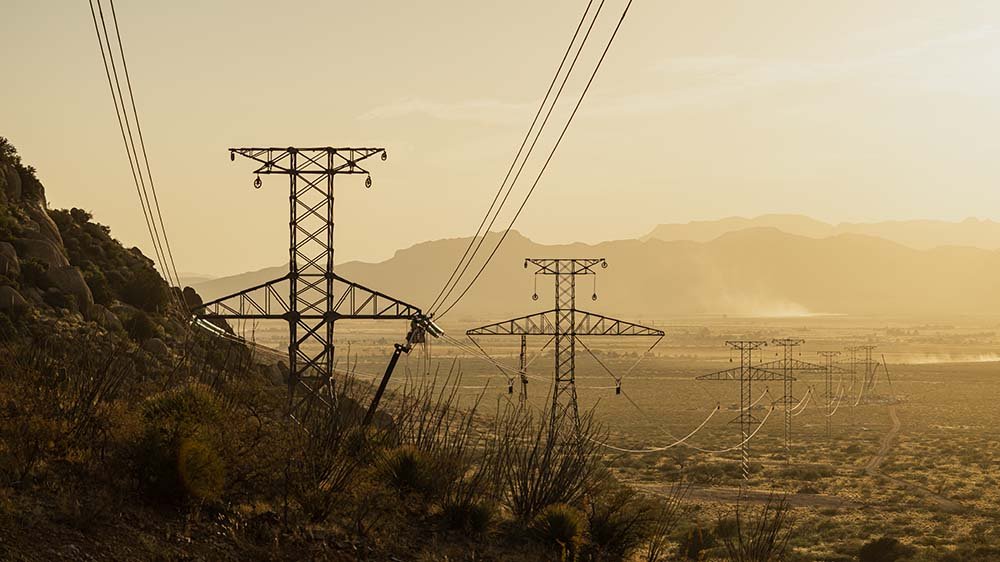
The transmission line itself runs from a converter station in Corona, New Mexico, to a second station near Casa Grande, Arizona, carrying power across nearly 2,200 structures including lattice towers and steel poles.
More than 5,000 grouted anchors support guyed sections of the line, with foundations ranging from precast pedestals to drilled piers. At each end, large HVDC converter stations switch the electricity from alternating current to direct current for transport, then back to alternating current for use on the receiving grid, a configuration Hitachi Energy describes as one of the largest voltage source converter installations in the country.
"SunZia proves that we can still build the consequential infrastructure this country needs," said Hunter Armistead, chief executive officer of Pattern Energy, the company that owns and built the project. "We did this the right way, we did it on time and on budget, in genuine partnership with the local communities and landowners who trusted us."
The path to completion was not straightforward. Development began in 2008, and the project spent roughly 17 years moving through permitting and environmental review before construction started in September 2023.
The transmission route faced legal challenges from the Tohono O'odham Nation and San Carlos Apache Tribe over its passage through the San Pedro Valley, an area with cultural and religious significance, along with a separate Arizona court case disputing the line's amended environmental certificate. Both challenges were ultimately unsuccessful, and construction proceeded.
Building through remote and environmentally sensitive terrain required unconventional methods. Some HVDC towers were erected in helicopter-only construction zones, and the project included an agreement to relocate mature saguaro cacti and large agave plants displaced by the build.
At peak construction, the project supported more than 2,000 workers, split roughly between the wind farm and the transmission line. It is expected to create more than 100 permanent operations jobs across New Mexico and Arizona going forward. Pattern Energy projects the project will generate around $20.5 billion in total economic benefit over its lifetime, including $1.3 billion in direct payments to local governments, schools, counties, and landowners over its first 30 years of operation.
"Large-scale transmission is essential to meeting the West's growing energy needs and strengthening reliability across the grid," said Elliot Mainzer, president and chief executive of the California Independent System Operator. SunZia represents one of the first major HVDC systems built in the United States in a generation, a technology better suited than conventional alternating current lines for moving large volumes of power efficiently over long distances.
Comments (0)
Leave a Comment
No comments yet. Be the first to share your thoughts!