
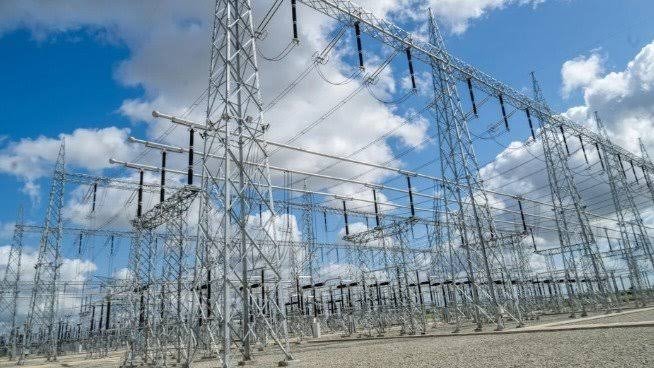

Kenya Power and Lighting Company (KPLC) has issued a warning over the rapid integration of Variable Renewable Energy (VRE) into the national electricity grid, cautioning that unchecked growth of solar and wind generation threatens voltage stability and could push electricity prices higher.
Managing Director and Chief Executive Officer Joseph Siror stated that unpredictable weather fluctuations create operational vulnerabilities, requiring costly backup generation to stabilize frequency.
According to the utility, intermittent sources account for 34 percent of daytime peak demand, which currently reaches 1,900 megawatts (MW).
During off-peak periods when demand drops to approximately 1,200 MW, the share of solar and wind rises to 36 percent. International technical standards recommend capping variable renewable sources at 15 percent of total firm capacity.
However, existing take-or-pay Power Purchase Agreements (PPAs) have pushed Kenya's integration level past 20 percent.
When solar or wind output suddenly drops, grid operators must immediately dispatch thermal or conventional generation to cover the gap.
Under present commercial contracts, these reserve plants must be paid whenever called upon, adding operational expenses that are ultimately passed on to consumer power bills.
While Battery Energy Storage Systems (BESS) are frequently proposed as a balancing solution, utility executives noted that energy storage remains vulnerable during extended periods of low wind or solar radiation.
Consequently, the utility is urging regulators to prioritize firm baseload investments, including geothermal and hydropower infrastructure, to ensure long-term system resilience.
Regional comparisons highlight Kenya's heavy reliance on variable renewable power. Data from the Eastern Africa Power Pool (EAPP) reveals that variable renewables account for only 10.4 percent of generation capacity in Egypt, 5.3 percent in Ethiopia, 4 percent in Uganda, and 1.2 percent in Tanzania.
To mitigate supply risks, energy planners are focusing on several firm generation facilities. These include the 61 MW expansion at Olkaria 1, the 80 MW Olkaria 7 development, and twin 35 MW geothermal units at Menengai.
Additions also include 200 MW of regional cross-border imports, alongside proposed hydro projects such as High Grand Falls and Karura Falls.
Comments (0)
Leave a Comment
No comments yet. Be the first to share your thoughts!