

Discussions surrounding the national long-term planning framework, Kenya Beyond 2030, must focus directly on meeting basic citizen needs, according to Principal Secretary (PS) for Internal Security and National Administration Dr. Raymond Omollo.
The senior government official emphasized that framing a future national development strategy remains impractical if opposition against initiatives providing basic shelter continues.
Dr. Raymond Omollo stated that securing decent housing forms a foundational requirement for any long-term growth agenda. His remarks come amidst ongoing national policy discussions regarding urban development, public housing allocations, and long-term economic planning.
Alongside the policy remarks, details were highlighted regarding civil engineering works underway in Murang'a County. The Kenol-Makutano Water Supply and Sewerage Project represents a key public infrastructure asset designed to address rising urban density.
The sanitation layout serves the expanding residential footprint of Kenol Municipality and neighboring peri-urban zones. Infrastructure expansions of this nature target core utility gaps across high-growth corridors in Kenya.
Urban planners continue to point toward essential services, such as clean water and waste management, as mandatory prerequisites before large residential developments are commissioned. The Kenol-Makutano infrastructure setup is structured to support higher housing capacity while maintaining public hygiene standards across local communities.
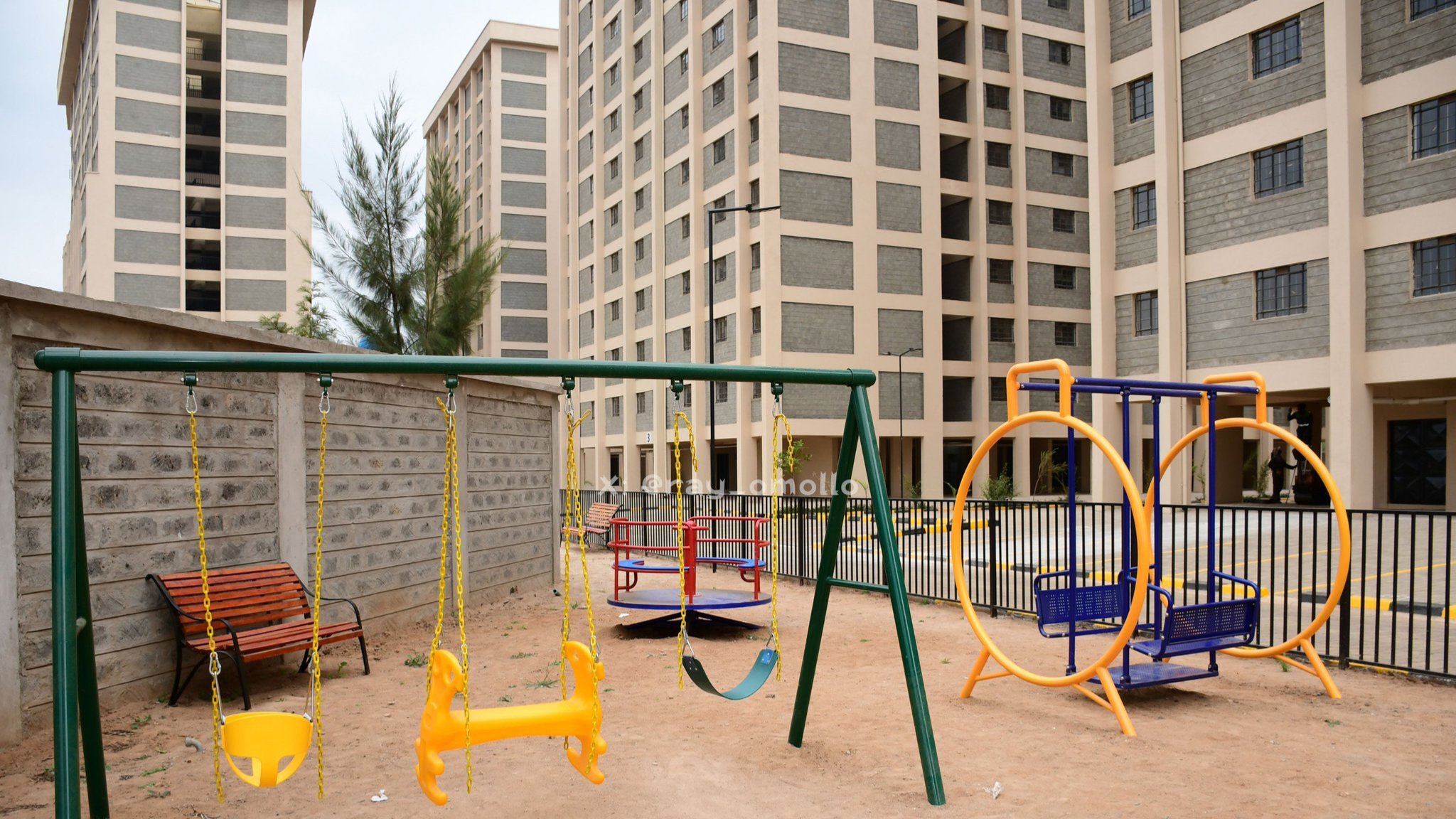
Modern housing schemes across various counties incorporate essential community facilities, including playgrounds, recreational open spaces, and modern elevator systems inside multi-story apartment blocks. These physical additions reflect evolving planning standards enforced across state-backed residential projects.
The current national development debate centers on how state resources should be allocated across utility delivery, high-density residential blocks, and long-term socio-economic programs under post-Vision 2030 frameworks.
Public officers continue to advocate for synchronized development, where physical infrastructure keeps pace with expanding residential settlement patterns. Government policy directions indicate that housing programs will remain central to upcoming spatial planning roadmaps across the country.
Ensuring utility connections keep up with housing structures remains a primary objective for utility providers operating near growing transport corridors. Further investments across regional urban centers are expected as municipal boundaries expand to accommodate larger populations.
Comments (0)
Leave a Comment
No comments yet. Be the first to share your thoughts!