
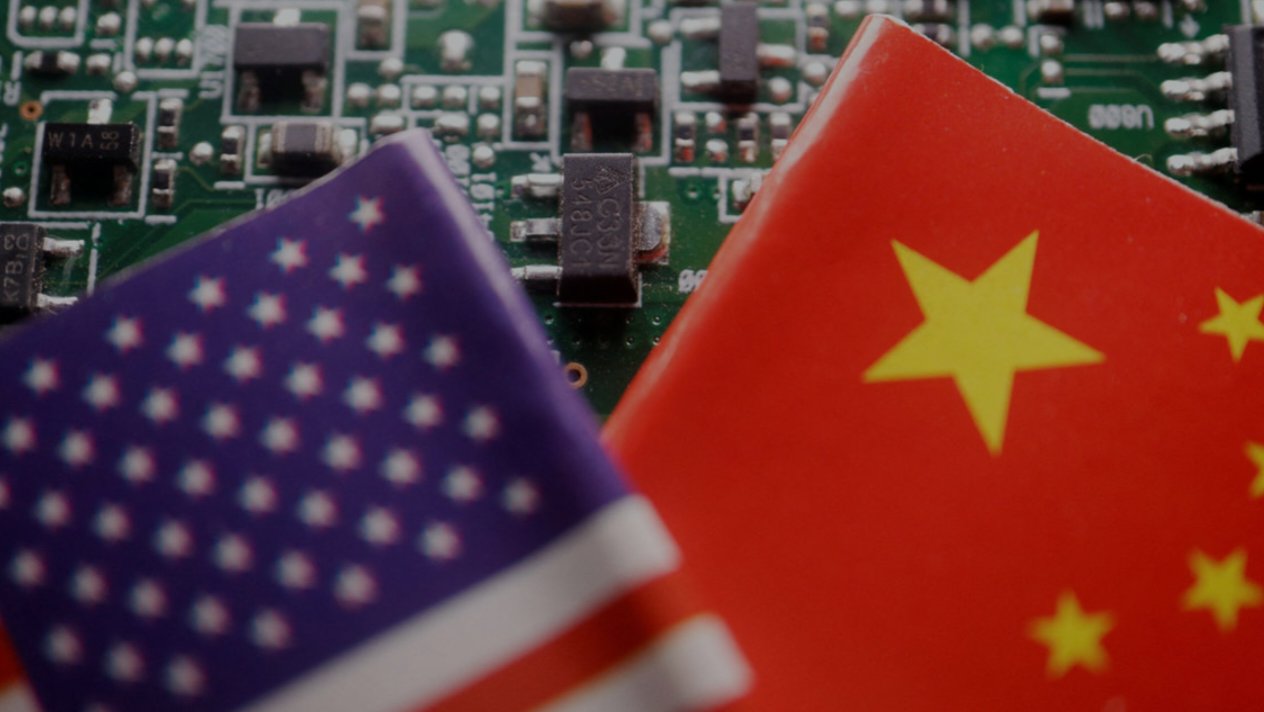

The rivalry between Washington and Beijing over artificial intelligence (AI) reached a decisive turning point as American officials pressed international partners to align strictly with US technology stacks.
Grounded in broader technology policy shifts, Washington continues pushing foreign jurisdictions to reject Chinese digital infrastructure while restricting access to advanced semiconductors.
The demand comes as Chinese open-weight models achieve significant technical gains, narrowing the performance gap with proprietary models developed by leading firms like OpenAI and Anthropic.
Foreign developers and public entities increasingly evaluate open-source alternatives from Beijing, which offer lower deployment costs and greater operational flexibility compared to closed American systems.
To maintain market supremacy, Washington relies on strict export restrictions regarding high-performance computing hardware and chipmaking machinery.
Under legislative proposals such as the Artificial Intelligence Oversight of Verified Exports and Restrictions on Weaponizable Advanced Technology to Covered High-Risk Actors (AI OVERWATCH) Act and the Guaranteeing Access and Innovation for National Artificial Intelligence (GAIN AI) Act, US lawmakers aim to secure domestic hardware access while preventing foreign adversaries from acquiring dual-use computing components.
Government authorities in the United States emphasize that artificial intelligence software and physical data center construction are deeply linked to national security interests.
Officials argue that allowing Chinese entities access to computing hardware or digital networks creates severe military risks, particularly through dual-use computing applications that support defense and civil operations alike.
Meanwhile, Beijing accelerates its domestic technology deployment through state funds and public infrastructure spending. The Chinese government continues offering research grants, supply contracts, and targeted industrial financing to domestic firms aiming for global market adoption.
For developing nations and regional markets, navigating the geopolitical divide poses significant regulatory challenges. International operators face growing political pressure to choose between American proprietary technology ecosystems and cost-effective Chinese open-weight alternatives.
Comments (0)
Leave a Comment
No comments yet. Be the first to share your thoughts!