
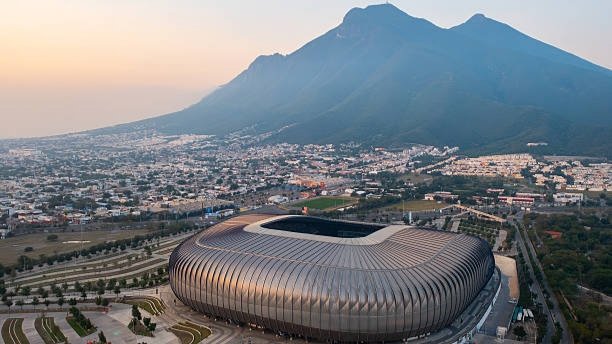

Estadio BBVA in Guadalupe, part of greater Monterrey, hosts match twelve of the 2026 FIFA World Cup tonight when Sweden face Tunisia. FIFA strips commercial branding from all host venues during the tournament, so the stadium is known officially as Monterrey Stadium for the competition.
The Vision and Construction
C.F. Monterrey commissioned the stadium after outgrowing Estadio Tecnológico, where the club had played for 63 years. Construction began in August 2011 and was completed in July 2015, in time for the club's 70th anniversary.
The project was funded entirely by FEMSA, the beverage conglomerate that owns C.F. Monterrey, at a declared cost of $200 million (approximately KES 25.8 billion). At the time, it was the most expensive stadium ever built in Mexico.
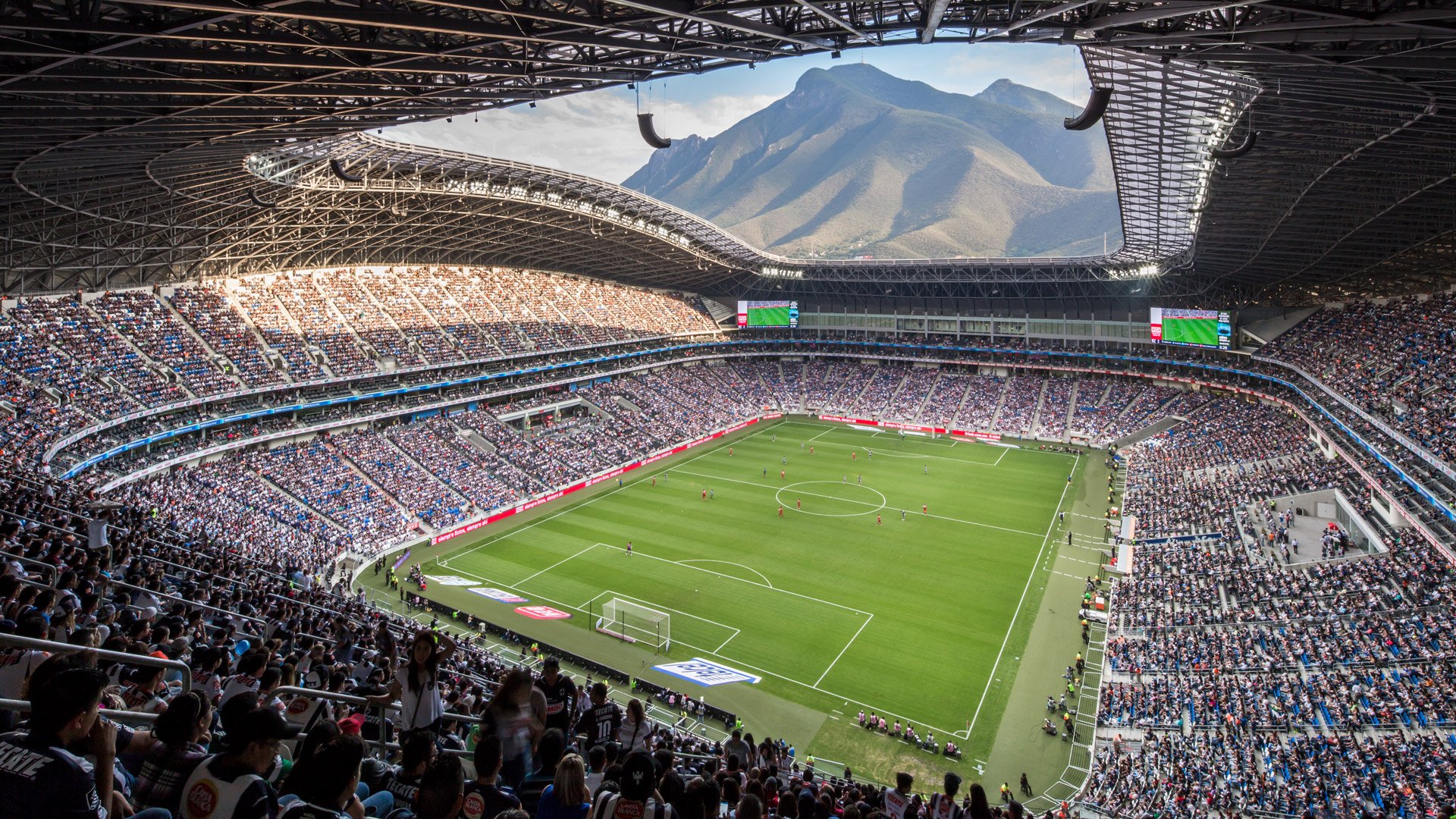
The fan atmosphere at Monterrey Stadium /AS
Populous, the global architecture firm behind Wembley and Tottenham Hotspur Stadium, led the design alongside Mexican studio VFO and lead architect Federico Velasco. A joint venture of Aceros Lozano, GGP, and Maíz Mier carried out construction, with ACSA leading the engineering works.
World Cup Debut and International Events
Monterrey Stadium opened in August 2015 with an initial capacity of 51,000, later expanded to 53,500 in 2016. It is the fourth largest stadium in Mexico and home to one of Latin American football's fiercest derbies, the Clásico Regio against Tigres UANL.
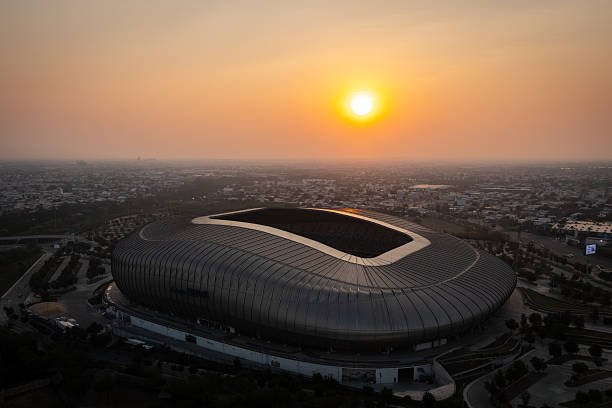
Sunset over the photographic Monterrey Stadium structure /Getty Images
The venue will host four matches during the 2026 World Cup, three group stage fixtures and one Round of 32 game. Sweden and Tunisia open the stadium's tournament tonight (5AM Kenyan Time - UTC+3, June 15), and Monterrey Stadium will also host the 1,000th match in World Cup history when Tunisia face Japan on June 20.
Engineering and Design
The design draws directly from Monterrey's industrial heritage and its setting beneath Cerro de la Silla, the saddle-shaped mountain that dominates the city's skyline. The jagged steel roofline echoes the peaks of the Sierra Madre Oriental range behind it.
The exterior skin is made up of over 5,000 aluminium panels, which shift colour with the sunlight throughout the day, much like the mountain itself. The roof features aluminium gills, designed to let breezes pass through and improve natural ventilation across the bowl.
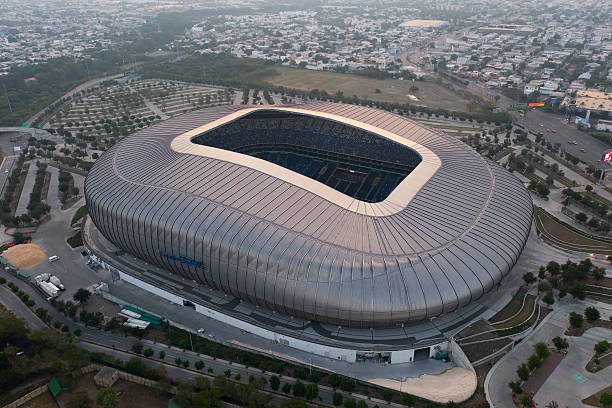
Aerial view of the bowl of Monterrey Stadium /Getty Images
A cantilevered roof extends 55 metres (180 feet), providing shade for spectators without internal supports. The exterior facade uses rolled steel trusses clad in aluminium, with Kalzip supplying the bespoke aluminium gutters and flashing manufactured in the United Kingdom.
Modern Setup for 2026
Monterrey Stadium uses GrassMaster, a hybrid surface that locks synthetic fibres into natural turf to maintain quality through the heat of a Mexican summer, which can reach 40°C (104°F) during the day. FIFA's group stage matches will be played on this existing surface.
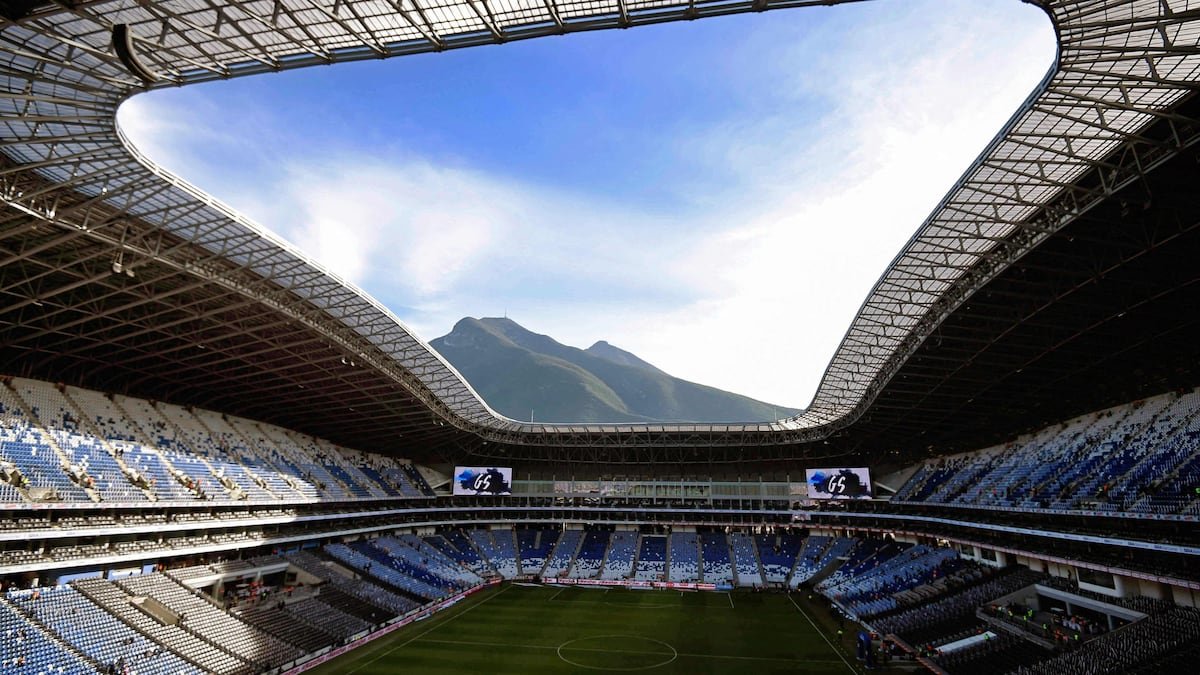
Inside Monterrey Stadium /AS
The seating bowl sits at a steep 34-degree incline, with the first row just 9 metres (30 feet) from the pitch, compared to 27 metres (89 feet) at the club's previous stadium. The proximity was a deliberate design choice to create intimacy at scale.
What Makes It Unique
Monterrey Stadium is the only one of Mexico's three World Cup venues built entirely with private capital, funded solely by FEMSA without public money or co-ownership arrangements involving the city or state.
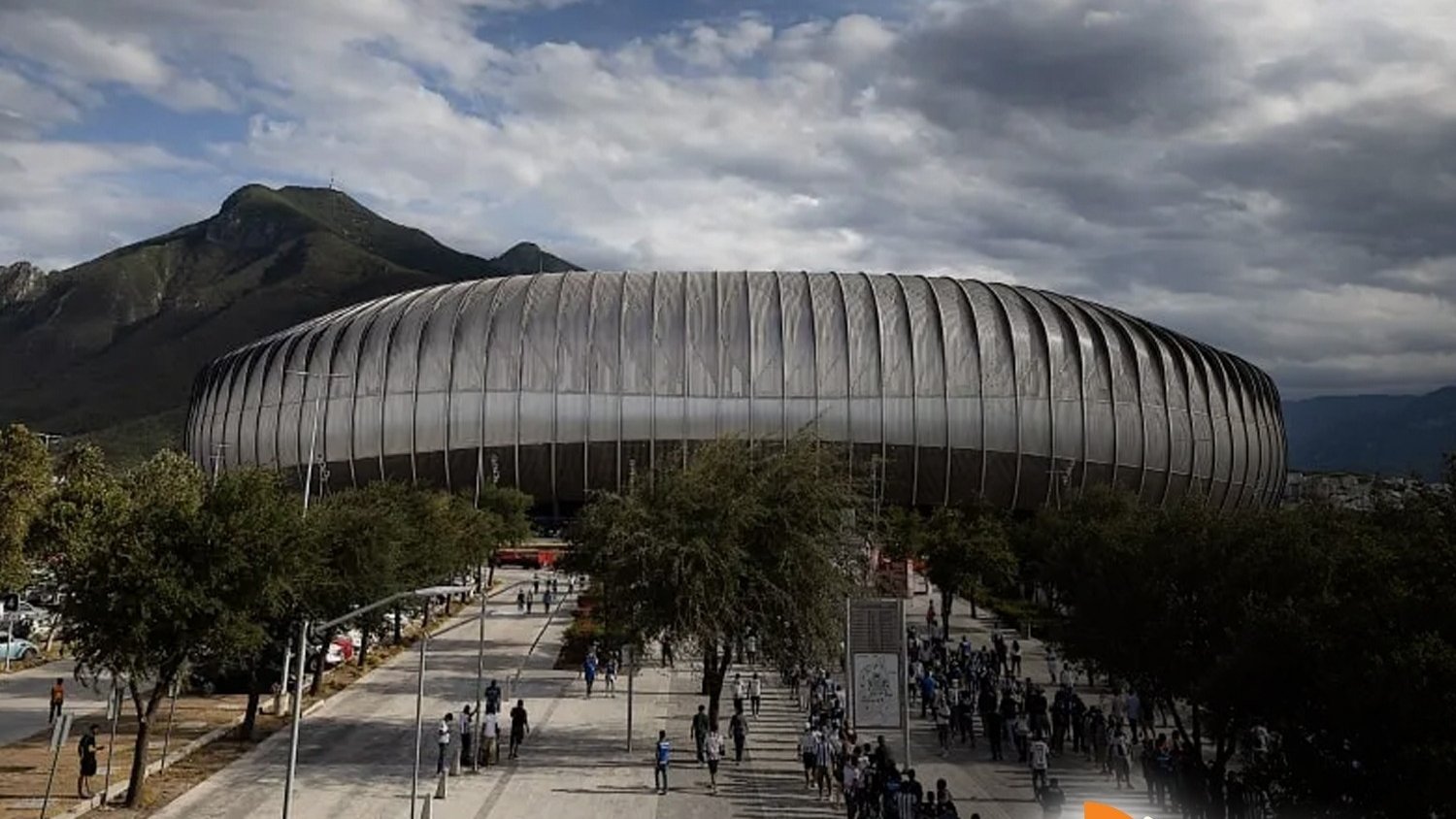
Monterrey Stadium entrance /Citizen
Nicknamed El Gigante de Acero, or the Steel Giant, the stadium is widely regarded as one of the most photogenic World Cup venues in the tournament, with the Cerro de la Silla mountain visible from inside the bowl during daylight matches.
Comments (0)
Leave a Comment
No comments yet. Be the first to share your thoughts!