
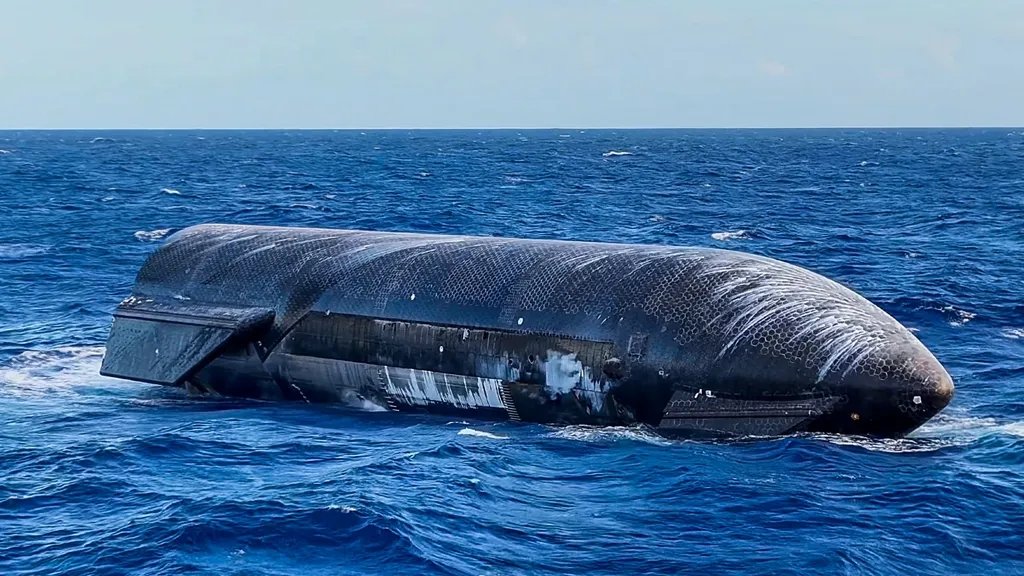

SpaceX's Starship upper stage is still floating in the Indian Ocean five days after completing its 13th test flight, giving engineers an extended opportunity to study the spacecraft following what the company described as its softest splashdown to date. The unexpected outcome has provided a rare chance to inspect the vehicle after re-entry.
The spacecraft completed its mission on July 24 after launching from Starbase in Texas. During the flight, it successfully deployed 20 next-generation Starlink Version 3 satellites before re-entering Earth's atmosphere and making a controlled splashdown in the Indian Ocean. The satellites were placed on a suborbital trajectory and later burned up as planned.
Unlike previous Starship flights that ended with the vehicle breaking apart or catching fire after landing, the latest prototype remained largely intact. After touching down, it tipped onto its side and continued floating, allowing recovery teams to document its condition over several days.
SpaceX has released new images showing the spacecraft still afloat while recovery crews gather photographs and engineering data. The prolonged survival of the vehicle offers a clearer picture of how its stainless steel structure and thermal protection system performed during atmospheric re-entry.
One area of particular interest is the heat shield, which protects Starship from temperatures exceeding 1,400 degrees Celsius during descent. Engineers are expected to compare the condition of the thousands of ceramic tiles with flight data collected during re-entry to guide future design improvements.
The mission also demonstrated several technical advances beyond the splashdown. SpaceX completed an in-flight relight of one of Starship's Raptor engines and reported improved re-entry performance compared with earlier test flights, helping validate upgrades introduced with the Version 3 vehicle.
Not every part of the mission went according to plan. The Super Heavy booster was unable to restart enough engines for a controlled descent and impacted the Gulf of Mexico harder than intended. Even so, the upper stage achieved its primary objectives and delivered valuable engineering data.
Starship is central to SpaceX's long-term ambition of building a fully reusable launch system capable of carrying larger payloads at lower cost. The rocket is also expected to play a key role in NASA's Artemis programme, which plans to return astronauts to the Moon using a modified Starship lunar lander.
Although SpaceX has not confirmed whether the floating vehicle will be recovered, the fact that it has remained afloat for days represents a notable improvement in the spacecraft's durability. For engineers, every additional hour the vehicle survives in a recoverable condition provides another opportunity to understand how Starship performs after one of the most demanding phases of flight.
Comments (0)
Leave a Comment
No comments yet. Be the first to share your thoughts!