
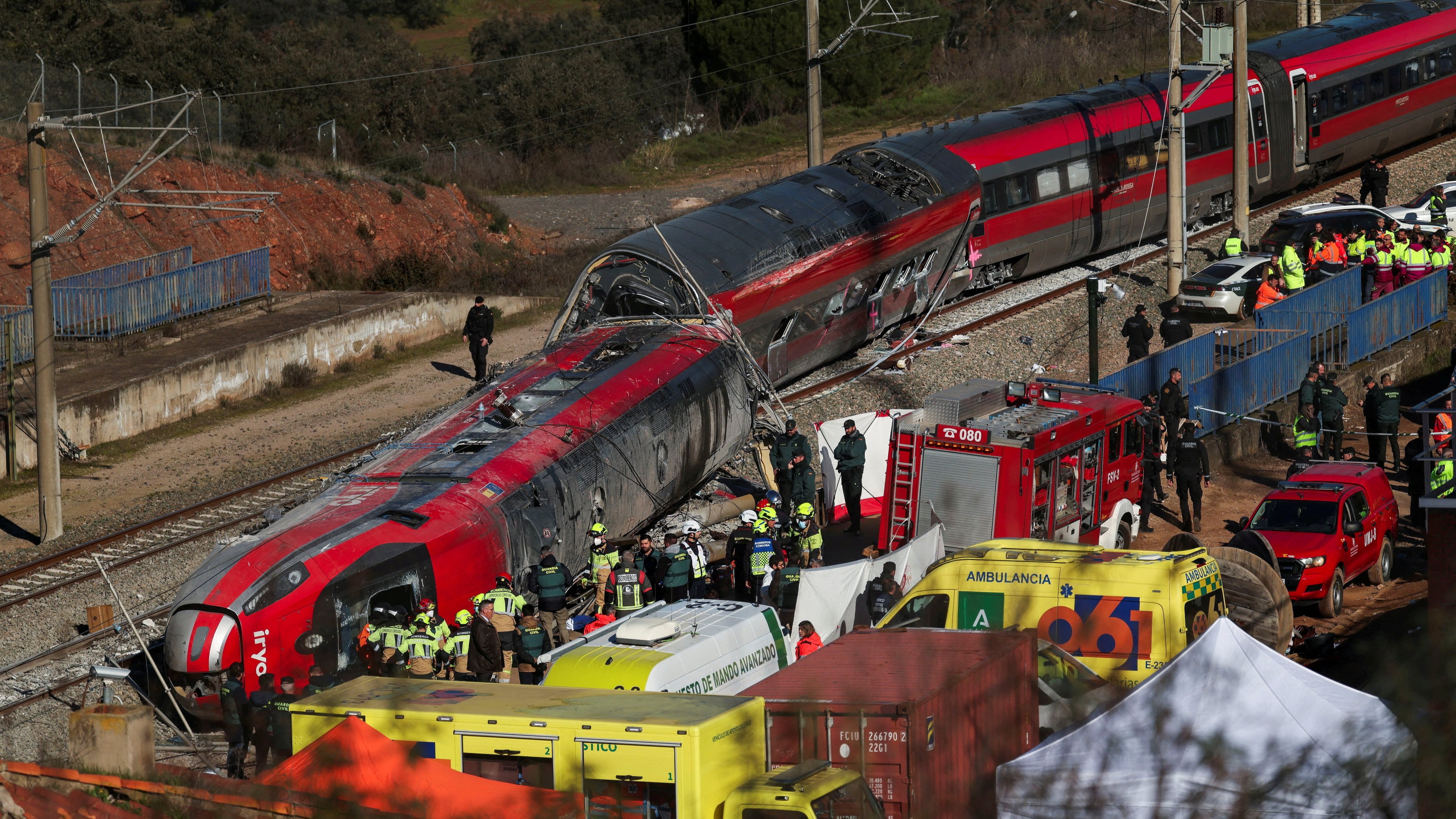

The collision happened at around 19:45 local time on Sunday. A high-speed train operated by a private company Iryo left Málaga heading to Madrid with about 300 passengers on board. Roughly an hour into the journey, carriages at the rear derailed on a straight section of track near Córdoba and crossed onto the opposite line.
The derailed cars then struck a Renfe-operated train travelling from Madrid toward Huelva with around 100 passengers. The impact forced several carriages of the second train off the rails and down an embankment beside the track. Most fatalities and serious injuries occurred in the front sections of the Huelva-bound train.
Local authorities quickly described the incident as Spain's worst rail crash in more than a decade. The previous major high-speed incident took place in Galicia in 2013, when a derailment killed 80 people. Over 400 passengers were aboard the two trains combined on Sunday.
Emergency responders, including firefighters, police, and medical teams, arrived within minutes. Ambulances and helicopters transported the injured to hospitals in the Andalusia region. Authorities set up assistance points in nearby Adamuz for families and survivors seeking information.
Spain's Transport Minister Óscar Puente called the crash extremely strange. Railway experts consulted by the government expressed bafflement at the circumstances. The president of Renfe stated that excessive speed and human error had been ruled out as causes.
Investigators from rail infrastructure manager Adif and the Commission of Investigation of Rail Accidents began work at the site. Officials expect the inquiry to take at least a month before any conclusions emerge. Early attention has focused on the interaction between track and train, including reports of a possible gap or fault in the rail.
Prime Minister Pedro Sánchez visited the scene on Monday. He announced three days of national mourning and promised a thorough examination of what went wrong. Sánchez thanked emergency workers for their response during difficult hours.
Survivors described the moment of impact as sudden and violent. One passenger compared the jolt to an earthquake that shattered windows and threw people and luggage around the carriage. Others spoke of screams and the urgent need for medical help inside the tilted cars.
Rescue teams used heavy machinery to reach those trapped in the wreckage. Operations continued through the night and into the following day. The death toll stood at least 40, with more than 120 injured, though figures remained subject to update as recovery progressed.
The accident has drawn attention to Spain's extensive high-speed rail network, the second largest in the world. No immediate changes to operations were announced pending the investigation outcome.
Comments (0)
Leave a Comment
No comments yet. Be the first to share your thoughts!