

Kenya's Affordable Housing Programme was designed to fill a gap the private sector could not. It has now grown large enough to create a new one.
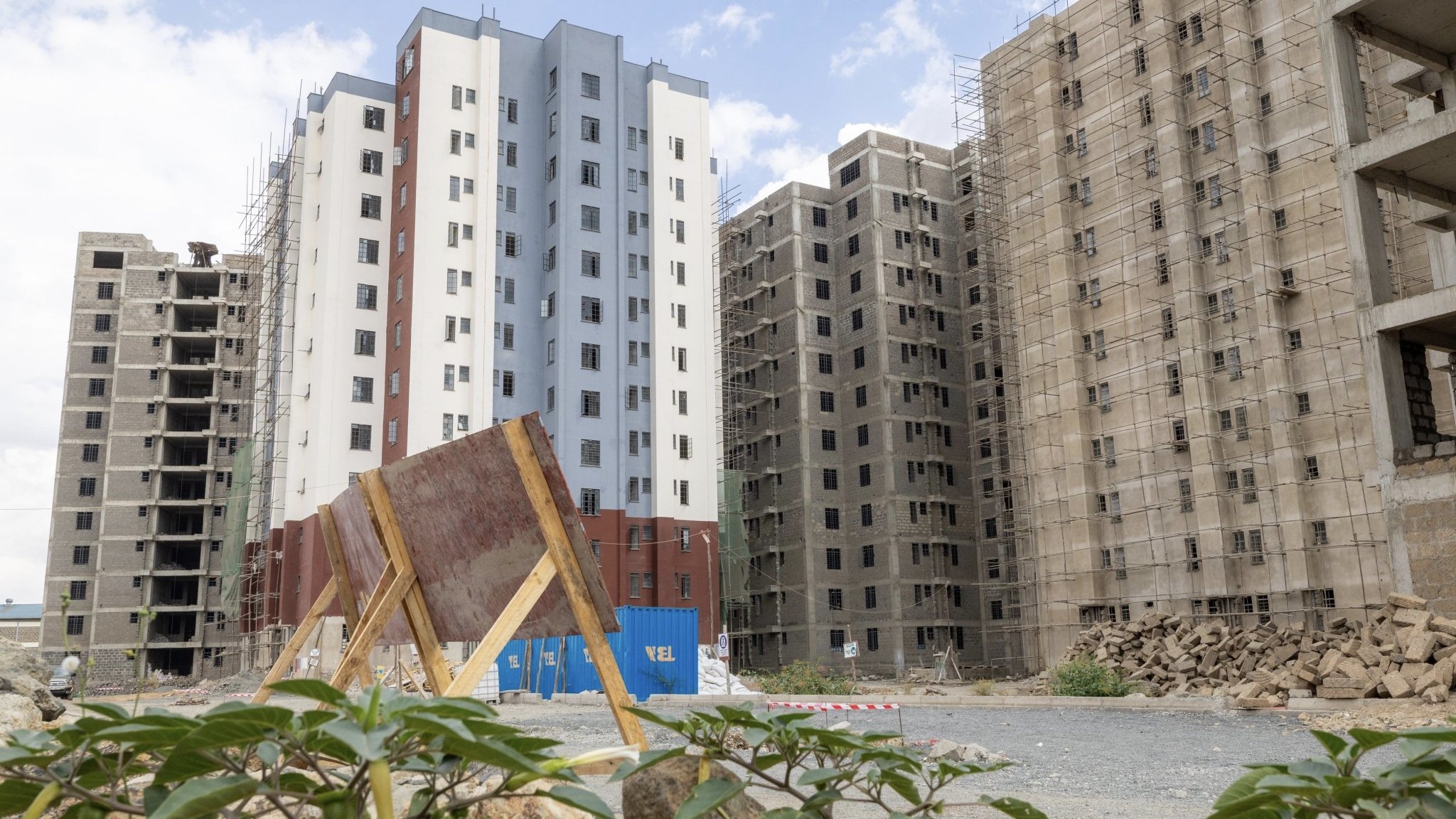
With 214,057 units currently under construction and government housing spending surpassing road expenditure for the first time in the nine months to March 2026, the programme's scale is beginning to reshape how private developers make decisions. The effect is not collapse. It is hesitation.
Data from the Kenya National Bureau of Statistics shows the total value of approved building plans in Nairobi fell 9.2 percent to Sh201.3 billion in 2025, down from Sh221.6 billion in 2024. Residential approvals fell further, dropping from Sh170.7 billion to Sh155.8 billion over the same period. Developers are completing what they have started. They are not starting much that is new.
Knight Frank's Kenya market review frames the dynamic directly. The real estate sector outlook for 2026, it says, points to a year of absorption and completion. Developers are expected to focus on completing existing projects while absorption of current stock improves as new supply remains constrained.
Growth will be selective, with expansion strongest in segments backed by targeted funding, particularly affordable housing supported by multilateral financing and the Housing Levy.
The concern among some private developers is more specific. Government units, priced at heavily subsidised rates through the Boma Yangu platform, are entering markets where private developers were already struggling to sell.
A studio in the Mukuru affordable housing estate costs Sh640,000 payable over 30 years, roughly Sh3,900 per month. No private developer in Nairobi can price at that level and remain viable without subsidy. For buyers with limited capital, the choice between a government unit at Sh3,900 per month and a private studio at three or four times that price is not complicated.
Ken Gichinga, chief economist at Mentoria Economics, has raised a wider concern. His argument is that road construction delivers a larger economic multiplier than housing, reducing transport costs and lifting productivity across agriculture, trade and tourism. The reallocation of development spending toward housing, while politically visible, may not be the most efficient use of the budget from an economic growth perspective.
The government's counterargument is that the housing deficit is real, structural and worsening. Kenya's shortfall stands at roughly two million units, growing by 200,000 annually. Addressing it requires a scale of delivery that the private sector, operating without subsidy, has never come close to achieving.
Both arguments are correct in different ways. The tension between them is now visible in Nairobi's building approval data, and it will only sharpen as more government units reach completion and enter a market that private developers have already started pulling back from.
Comments (0)
Leave a Comment
No comments yet. Be the first to share your thoughts!