
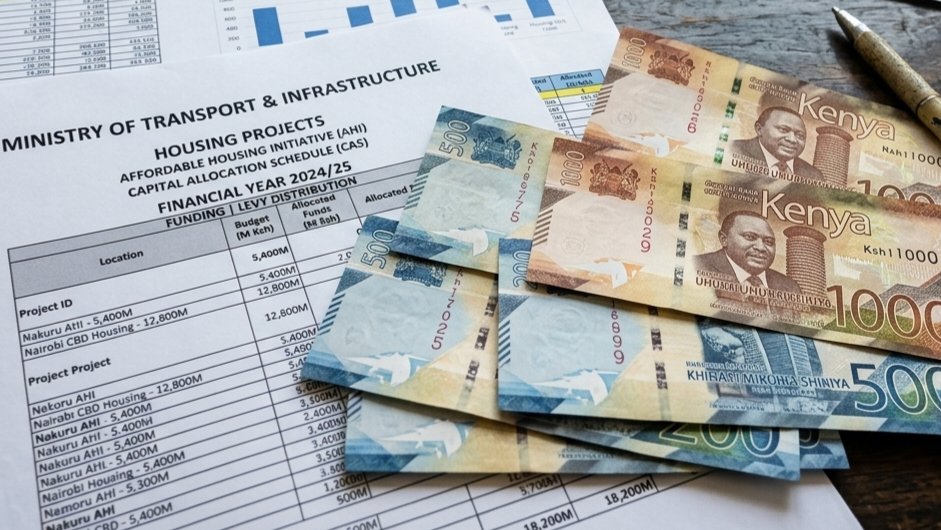

The Kenyan government has stopped investing Affordable Housing Levy collections into short-term Treasury Bills (T-Bills) as active site expenses accelerate across the country. Financial managers are redirecting incoming cash reserves straight to development projects to keep up with cash flow demands.
The National Treasury previously allocated roughly Sh46 billion of collected revenues into government paper assets. This holding strategy was designed to generate interest yields while land acquisitions, procurement frameworks, and initial planning logistics were finalized.
Short-term paper assets like Treasury Bills (T-Bills) provided state administrators with a temporary mechanism to earn investment returns during the early administrative phases. Channeling funds into low-risk securities prevented public levies from sitting unused in non-interest-bearing bank accounts.
A sharp surge in monthly payment claims from civil works contractors, architectural teams, and material suppliers has altered that capital strategy. Project managers are now forced to halt debt purchases and immediately release liquidity to settle pending construction invoices.
Public finance observers continue to raise questions regarding the total interest earned from the Sh46 billion investments. Transparency advocates are seeking details on how those yield returns will be accounted for within upcoming national reporting frameworks.
Comments (0)
Leave a Comment
No comments yet. Be the first to share your thoughts!