
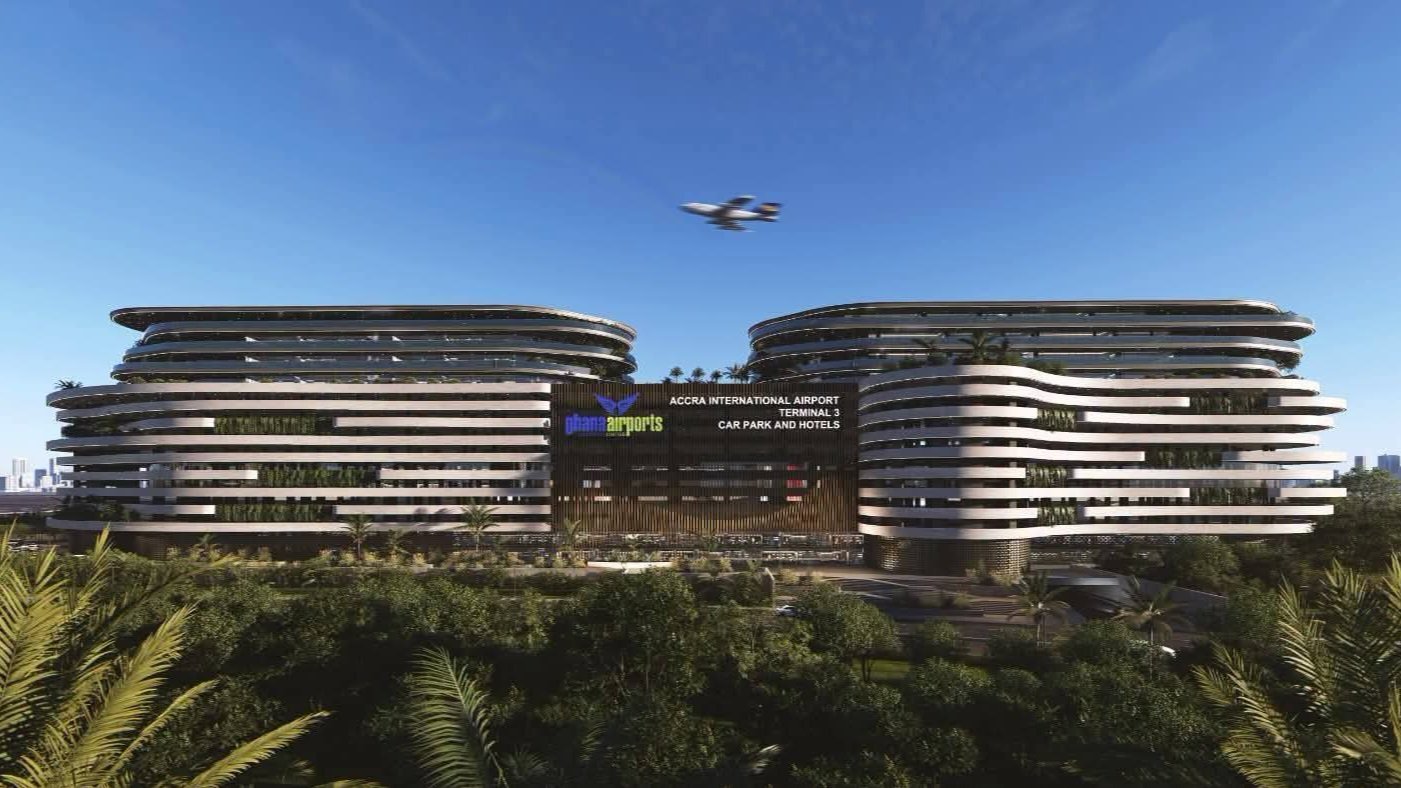

Accra International Airport (AIA) operates a dedicated passenger infrastructure facility built specifically to process international transit. Terminal 3 operates as an isolated hub on the airfield, catering strictly to international travelers navigating through Ghana's primary commercial aviation node.
Engineers designed the structure to accommodate up to 5 million passengers annually. The processing capacity was scaled to handle increased international traffic volumes while providing modern security, baggage handling, and border control systems within a single footprint.
The $350 million project was delivered in 30 months. Construction involved specialized terminal engineering, airside civil works, and integrated building management technology designed to streamline international passenger movement.
The completion of the facility added substantial capacity to the airport's operational envelope. The modern facility supports long-haul carrier operations by offering enlarged terminal facilities, modern gate arrangements, and efficient customs channels.
The project timeline of 30 months represented an intensive construction schedule for major transportation infrastructure in the region. Civil engineering teams completed structural works, interior fit-outs, and airside integration within the designated period.
By isolating international passenger processing inside a standalone facility, the airport authority reorganized operational flows across the entire airfield footprint. Terminal 3 operates independently from domestic flight facilities, allowing customs officers, security personnel, and ground handling teams to manage international arrivals and departures without cross-terminal interference.
The design specifications focused on future expansion potential while meeting high-density operational needs. Advanced baggage systems and multiple passenger boarding bridges were integrated directly into the structural design to speed up turnaround times for wide-body commercial aircraft.
Large-scale regional transport hubs continue to require high-capital investments to keep pace with growing global air traffic demands. The build scope involved heavy structural steel, reinforced concrete, and modern facade assemblies tailored for tropical climatic conditions.
The capital expenditure behind Terminal 3 highlights the substantial financial backing required to build modern aviation infrastructure across major West African commercial centers. The completed build expanded the total physical footprint of the airport complex while offering dedicated international processing zones.
Aviation facilities require ongoing maintenance and specialized operational management to maintain baseline performance figures. Terminal 3 remains a core component of the broader airport infrastructure network serving international passenger traffic in Accra.
Comments (0)
Leave a Comment
No comments yet. Be the first to share your thoughts!