
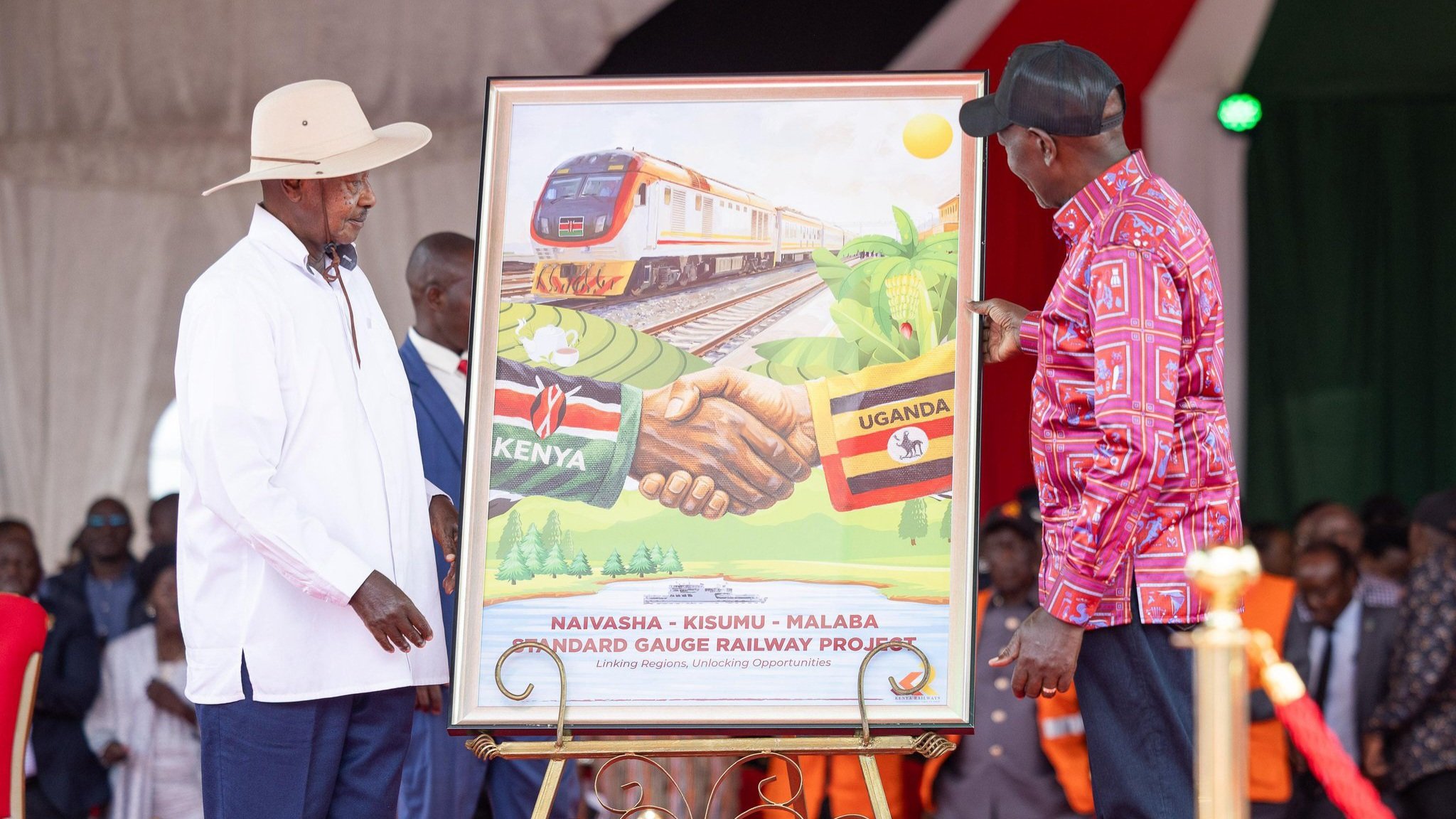

The historical trajectory of East African logistics saw a shift this week as Kenyan President William Ruto and Ugandan President Yoweri Museveni met to formalize the next phase of the Standard Gauge Railway. The meeting focused on the extension of the line from its current terminus in Naivasha toward the Ugandan border at Malaba.
This development seeks to address a long-standing gap in the regional transport network. Since the completion of the first phases of the SGR in Kenya, the transition of cargo from the modern rail line to the older, narrow-gauge tracks or onto trucks has remained a bottleneck for landlocked Uganda.
President Ruto noted that the original Kenya-Uganda Railway, built during the colonial era, was the primary factor in shaping the economic geography of the region. He emphasized that modernizing this link is a requirement for the economic integration of the East African Community.
The construction of the Naivasha to Malaba segment involves significant engineering hurdles, including the navigation of the Rift Valley's complex terrain. Technical teams from both nations are expected to harmonize specifications to ensure a seamless transition of rolling stock across the border.
Uganda has been preparing for its portion of the project, which will eventually connect Malaba to Kampala. For years, the project faced delays regarding financing and synchronization, but the recent high-level diplomatic engagement suggests a renewed urgency to complete the northern corridor.
Logistics experts suggest that a continuous SGR link will reduce the cost of doing business by cutting transit times from the Coast to the Western region. Currently, haulage by road remains the dominant, though more expensive and slower, method of transporting heavy goods into the interior.
The love also aligns with the broader LAPSSET corridor goals, though the SGR remains the immediate priority for the two heads of state. By linking the hinterland to the Port of Mombasa via a high-capacity rail, both governments hope to increase the volume of exports and imports handled annually.
While the technical details of the financing models were not the primary focus of the public address, the commitment to a joint approach marks a departure from previous years, where each country appeared to be pursuing independent timelines for their respective rail sections.
Construction firms specializing in heavy rail infrastructure are watching the procurement process closely. The extension will require extensive earthworks, several new stations, and the installation of specialized signaling systems compatible with the existing Kenyan network.
The regional leadership appears to be pivoting back to large-scale infrastructure as a tool for political and economic stability. As the two presidents inspected the proposed routes and existing facilities, the emphasis remained on the historical continuity of the rail link that first defined the two nations' borders.
With the 2026 timeline for various regional milestones approaching, the pressure is on the respective transport ministries to move from the ceremonial phase into active site preparation and track laying. The successful completion of this link would finalize a project that has been over a decade in the making.
Comments (0)
Leave a Comment
No comments yet. Be the first to share your thoughts!