
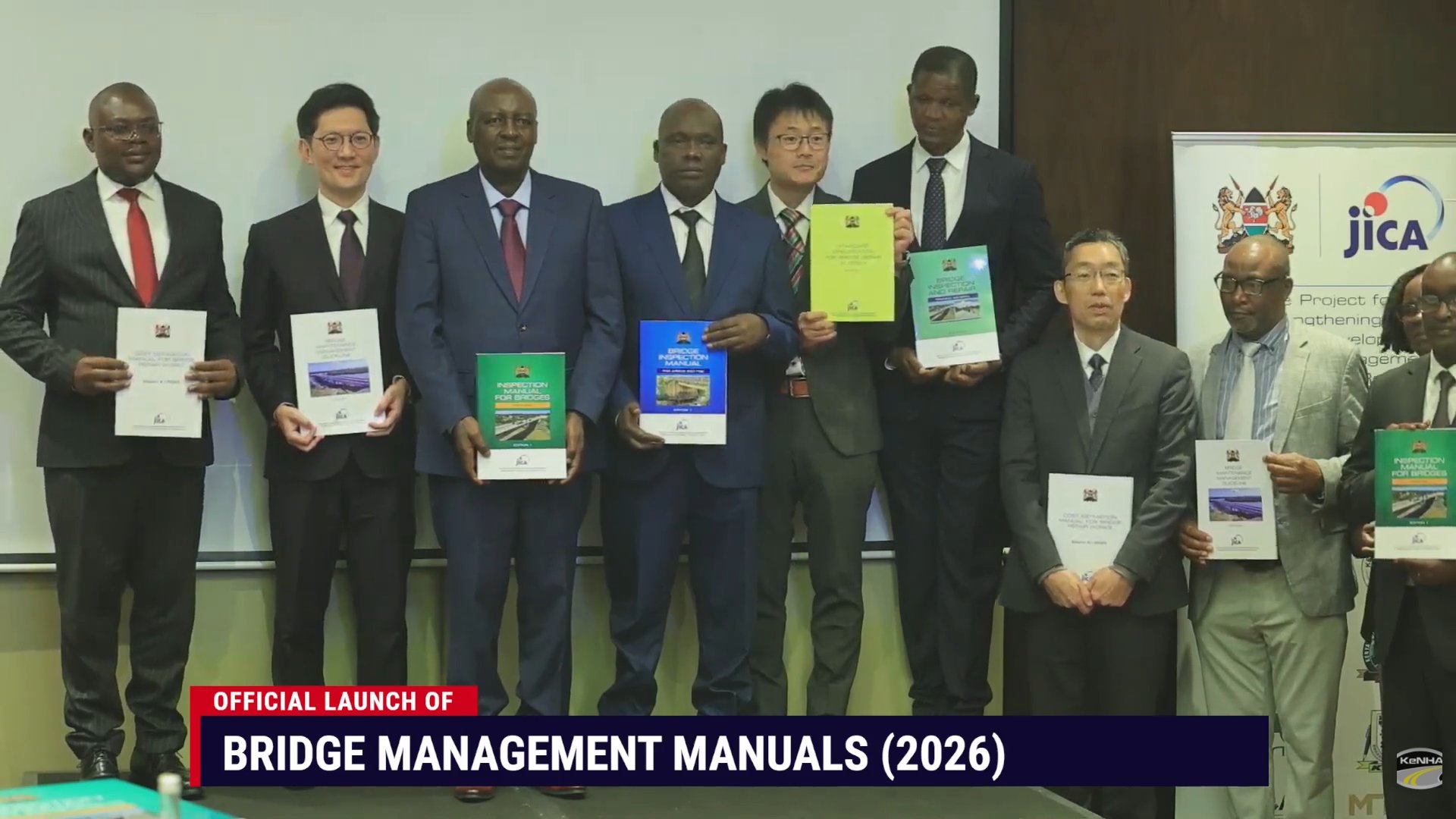

The Ministry of Roads and Transport, in partnership with the Japan International Cooperation Agency (JICA), has officially launched the Bridge Management Manuals (2026) to establish a standardized approach to structural oversight across the national road network.
The launch event took place at the Crowne Plaza Hotel near Jomo Kenyatta International Airport (JKIA) in Nairobi. Roads Principal Secretary Joseph Mbugua presided over the technical rollout, stepping in for Cabinet Secretary Davis Chirchir, who was attending an urgent Cabinet meeting.
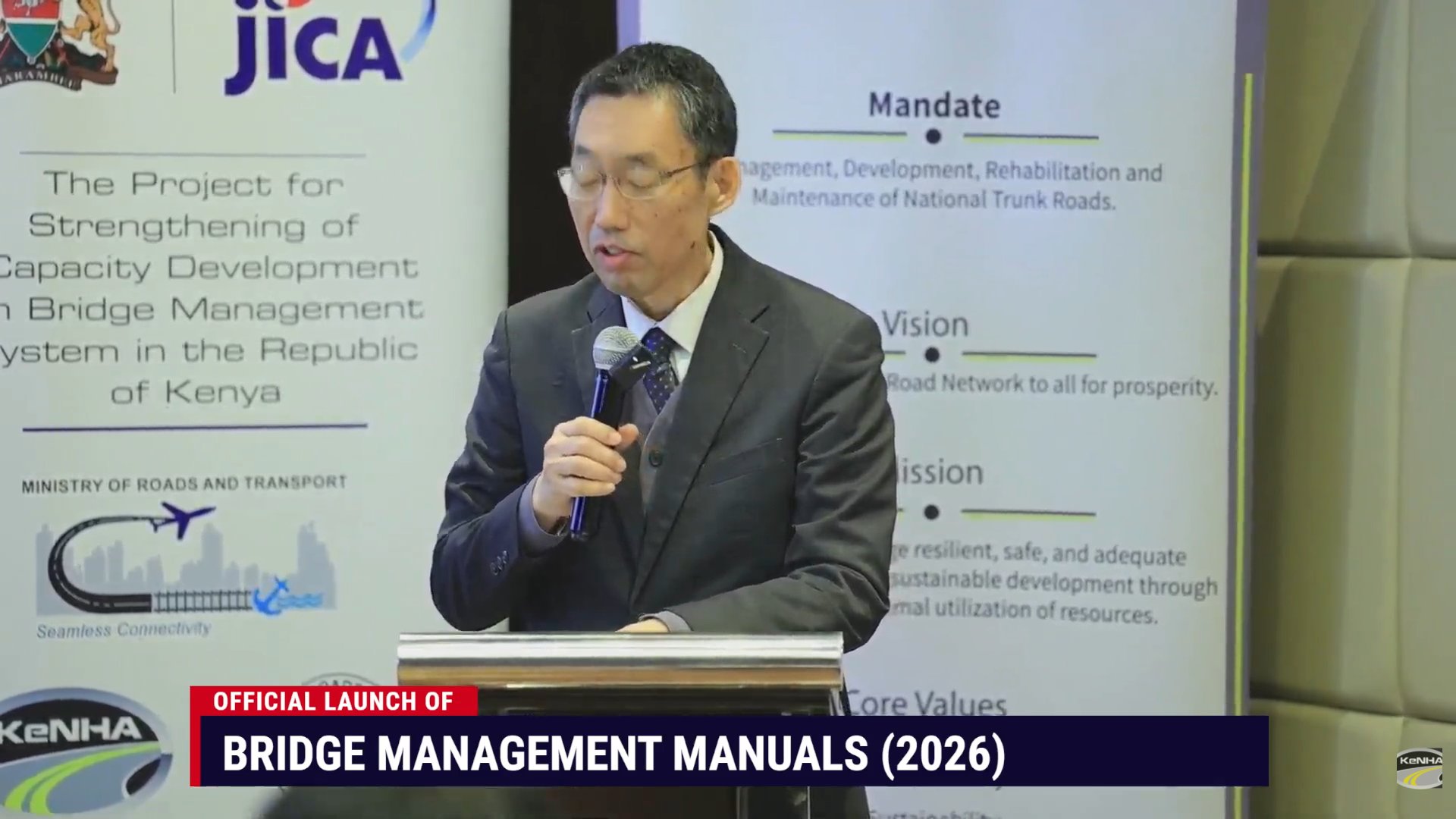 Chinese representatives were also present at the event alongside JICA officials. During the meeting, a JICA representative spoke about the Mombasa Gate Bridge project, reaffirming Japan’s commitment to key infrastructure initiatives in Kenya.
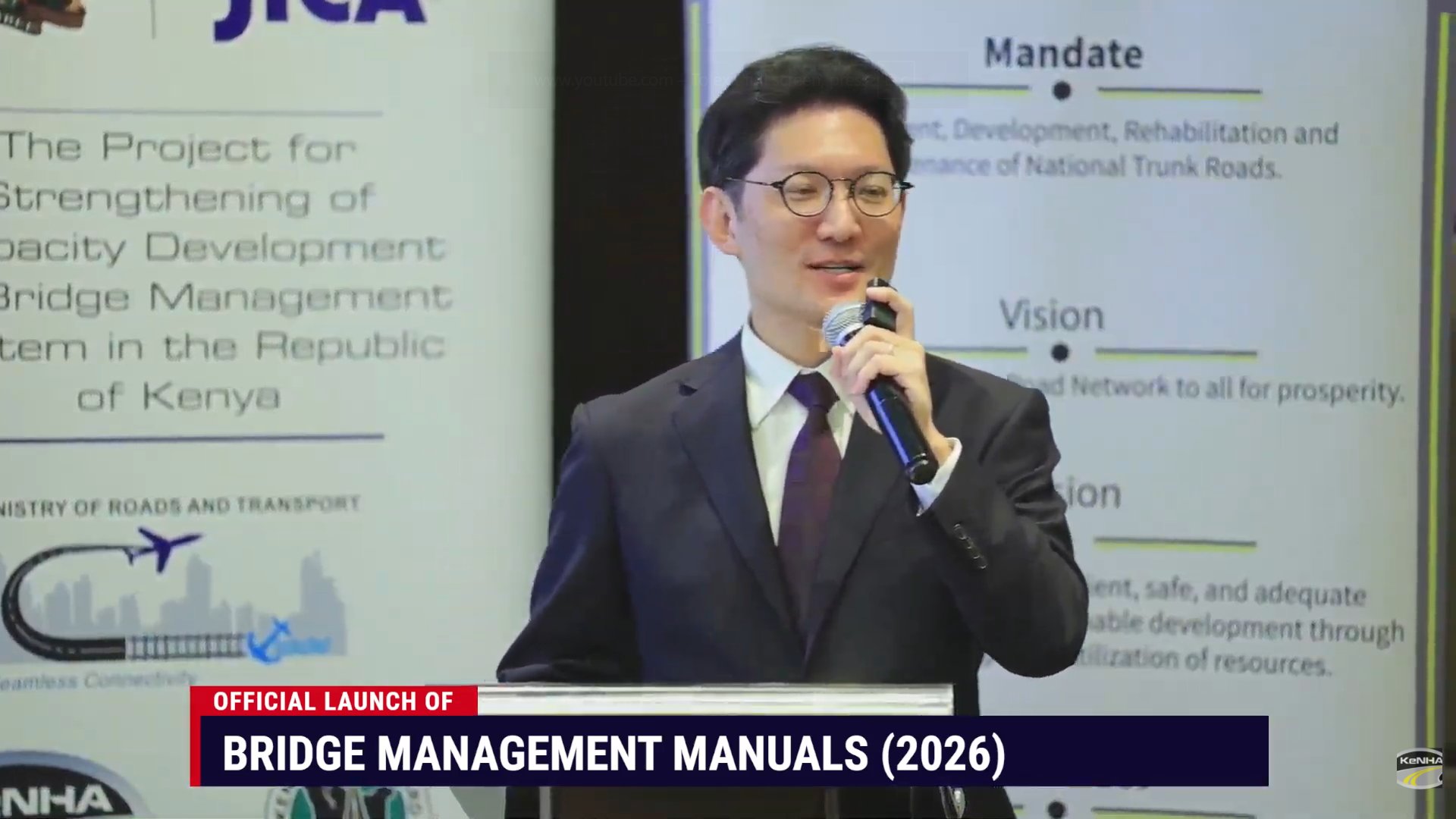
The newly introduced documentation aims to transition the Kenya National Highways Authority (KeNHA) from a reactive repair model to a structured, preventative maintenance cycle. Five distinct technical publications form the backbone of this updated state engineering framework.
The regulatory documents unveiled to public works stakeholders comprise the Bridge Maintenance Management Guideline, Inspection Manual for Bridges, Bridge Inspection Handbook, Bridge Repair Manual, and Standard Specifications for Bridge Repair in Kenya.
These publications establish uniform operational benchmarks for field engineers.
The guidelines define explicit criteria for assessing material wear, concrete degradation, and riverbed scouring, while dictating the specific concrete classes and structural grout requirements permitted for state rehabilitation contracts.
The technical overhaul incorporates modern remote sensing capabilities to address long-standing physical limitations in structural auditing.
Aerial drones are now formally integrated into the state inspection workflow to photograph previously inaccessible components, such as high-altitude viaduct joints and underwater pier foundations.
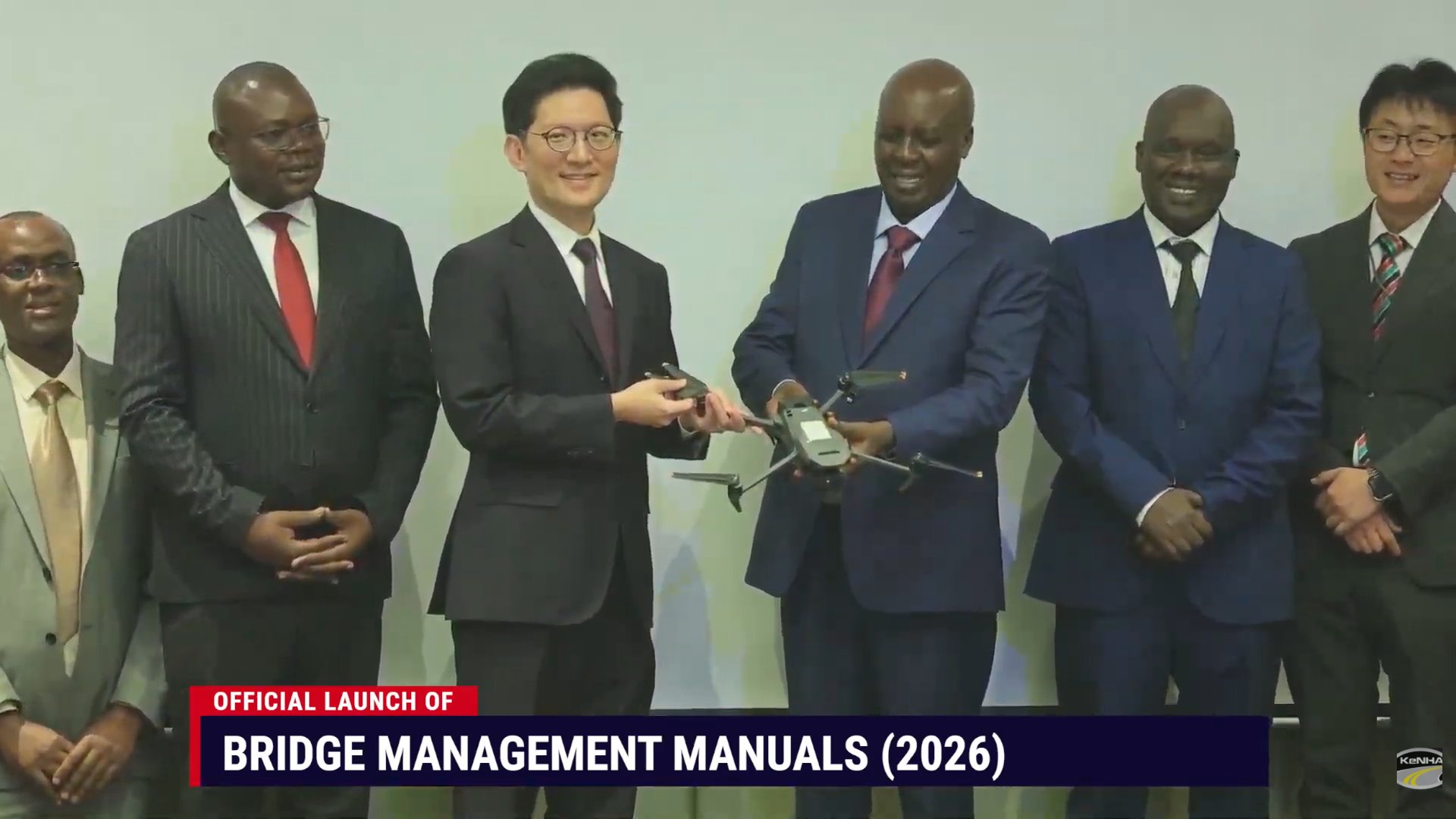
Automated data collection will also be supported by a specialized mobile road inspection vehicle. Although logistical constraints prevented the vehicle from being displayed at the hotel venue, officials confirmed its impending deployment to scan pavement profiles and detect sub-surface voids near bridge approaches.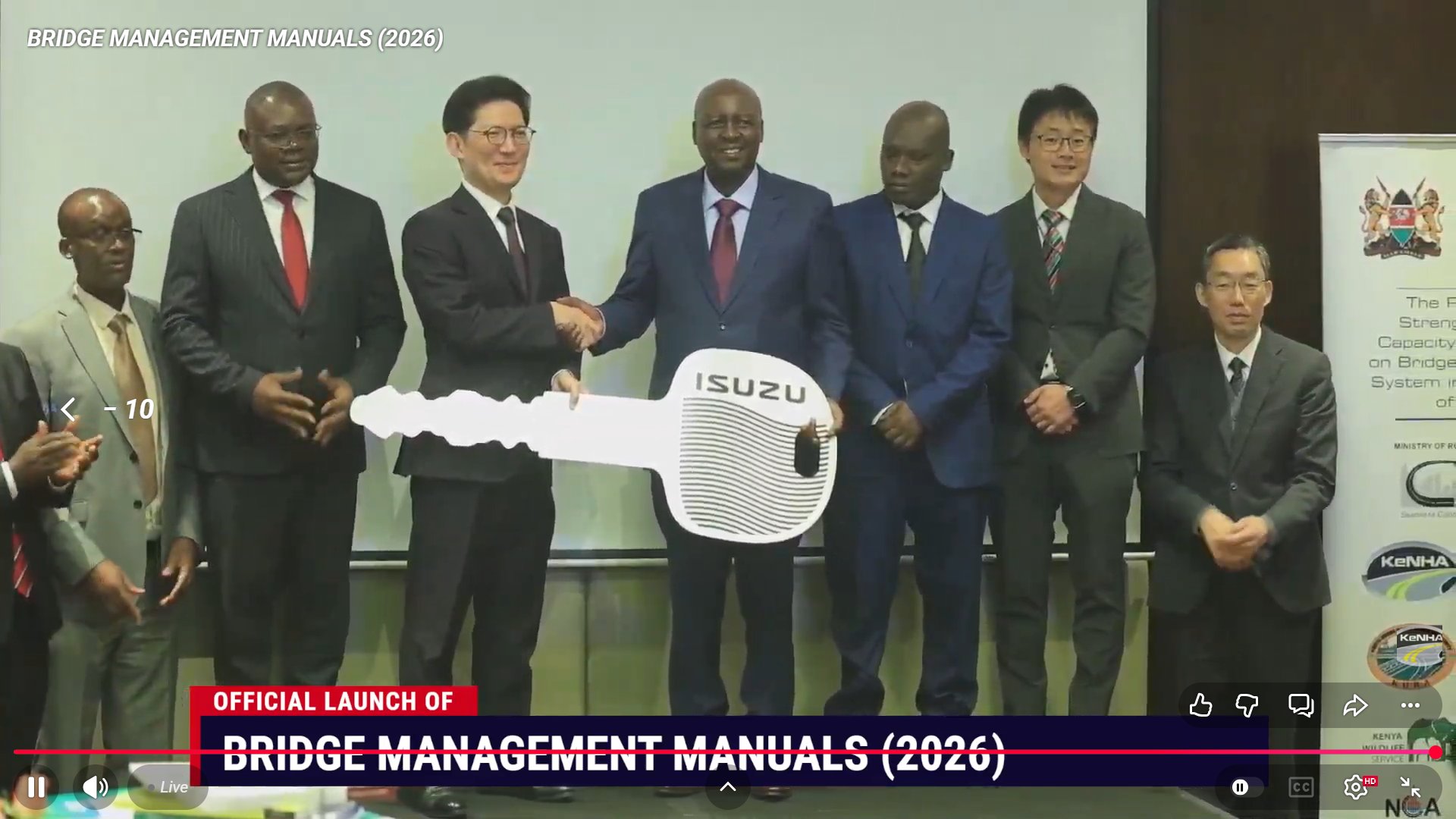
By anchoring these automated vehicle and drone data systems within the newly launched JICA technical frameworks, the state intends to eliminate subjective field checklists.
The compiled metrics will form a digital structural inventory to guide future engineering interventions and state maintenance allocations.
Comments (0)
Leave a Comment
No comments yet. Be the first to share your thoughts!