
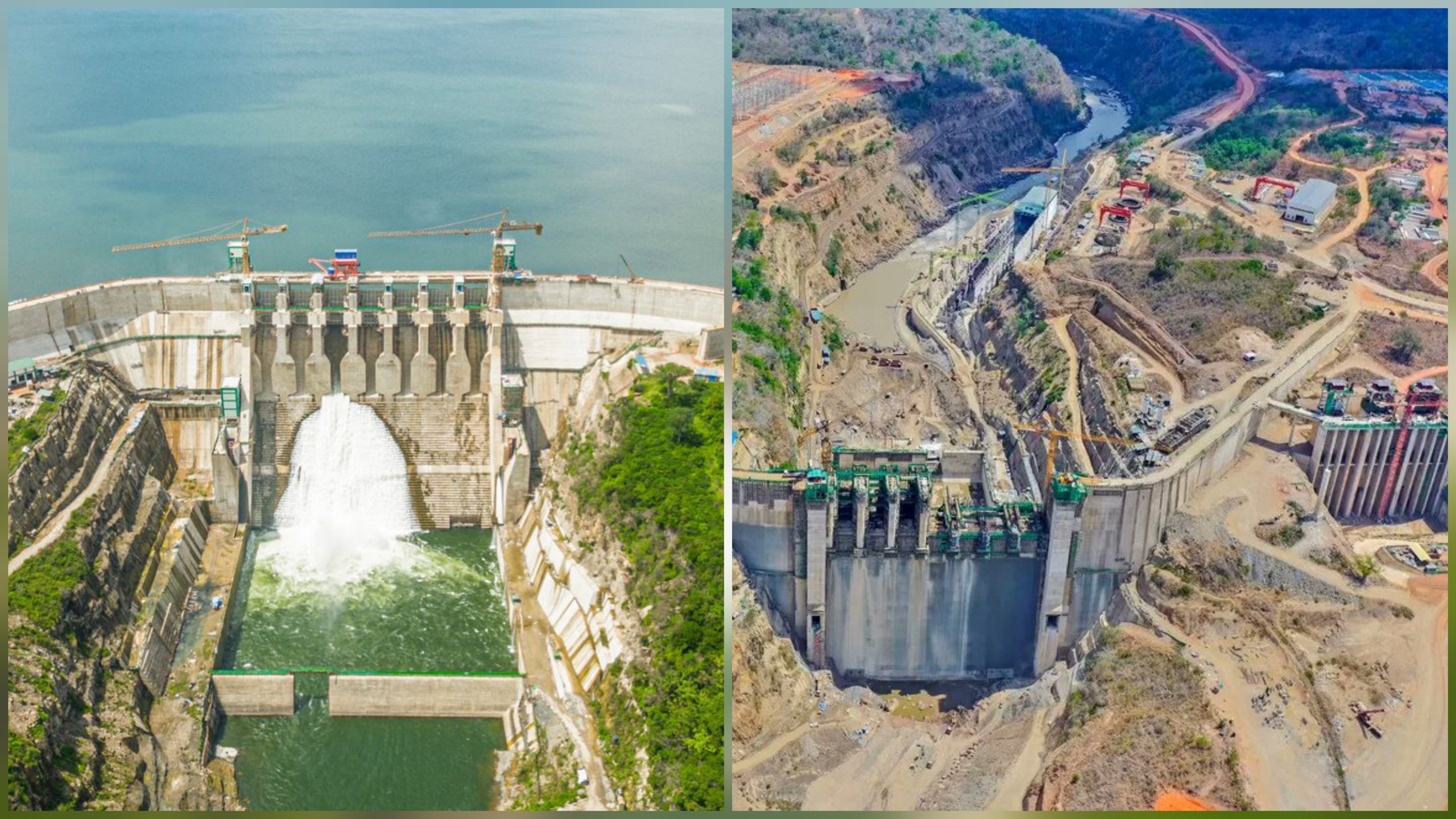

Tanzania has completed civil works on the 2,115 Megawatts (MW) Julius Nyerere Hydropower Project (JNHPP) along the Rufiji River. Former President John Magufuli initiated the scheme six years ago without foreign loans.
The government financed the entire 2.9 billion United States Dollars (USD) enterprise using domestic tax revenue collections. State treasury allocations covered all principal contractor payments throughout the entire construction schedule.
Engineers originally designed a 42-month execution timetable when ground breaking took place during 2019. Logistical delays and complex engineering challenges extended site operations to 72 months, but project delivery occurred in 2025.
Contractors finished installing all nine Francis turbines, which carry an individual generating capacity of 235 MW. Technicians integrated the generation units into the national grid framework, when preliminary mechanical testing concluded.
State power utility Tanzania Electric Supply Company (TANESCO) expects the plant to enter full commercial service in 2027. Energy ministry officials anticipate supplying reliable power to 60 million citizens, when full capacity dispatch begins.
Before this expansion, national generation capacity stood at approximately 1,900 MW, which left industrial sectors vulnerable to recurring power outages. The added capacity doubles existing baseline generation, but distribution networks require parallel reinforcement.
Contractors built the main dam structure using Roller Compacted Concrete (RCC) methods across Stiegler's Gorge. The concrete gravity wall rises 134 meters high, which impounds a reservoir holding 34 billion cubic meters of water.
Egyptian joint venture partners Arab Contractors and Elsewedy Electric executed the primary Engineering, Procurement, and Construction (EPC) contract. Site crews poured millions of tons of high-grade concrete, while navigating complex river diversion stages.
The massive reservoir spans 1,200 square kilometers within the Rufiji River basin. Impoundment required clearing localized areas within the Selous Game Reserve, which raised environmental debates during initial site clearing stages.
High-voltage transmission infrastructure now connects the site to national distribution hubs. Engineers constructed a 400 Kilovolt (kV) substation directly adjacent to the power house, which elevates generation voltage for efficient transmission.
Substation transformers handle up to 2,470 Megavolt-Amperes (MVA) across multiple step-up units. System operators use automated Supervisory Control and Data Acquisition (SCADA) platforms, which stabilize frequency fluctuations during load shifts.
Tanzania joins Ethiopia in deploying large-scale domestic storage dams across sub-Saharan Africa. Government planners envision exporting surplus electricity through regional interconnection corridors, although domestic industrial demand remains the primary distribution focus.
Heavy industrial plants, mining operations, and rural electrification programs will receive dedicated feeder lines. Energy authorities maintain that direct government funding preserved national sovereignty, although high capital outlays absorbed significant annual budget allocations.
Hydropower now constitutes over half of the national generation mix, shifting reliance away from expensive thermal power plants. Full operational integration remains scheduled for 2027, as technicians finish balance-of-plant automation testing.
Regional trade partners within the East African Power Pool (EAPP) continue monitoring transmission progress closely. Cross-border line connections will enable electricity sales to neighboring countries, once domestic reserve margins reach peak stability thresholds.
Local supply chains benefitted from substantial procurement spending during the six-year civil construction period. Material suppliers delivered steel, aggregates, and fuel continuously, while thousands of local technicians gained technical expertise.
Comments (0)
Leave a Comment
No comments yet. Be the first to share your thoughts!