
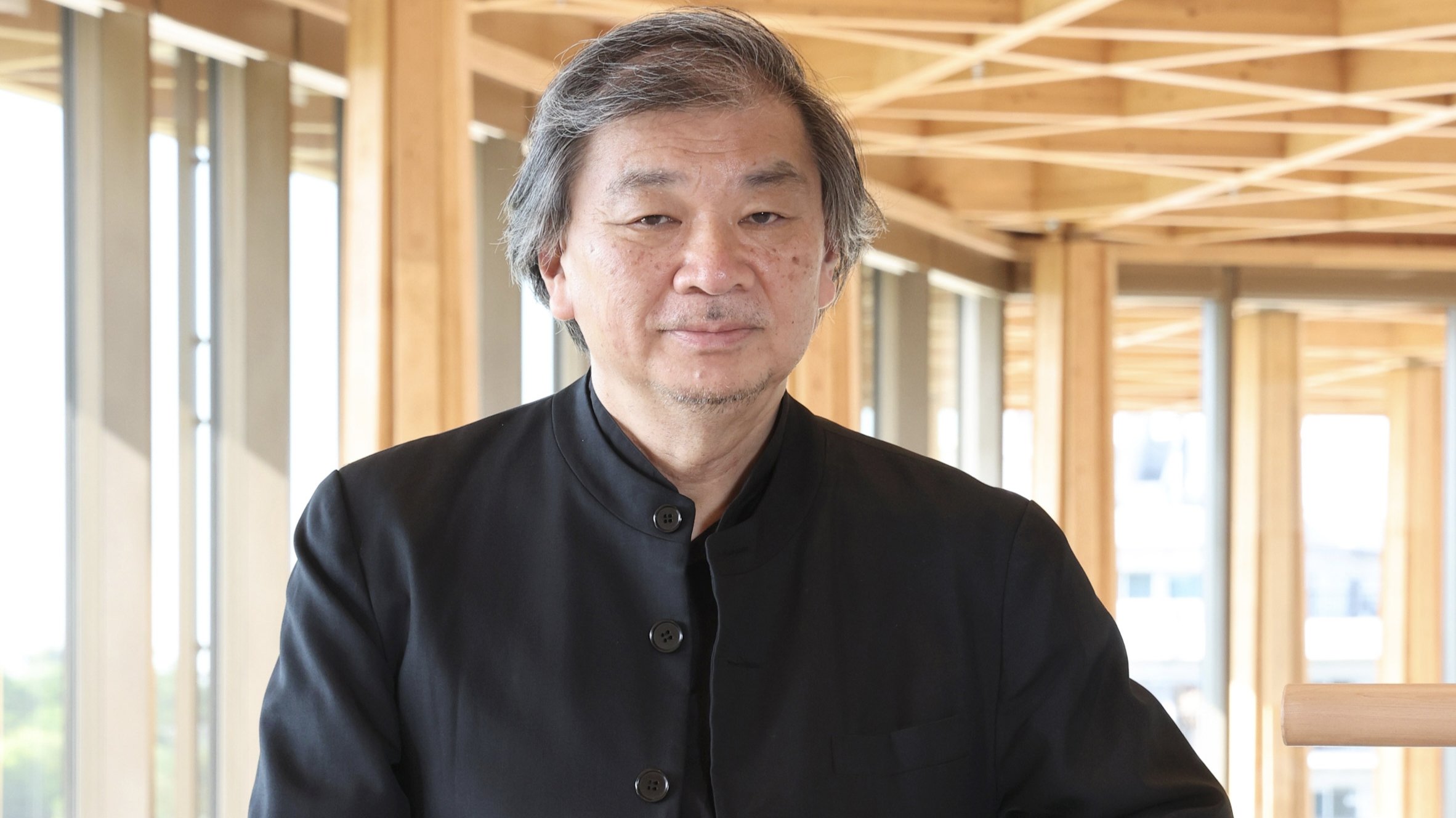

Most architects build with concrete, steel and glass. Shigeru Ban builds with paper tubes. America's most prestigious architecture award just went to him.
The American Institute of Architects (AIA) announced on December 4, 2025, that Ban is the recipient of the 2026 Gold Medal, the organisation's highest individual honour, awarded annually since 1947. He is the first non-American to receive it since the late Richard Rogers in 2019, and the first Japanese architect to win it since Fumihiko Maki in 2011.
Ban was born in Tokyo in 1957, grew up watching carpenters renovate his family's wooden house, and eventually trained at the Southern California Institute of Architecture (SCI-Arc) and New York's Cooper Union. He opened his practice in Tokyo in 1985 with no prior work experience.
The paper tube began as a solution to an exhibition problem. While working as a curator at Tokyo's Axis Gallery in the mid-1980s, Ban was designing a show around the work of Alvar Aalto and needed lightweight, inexpensive structural elements. He turned to paper tubes, the same cardboard cylinders used inside rolls of fabric and industrial materials, and discovered they could do considerably more than hold a display together.
He spent the following decades proving exactly how much more. After the 1995 Kobe earthquake killed more than 6,000 people, Ban founded the Voluntary Architects' Network (VAN), a non-profit organisation that deploys fast-to-build emergency shelters using paper, timber and bamboo in disaster zones. The organisation has since responded to earthquakes, floods and displacement events across Japan, Haiti, Turkey, the Philippines and beyond.
His most recognised work from this body of practice is the Cardboard Cathedral in Christchurch, New Zealand, built after the 2011 earthquake destroyed the city's Anglican cathedral. The replacement structure, assembled from 98 cardboard tubes, timber and polycarbonate panels, seated 700 people and was completed in 2013. It remains in use today. Ban's humanitarian work has never overshadowed his commercial and cultural output. The Centre Pompidou-Metz in France, completed in 2010, features a dramatic timber gridshell roof whose form was inspired by a woven Chinese hat. The Swatch Omega Campus in Biel, Switzerland, is the largest mass timber building in the world, spanning 240 metres with Swiss-sourced wood. He won the Pritzker Architecture Prize in 2014.
He will be formally honoured at the AIA Conference for Architecture and Design in San Diego in June 2026, where he joins a roster of past Gold Medalists including Deborah Berke, Carol Ross Barney, and the founders of Lake Flato.
For over 30 years he has also taught at Harvard, Cornell and Columbia, often involving students directly in VAN humanitarian projects. The AIA described his career as a reminder of the profession's potential to create a more sustainable and equitable world.
That is a generous framing. A more direct one is this: Ban has spent four decades proving that architecture does not require expensive materials to be structurally sound, beautiful, or useful to people who need it most. The AIA has finally given him its biggest award for doing so.
Comments (0)
Leave a Comment
No comments yet. Be the first to share your thoughts!