
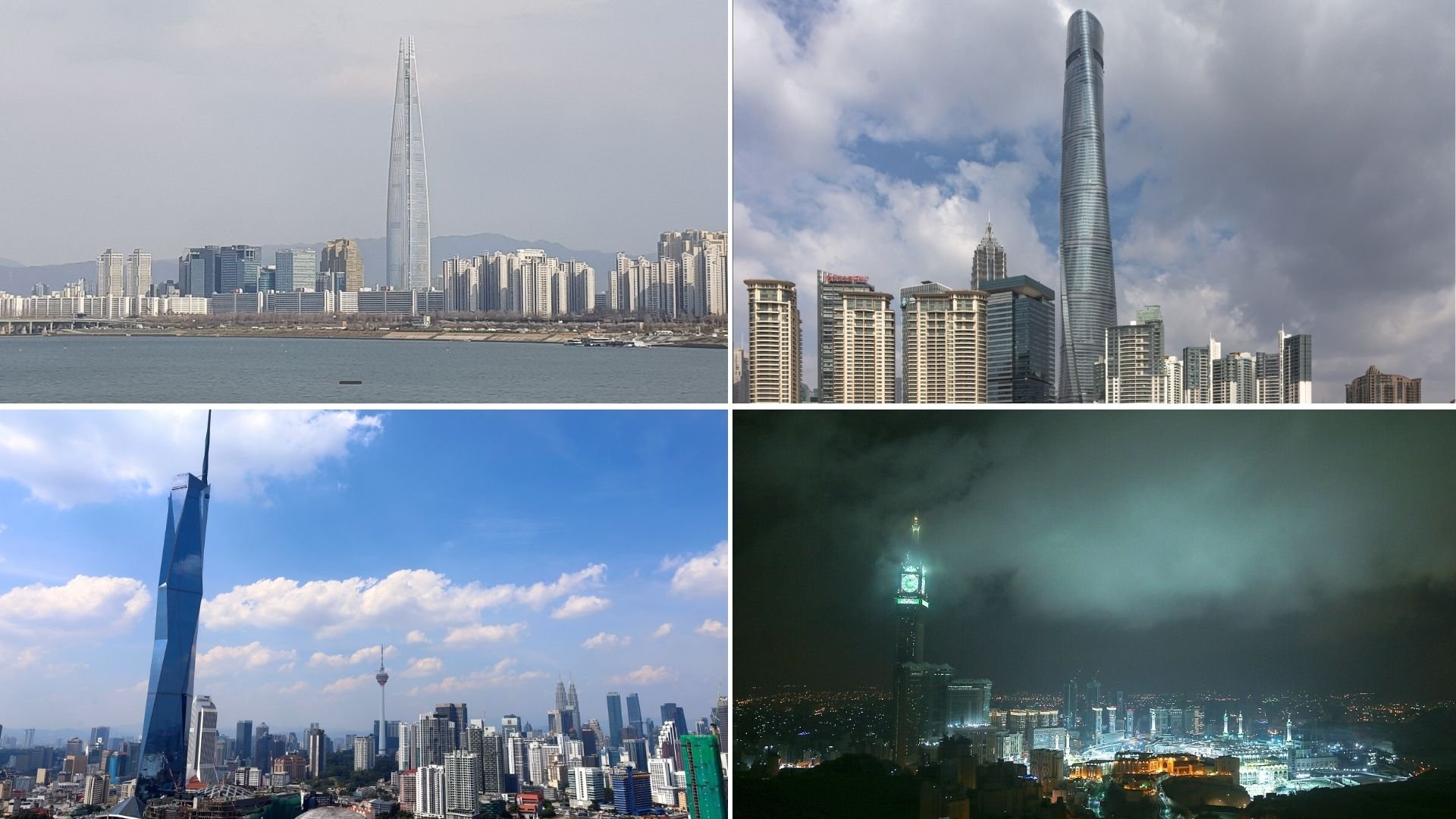

A version of this article appeared on Interesting Engineering.
Skyscrapers have long existed as enduring symbols of ambition, wealth, and engineering progress, carving unique profiles into urban landscapes. The tallest structures do far more than merely dominate a skyline, as they actively showcase what modern architecture and structural design can achieve at the very edge of human capability.
In a recent analysis, reporter Atharva Gosavi detailed seven breathtaking buildings that are redefining skylines with engineering brilliance. These specific towers represent the boldest heights of modern architecture, pushing structural limits while introducing innovative solutions to the immense physics challenges that come with supertall construction.
Designing and constructing buildings of this magnitude requires a deep mastery of materials, wind dynamics, and foundational engineering. High-rise projects must withstand immense gravitational loads, counter violent high-altitude winds, and incorporate advanced seismic resilience, all while maintaining aesthetic elegance and functional internal spaces for occupants.
The iconic structures highlighted by Gosavi serve as a testament to how far the global construction industry has progressed. These mega-towers utilize cutting-edge technology, including advanced Computer Aided Design (CAD), tuned mass dampers, and high-performance concrete mixes, to safely reach heights that were completely unimaginable a few generations ago.
While specific architectural styles vary across continents, the underlying engineering principles remain anchored in managing forces. For instance, the use of aerodynamic tapering, deep-set subterranean pilings, and mega-columns helps distribute weight effectively, allowing these skyscrapers to stand secure against the elements.
Beyond their sheer physical presence, these buildings alter the identity of their host cities, transforming them into global hubs of innovation. As urban populations expand and available land decreases, vertical expansion remains a primary solution for modern metropolises, making these engineering marvels a blueprint for the future of city environments.
Comments (0)
Leave a Comment
No comments yet. Be the first to share your thoughts!