

A version of this article appeared on Construction News.
The 2026 FIFA World Cup has put stadium heat management back under the microscope. FIFA president Gianni Infantino confirmed that roofed stadiums could be used at this year's tournament following criticism over conditions at the 2025 Club World Cup, also held in the United States.
But closing a roof is not the straightforward solution it appears.
"Closing a roof may shade spectators, but without adequate active cooling and ventilation it can trap heat and create worse conditions inside than outside," said Jeroen Janssen, director at global engineering consultancy Thornton Tomasetti.
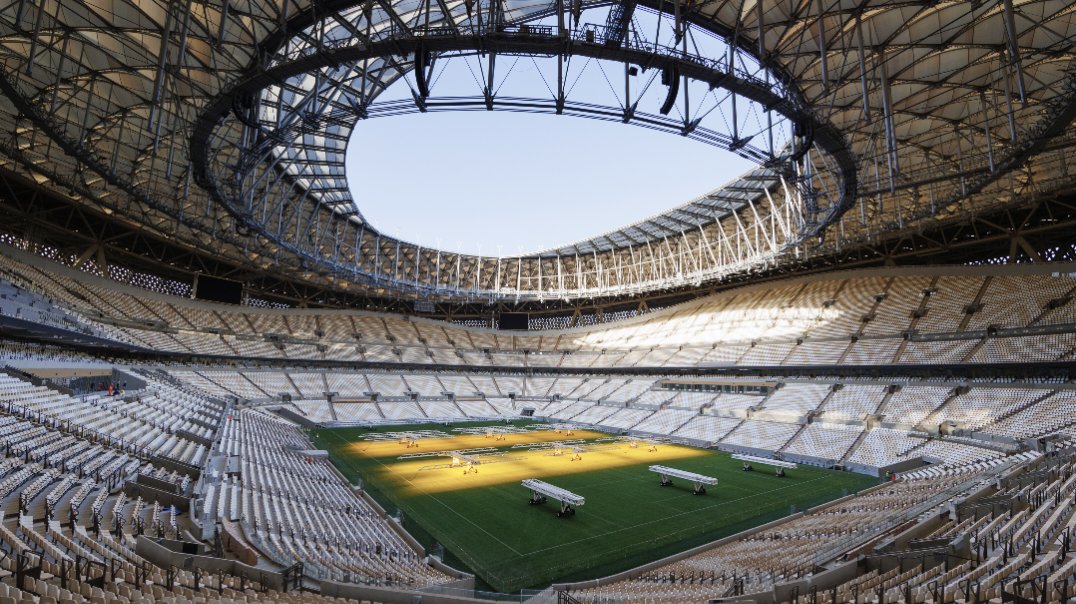
Qatar 2022 demonstrated this tension clearly. Seven venues were fitted with 120,000 under-seat vents to keep spectators comfortable, but those conditions did not extend to players on the pitch. The roof over those stadiums was left open, a deliberate choice.
Five 2026 venues have enclosed roofs that limit natural light, requiring artificial grow lamps to maintain turf quality, adding another layer of operational complexity.
AECOM, which designed the first new-build cooled stadium for Qatar, said effective heat management requires complex computational fluid dynamics (CFD) modelling to assess the impact of roof oculus sizes, cladding aerodynamics, and the volume and velocity of cooled air delivered into the bowl. Seat-by-seat probability maps of overheating are then produced to optimise the final design.
The challenge is compounded by the multi-use nature of most modern stadiums. As Janssen put it, a stadium is a "massive, highly volatile thermodynamic puzzle," and no single design can be fully optimised for every event type.
Permanent cooling and operable shading systems are expensive and energy-intensive, making lifecycle costing and legacy use central considerations from the outset. Engineers say the lesson from successive major tournaments is that climate-adapted stadium design must start at concept stage, not after the architect has already fixed the form.
Comments (0)
Leave a Comment
No comments yet. Be the first to share your thoughts!