

Industrial logistics operators, including Amazon, are utilizing powered trailer spotters to handle localized freight positioning within facility yards.
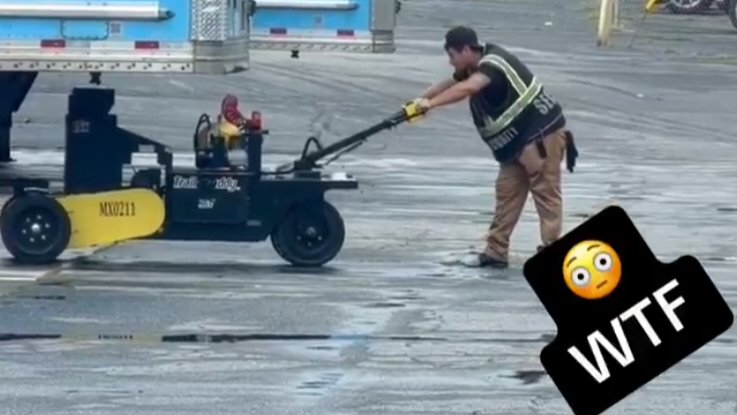
A video shared online highlights a facility worker operating a walk-behind powered trailer spotter to push and pull heavy transport trailers across a paved staging area.
The equipment serves as a motorized tugger designed specifically for maneuvering unattached semi-trailers into designated staging bays or dock positions. Powered trailer spotters allow single operators to move massive loads across short distances on private property.
The walk-behind design provides direct forward line-of-sight visibility, which allows workers to align kingpins and secure couplings without operating a traditional truck cab.
A primary operational feature of powered trailer spotters is their regulatory classification. Because the machinery operates at low speeds exclusively within off-road private premises, operators do not require a Commercial Driver's License (CDL).
In contrast, traditional yard movement relies on specialized terminal tractors, often called hostlers or yard jockeys, or standard day-cab trucks operated by licensed commercial drivers.
By using motorized trailer tuggers, warehouse facilities can assign trailer positioning tasks directly to site associates. Non-CDL yard staff earning standard hourly wages can handle internal movements, while licensed drivers remain focused on long-haul transport routes.
The machinery is engineered to lift and haul heavy trailer loads, replacing manual labor while eliminating the need to wait for licensed drivers to clear dock gates.
Facilities adopting pedestrian-operated tuggers aim to reduce operational overhead, as specialized yard hostler trucks represent significant capital and maintenance expenses.
The compact footprint of powered spotters also enables easier navigation through congested loading zones where full-sized tractors face maneuvering constraints.
The equipment integrates into broader yard management efforts aimed at accelerating turnaround times for outbound freight. By streamlining dock-to-yard transfers, logistics networks lower idle times for incoming haulers and maintain steady product throughput across fulfillment networks.
Comments (0)
Leave a Comment
No comments yet. Be the first to share your thoughts!