

Chinese semiconductor memory specialist Longsys has scaled its manufacturing infrastructure to reach a stable monthly production capacity of one million micro solid-state drive units. The facility at the company's Suzhou packaging and testing base hit the output milestone following multi-month optimization.
Initial manufacturing samples rolled off the production lines in October 2025. Over the subsequent months, industrial engineers focused on process refinement and technical line optimization to build up the seven-figure delivery capacity.
The manufacturing achievement serves global electronics infrastructure by supplying compact Peripheral Component Interconnect Express (PCIe) Gen5 storage for personal computers (PCs). The hardware utilizes a specialized architecture known as System-in-Package (SiP) integration.
Traditional storage relies on standard printed circuit board assemblies. In contrast, this advanced packaging technology crams the main controller, flash memory, power management circuits, and passive components directly into a single unified module.
This industrial configuration shortens the physical production cycle. It minimizes space requirements inside edge artificial intelligence (AI) devices, which require high data throughput within tight structural footprints.
Leading technology original equipment manufacturer (OEM) clients have already qualified the modules. Computer hardware giants Lenovo and ASUS verified the storage hardware for integration into commercial devices.
Real-world customer applications validated the operational performance and structural quality of the components. Industry demand for compact components continues to grow, driven by hardware capable of handling localized data processing workloads.
To address diverse performance tiers, the industrial facility manages two distinct generations of the architecture. The baseline high-speed tier utilizes the standard fourth-generation platform.
The fifth-generation variant integrates an advanced vapor chamber cooling system. This specific thermal design allows the hardware to sustain elevated bandwidth without experiencing thermal throttling under intense computational stress.
Managing heat dissipation remains a critical engineering priority for compact edge devices. The customized architecture maintains a thin profile, which is necessary for thin-and-light laptop form factors and intelligent terminals.
Beyond physical assembly, the developer introduces software integration layers. The company deployed its proprietary storage processing unit and intelligent storage agent technologies to optimize edge processing capabilities.
Industrial scaling of this nature requires reliable logistics and supply chains. Longsys, established in 1999, handles research, design, packaging, testing, and sales within its vertically integrated operational model.
The Suzhou plant acts as a primary manufacturing node within the global network. Facility operators plan to expand the storage architecture across artificial intelligence boxes and advanced industrial terminals.
Future facility readiness involves preparing the infrastructure for forward compatibility with upcoming sixth-generation standard specifications. Testing protocols cover consumer-grade, industrial-grade, and demanding automotive-grade reliability standards.
Analysts track whether regional markets can absorb high monthly volumes, but doing so requires sustained consumer demand.
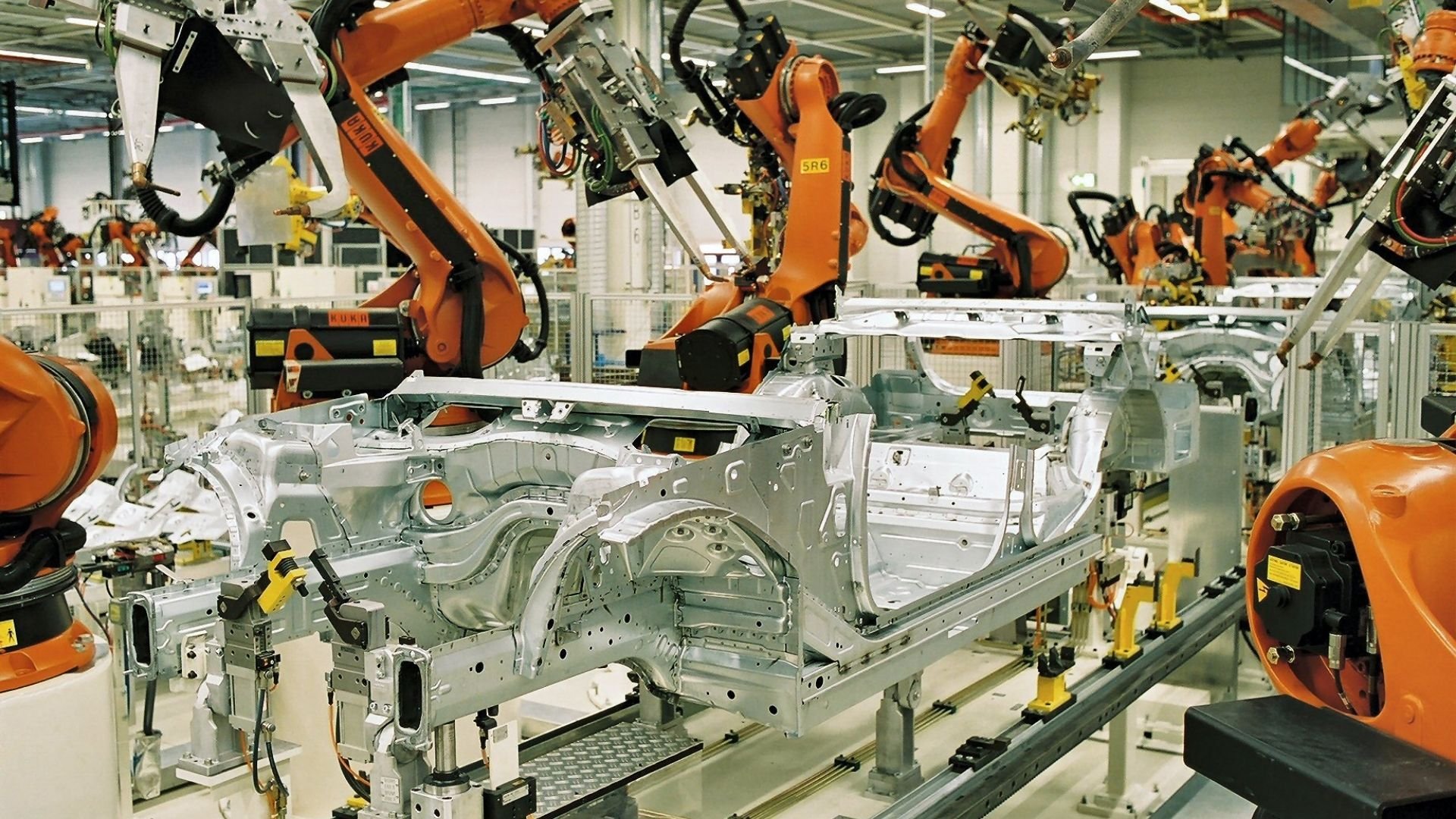
Automation reduces human error and shortens manufacturing turnaround times. Industrial factories increasingly adopt these automated systems, which help to maintain consistent delivery numbers and fulfill corporate supplier agreements.
Financial metrics from the early months of the year showed strong revenue growth alongside the capital expenditure needed for industrial scaling, which supports the long-term viability of the automated facility.
Industrial infrastructure developments in the semiconductor space remain vital for digital hardware availability globally. The scaling milestone highlights the intersection of heavy automated factory engineering and advanced consumer micro-electronics.
Comments (0)
Leave a Comment
No comments yet. Be the first to share your thoughts!