
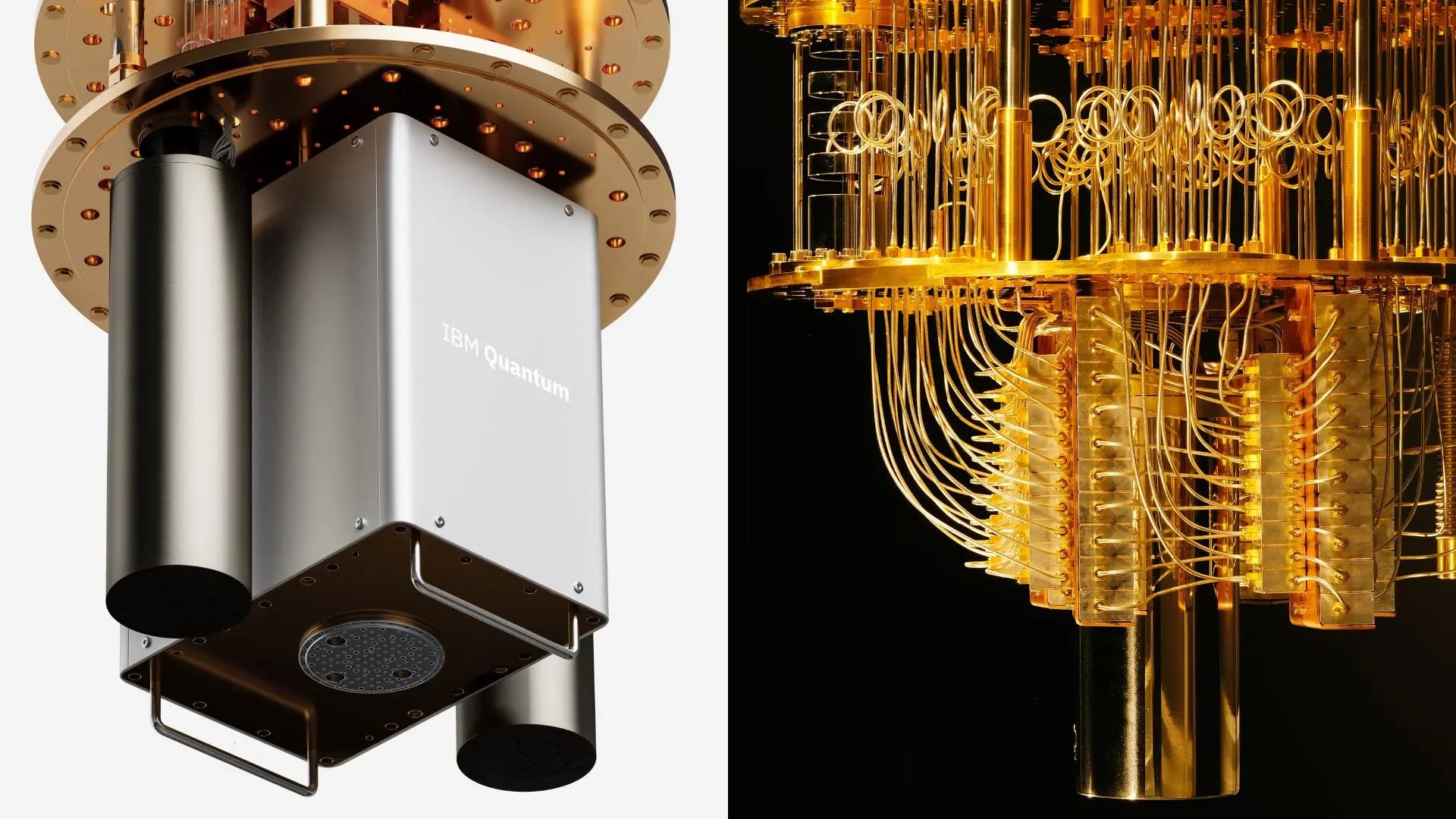

Researchers at International Business Machines (IBM) and the University of Chicago have completed a quantum computation in 15 minutes. Leading classical supercomputers face prohibitive runtimes attempting to perform the same task.
The experiment encoded 70 logical qubits using an advanced error-correction method. This approach reduced effective logical error rates to one-tenth of physical noise levels, which allowed the system to compute reliably.
During the test run, scientists executed 2,415 logical two-qubit operations and 468 logical T gates. These specific metrics measure the operational complexity of an encoded quantum circuit.
Historically, testing computational performance relied heavily on Random Circuit Sampling (RCS). However, verifying whether those outputs were accurate remained an unsolved challenge for classical validation tools.
The research team introduced a structured alternative to RCS that maintains computational difficulty, but it also enables real-time error detection throughout execution.
Associate Professor Bill Fefferman from the University of Chicago noted that verification remains a major obstacle in quantum research. He explained that the experiment provides methods to characterize hard quantum states under noise.
Director of IBM Research Jay Gambetta stated that the team completed a calculation beyond the practical reach of traditional hardware. He added that the result establishes statistical confidence in execution fidelity.
Classical simulation methods required impractical durations when attempting to match the quantum processor. The hardware finished the entire workload in approximately 15 minutes.
The tenfold error reduction permitted high circuit fidelity across thousands of sequential gate operations. Such operational stability is essential when solving complex mathematical algorithms.
All encoded circuits and output datasets have been published on the Quantum Advantage Tracker. Independent researchers can now inspect and benchmark the findings directly.
This development addresses long-standing doubts regarding quantum result validation. Scientists can now prove that quantum outputs are mathematically sound without relying on unverified assumptions.
Hardware noise routinely degrades quantum calculations before completion. By suppressing physical disturbances, the system preserved logical accuracy across thousands of operations.
The research paper detailing the experiment is titled Sampling Hard Circuits with Verifiably High Fidelity. It outlines how logical encoding shields quantum processors during long, intensive computation cycles.
Several industry partners across the quantum computing ecosystem released complementary benchmark results on the same date. These findings highlight additional demonstrations of verified quantum computations.
The technical milestone focuses heavily on structural fault tolerance in processor architectures. Without proper error mitigation, physical qubits lose coherence during multi-step processing.
The University of Chicago and IBM conducted these tests at research facilities in Yorktown Heights, New York. The collaborative project combined advanced hardware engineering with theoretical computer science.
Future experiments will scale the logical qubit count higher across larger systems. Researchers aim to address practical challenges in materials science, chemistry, and complex supply chain logistics.
The team proved that structured circuit designs prevent error propagation across logical gates. This technique opens practical pathways toward larger fault-tolerant computing architectures.
By maintaining high fidelity across thousands of operations, the processor completed a workload classical systems cannot realistically replicate. The field now shifts toward scaling these fault-tolerant systems.
Engineers designed the error-correction layer to actively isolate noise without halting processing threads. This active suppression keeps logical qubits stable during extended runs.
The combined performance metrics confirm that logical qubits can outperform raw physical qubits in stability. Researchers expect this structural framework to guide next-generation quantum system builds.
Comments (0)
Leave a Comment
No comments yet. Be the first to share your thoughts!