
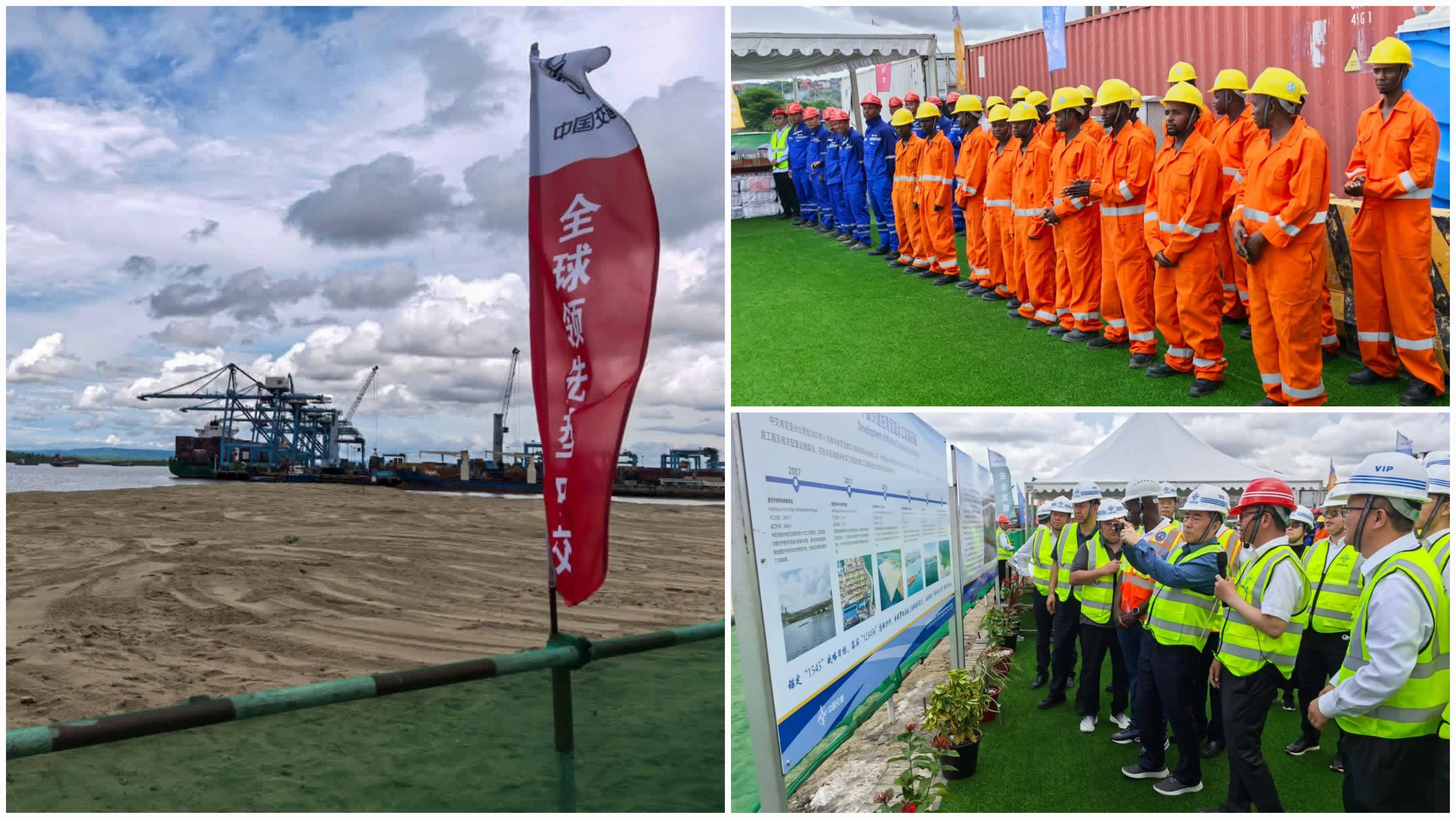

Progress on the Port of Mombasa expansion has reached a notable stage, with the development of Berth 19B now 30 percent complete. The project, which is being executed by the China Communications Construction Company (CCCC), is part of a broader strategy by the Kenya Ports Authority (KPA) to manage rising cargo volumes.
The new berth will span 250 meters in length once completed. It is designed to provide an additional annual throughput capacity of 300,000 Twenty-Foot Equivalent Units (TEUs), providing the terminal with more room to handle the containerized trade that has seen steady growth.
On-site activity has intensified as engineers and laborers work on the structural foundations. Recent site inspections by project officials and stakeholders highlight the ongoing coordination between the Kenyan technical teams and the Chinese contractors.
The Port of Mombasa remains the primary gateway for East and Central Africa, serving landlocked neighbors including Uganda, Rwanda, and South Sudan. For the Kenya Ports Authority, the timely delivery of Berth 19B is essential to maintaining the port's competitive edge against emerging regional maritime hubs.
Operational data from the KPA indicates that the port has been achieving record cargo volumes year-on-year. This trend has put pressure on existing infrastructure, making the expansion of the 19-series berths a priority for the national government.
Under the administration of President Ruto, there has been a renewed focus on completing flagship infrastructure projects that facilitate trade. The logistics sector remains a pillar of the local economy, and improvements at the coast often have a direct impact on the cost of goods for the locals.
The construction site currently features a mix of heavy machinery, including piling rigs and cranes, as the reclamation and quay wall construction continues. Laborers in high-visibility gear have been documented during various stages of the technical briefings and physical work.
In addition to the physical quay, the project involves the development of back-of-port stacking yards. These areas are critical for ensuring that the 300,000 TEU increase in capacity does not lead to bottlenecks during the loading and offloading processes.
The China Communications Construction Company has a long-standing history with Kenyan infrastructure, having been involved in several major rail and road projects across the country. Their involvement in the maritime sector is seen as a continuation of that technical partnership.
While the project is currently at 30 percent, the focus now shifts to the more complex maritime engineering phases. These stages will determine if the project remains on the projected timeline to support the next peak season in global shipping.
As the maritime industry shifts toward larger vessels, the depth and length of berths like 19B become more critical. KPA officials have noted that modernizing the harbor is not just about space, but about the ability to host the latest class of container ships.
The successful integration of Berth 19B into the existing terminal operations will require significant coordination in digital tracking and crane deployment. For now, the focus remains on the civil works as the structure begins to take shape against the Mombasa shoreline.
Comments (0)
Leave a Comment
No comments yet. Be the first to share your thoughts!