
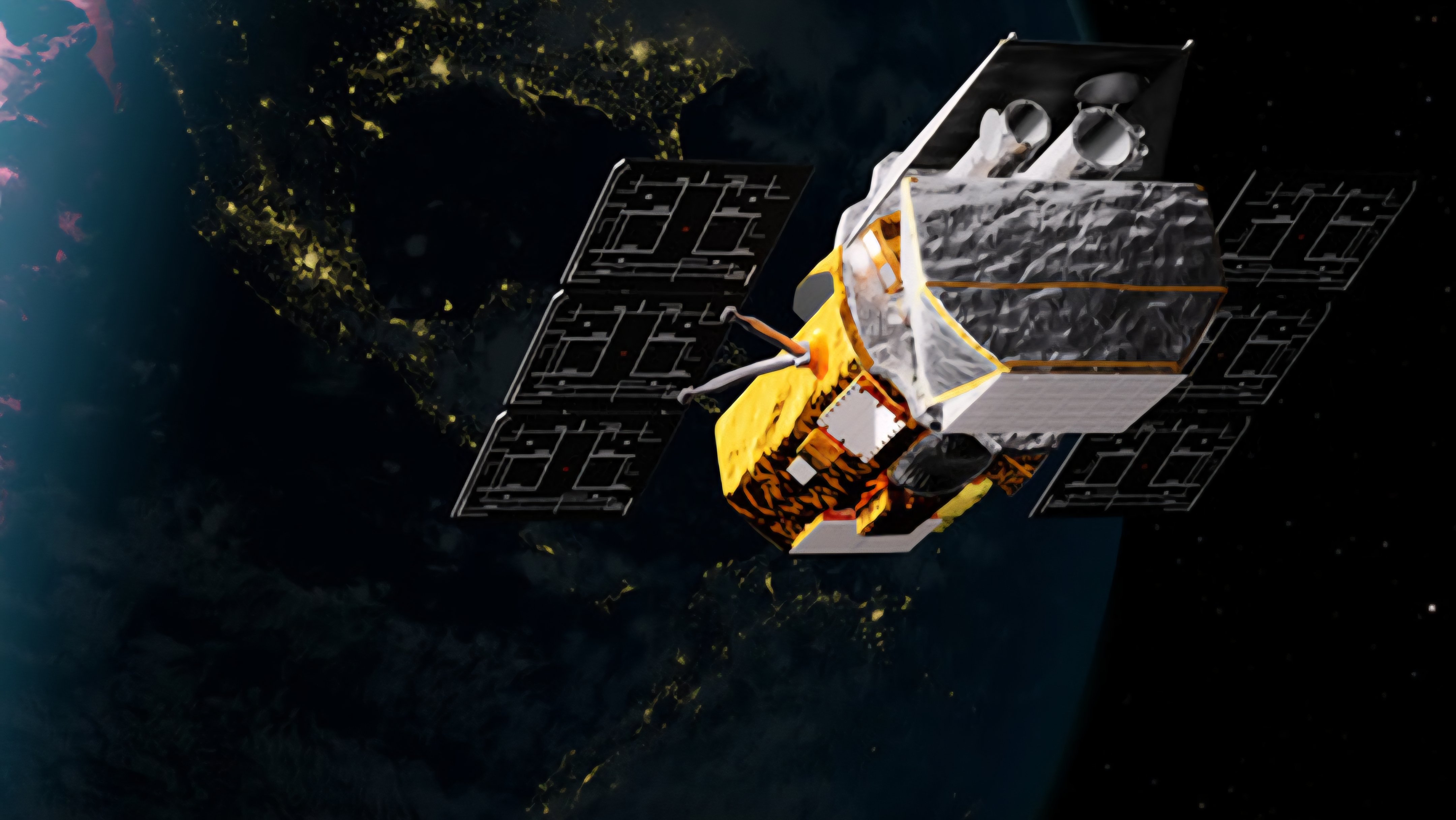

An unprecedented orbital salvage operation began on Friday when a specialized robotic spacecraft blasted off from the Pacific Ocean to rescue a sinking international research asset.
The mission targets the Neil Gehrels Swift Observatory, which has spent twenty years orbiting Earth.
The National Aeronautics and Space Administration (NASA) funded the emergency $30 million intervention.
Increased solar activity expanded the upper atmosphere of Earth, causing severe drag that slowed the observatory and dropped its altitude significantly.
The 1.6-ton infrastructure asset fell from an initial 373 miles to approximately 224 miles above the surface.
Officials warned that the telescope would plunge into the atmosphere and burn up by October without immediate physical intervention.
Aerospace manufacturer Northrop Grumman deployed the specialized rescue craft from a modified aircraft flying over the Marshall Islands.
The experimental space tug, named LINK, was designed and constructed by Arizona-based engineering firm Katalyst Space Technologies.
Engineers completed the design, fabrication, and assembly of the craft within an accelerated eight-month timeline to meet the strict orbital window.
“The team designed, built, tested, and integrated a robotic spacecraft capable of performing one of the most ambitious commercial servicing missions ever attempted,” said Ghonhee Lee, Chief Executive Officer (CEO) of Katalyst Space Technologies.
The LINK craft is roughly the size of a standard domestic refrigerator and utilizes specialized ion thrusters alongside an array of advanced navigation cameras.
It will spend several weeks activating power, communication, and navigation systems to ensure everything survived the intense forces of launch.
The rescue craft must perform complex orbital maneuvers to match the changing altitude of the telescope.
Controllers expect the craft to draw alongside the observatory in approximately three to four weeks.
The robotic interceptor will execute a slow, full-circle rotation to photograph the aging telescope from every angle before attempting contact.
Securing the telescope presents significant engineering difficulties because the twenty-year-old hardware was never designed to be captured or modified in space.
The rescue vessel features three specialized mechanical arms engineered to grasp a specific manufacturing flange on the base of the telescope.
Once firmly attached, LINK will begin a prolonged propulsion sequence to slowly elevate the pair back to a stable altitude of 373 miles.
The delicate lifting operation will take between ten and twelve weeks of continuous, low-thrust propulsion to avoid damaging the sensitive scientific instrumentation onboard.
Dr Simeon Barber, a senior research fellow at the Open University, confirmed the high-risk nature of the orbital logistics mission.
“But NASA obviously thinks it’s worth a go, because it’s an important telescope that enables us to study super high-energy phenomena,” Barber said.
If this structural recovery succeeds, the aerospace industry will look at deploying similar servicing missions to extend the operational lifespan of other critical orbital infrastructure, including the Hubble Space Telescope.
Comments (0)
Leave a Comment
No comments yet. Be the first to share your thoughts!