
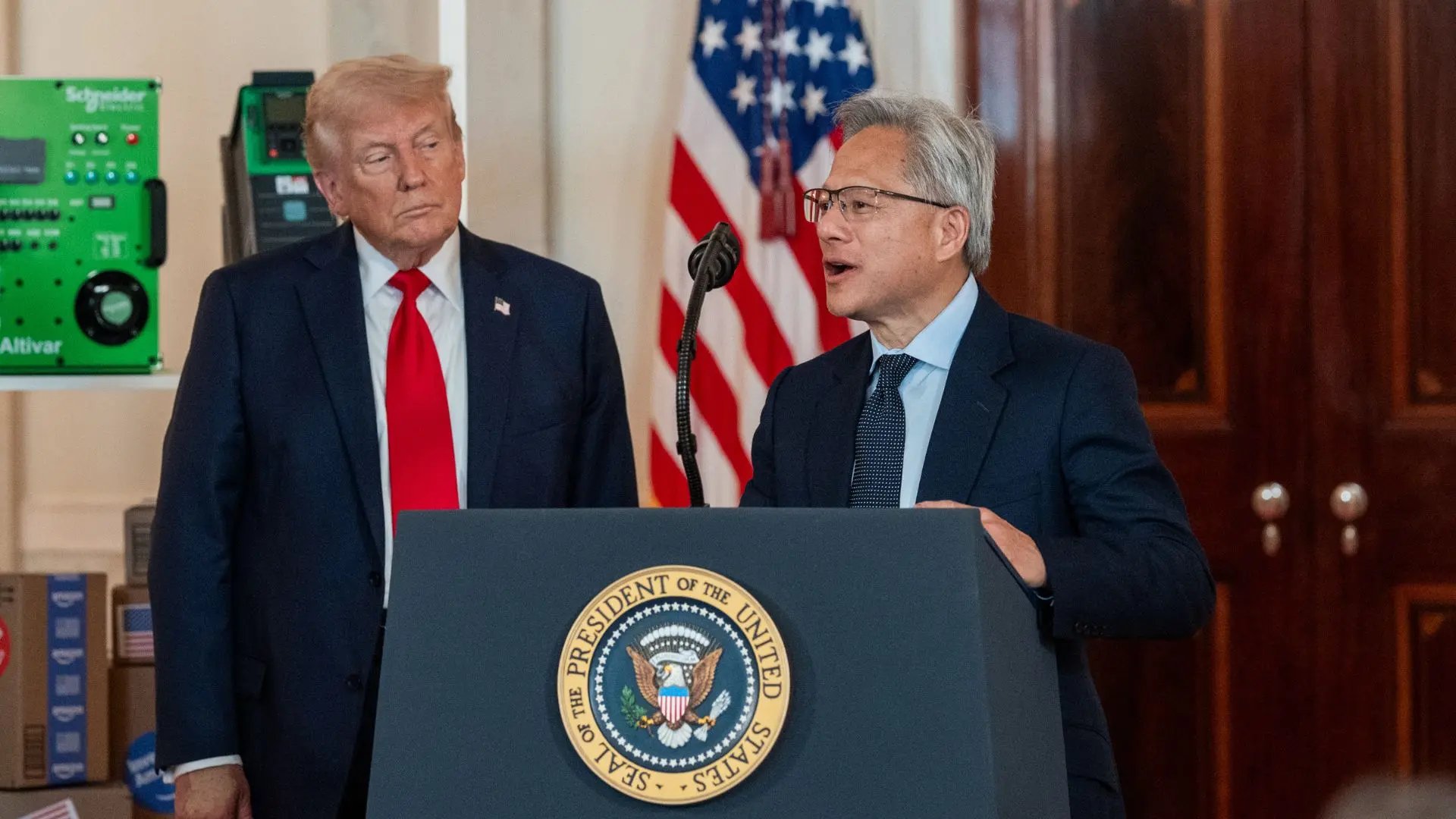

Nvidia Chief Executive Officer (CEO) Jensen Huang made his debut post on X to back an open letter addressed to lawmakers in Washington. The document warns that federal curbs on open-weight Artificial Intelligence (AI) models will weaken domestic technological growth.
The joint letter brings together more than twenty technology leaders, who caution that heavy restrictions could hand China an advantage. Industry experts argue that restricting downloadable weights will only stifle regional software progress, while failing to prevent foreign competitors from advancing.
Coalition members include major software firms like Microsoft Corporation, Meta Platforms, and International Business Machines (IBM) Corporation. Prominent venture firms and research bodies also signed the appeal, when concerns over regulatory oversight began mounting in Washington.
Notably absent from the coalition were frontier developers such as OpenAI and Anthropic. Industry observers note that both companies are currently preparing for public market listings, which could influence their distinct positions on regulatory policy.
The policy debate intensified after federal officials accused foreign developers of using model outputs without authorization. Treasury Department leadership raised the prospect of sanctions, but industry leaders urge targeted enforcement instead of sweeping bans.
Supporters of open technology maintain that accessible weights allow independent software engineers to inspect system mechanics. This public oversight improves cybersecurity defenses, because developers can fix flaws before bad actors exploit vulnerabilities.
Industry experts argue that early computer infrastructure grew because underlying systems remained accessible to all developers. They urge federal regulators to protect model distribution, if the United States (US) intends to preserve its digital infrastructure leadership.
Supporters also caution that broad limits on distillation techniques could hamper legitimate machine learning development. The industry letter recommends enforcing Intellectual Property (IP) laws to target illegal misuse, rather than restricting open access frameworks.
Nvidia relies on widespread adoption of software frameworks to sustain global demand for graphics hardware. When more independent teams build on open infrastructure, the demand for high-performance computing systems continues to expand across multiple industries.
Hardware trade restrictions already limit shipments of advanced computing chips to international markets. Tech executives argue that restricting open software models on top of hardware controls will backfire, as global developers shift toward foreign alternatives.
In digital infrastructure sectors, engineering firms rely heavily on open-weight systems to customize complex modeling tools. Restricting these foundational layers could slow down digital transformation, when engineering teams require adaptable software to manage large project datasets.
Huang emphasized that global technology ecosystems require both proprietary systems and open-weight models to thrive. A balanced approach ensures healthy market competition, while keeping advanced tools accessible to researchers, startups, and enterprise operations worldwide.
The coalition continues to urge Congress to expand public computing resources for researchers instead of imposing bans. Lawmakers are expected to review the policy recommendations, as debate over technology controls continues in Washington.
By focusing on targeted IP enforcement, tech leaders believe regulators can protect national interest without stifling software innovation. The joint letter marks an important moment in shaping federal oversight for emerging digital tools.
As international competition intensifies, technology executives maintain that open standards remain essential for long-term security. The industry now awaits legislative responses from Washington regarding downloadable model regulations.
Comments (0)
Leave a Comment
No comments yet. Be the first to share your thoughts!