
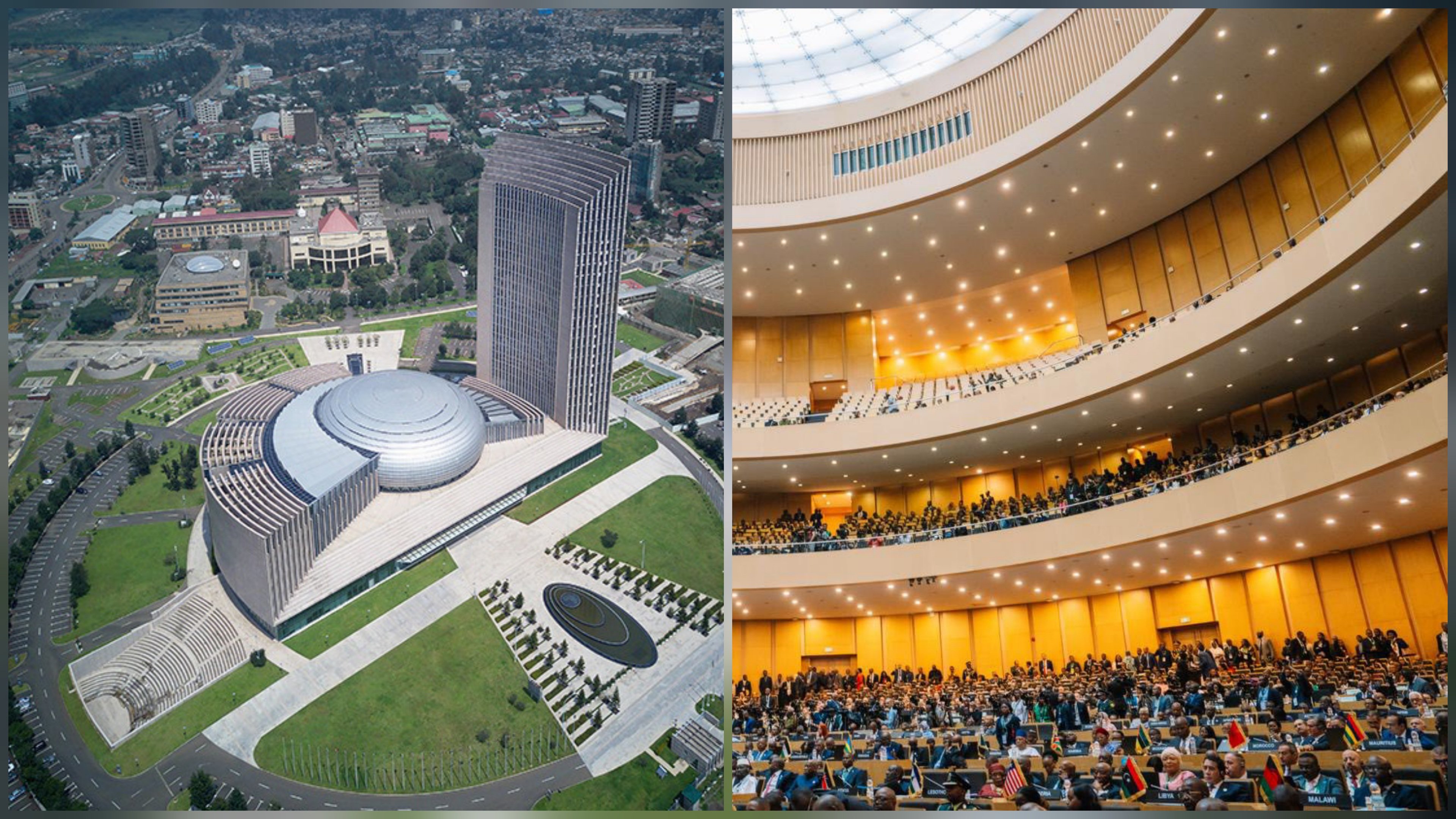

The African Union headquarters in Addis Ababa remains one of the most visible examples of large-scale infrastructure collaboration on the continent. Spanning a massive footprint in the Ethiopian capital, the complex serves as the primary diplomatic hub for the 55 member states. The project was delivered as a fully funded gift from the Chinese government, a move that solidified the architectural and political ties between Beijing and the pan-African body during the early 2010s.
At the heart of the site is a 20-story office tower that houses the African Union Commission. Standing 99.9 meters tall, the height of the building was a deliberate choice by the designers to reference the date September 9, 1999, when the Sirte Declaration was signed to establish the union. The tower provides dedicated workspace for approximately 700 employees, shifting the organization’s administrative operations from older, smaller facilities into a centralized, modern environment.
The construction was executed by the China State Construction Engineering Corporation, with design services provided by the China Architecture and Design Research Group in collaboration with Tongji University. These firms managed the three-year build period using a workforce of roughly 1,200 people. While approximately half the labor force was Ethiopian, a significant portion of the specialized technical work was handled by Chinese crews, and much of the construction material and interior furnishings were imported directly from China.
Integrated into the primary complex is the Nelson Mandela Conference Hall. This plenary space is the focal point for the biannual AU summits, featuring a seating capacity of 2,505. The hall is engineered for high-level summits, equipped with simultaneous translation booths and advanced audiovisual systems to facilitate debates among heads of state. Beyond the main hall, the facility includes 32 smaller conference rooms, caucus spaces, and a large lobby area decorated with African art and symbolic motifs.
Adjacent to the main conference center is the specialized Julius Nyerere Peace and Security Building. This separate structure was designed to house the AU’s Peace and Security Department, which oversees the continental early warning system and peacekeeping coordination. Unlike the main tower, the Peace and Security Building was a separate collaboration project, though it remains a critical component of the integrated campus.
The site also features specialized logistics infrastructure, including a helipad designed for the rapid transport of visiting dignitaries. This was included to bypass the often congested traffic of Addis Ababa, ensuring that security and efficiency are maintained during high-profile international events. The surrounding grounds are landscaped with wide green spaces that connect the modern glass and steel structures with the older administrative buildings on the campus.
Financially, the $200 million project was a total grant from China, covering everything from the structural shell to the office desks and technical equipment. This arrangement allowed the African Union to transition into a world-class headquarters without the immediate burden of construction debt, although the reliance on foreign funding for such a symbolic project continues to be a point of discussion among regional policy analysts and infrastructure experts.
Comments (0)
Leave a Comment
No comments yet. Be the first to share your thoughts!