
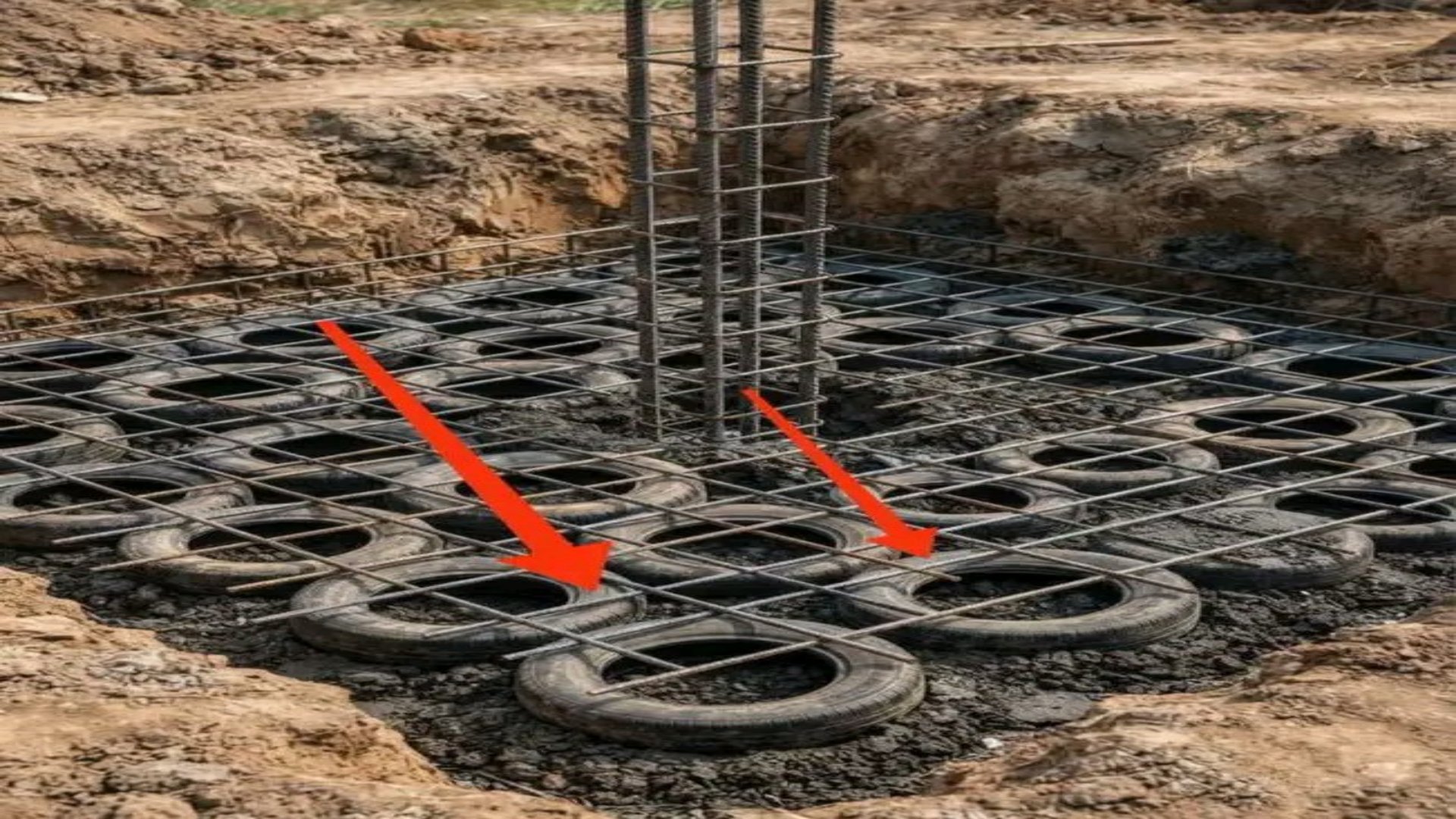

An online query regarding the placement of recycled tires within a foundation pit has raised questions among social media users about whether the method is an intentional engineering technique or a significant construction blunder.
The image shows dozens of scrap vehicle tires laid out in a grid pattern across a excavated foundation footing. Steel reinforcement bars, known as rebar, are arranged over and through the tires, with a central column starter cage rising from the middle of the structure.
Social media user CPM Mutuse shared the photo, directly addressing engineers on their timeline to ask why the discarded rubber tires were being used inside the foundation. The post questioned whether the arrangement represents an innovative foundation technique or a serious mistake, inviting public input.
While scrap tires have historically seen niche applications in earthship construction and civil engineering projects, such as retaining walls, embankment stabilization, and shock-absorbing sub-bases, their direct incorporation into reinforced concrete footings remains controversial in standard structural design.
In traditional civil engineering, foundation footings rely on dense, well-compacted soil or lean concrete blinding to support structural loads. Unfilled or improperly compacted tires within a footing grid can introduce void spaces, organic trapping, or differential settlement over time if non-compressible material does not fully replace the trapped air.
Conversely, proponents of alternative building approaches often point to tire-derived aggregate or tire-encased earth as a low-cost, eco-friendly method for improving load distribution on soft soils, dampening seismic vibrations, or re-using waste materials that would otherwise end up in landfills.
Without official engineering documentation, structural calculations, or site details accompanying the post, industry observers remain divided on whether the image depicts a legitimate specialized technique using soil-compacted tire cells or an unauthorized shortcut by site workers.
The debate highlights ongoing public scrutiny surrounding non-standard building materials and informal structural modifications on residential and commercial sites.
As alternative construction methodologies gain attention globally, questions regarding structural integrity, compliance with local building codes, and standard engineering practice continue to stir active discussion among professionals and observers alike.
Comments (0)
Leave a Comment
No comments yet. Be the first to share your thoughts!