

A version of this article appeared on LinkedIn by Damian Hadley.
The newly opened Warriewood Community Centre has showcased the application of mass timber engineering in public infrastructure. Designed by Terroir and built by Belmadar, the facility replaces an older structure that suffered severe structural failure due to unstable subsoil conditions.
Northern Beaches Council officially opened the site following an extensive construction phase, which targeted deep-seated geological challenges. The previous facility, known as the Nelson Heather Centre, became entirely unsound, when it sank directly into the boggy coastal wetland ground.
To guarantee long-term structural stability, engineers implemented a highly complex foundation system before timber assembly could begin. The new concrete foundation slab rests on 120 concrete support pillars driven deep into the earth, anchoring firmly into solid bedrock found 20 metres below the surface.
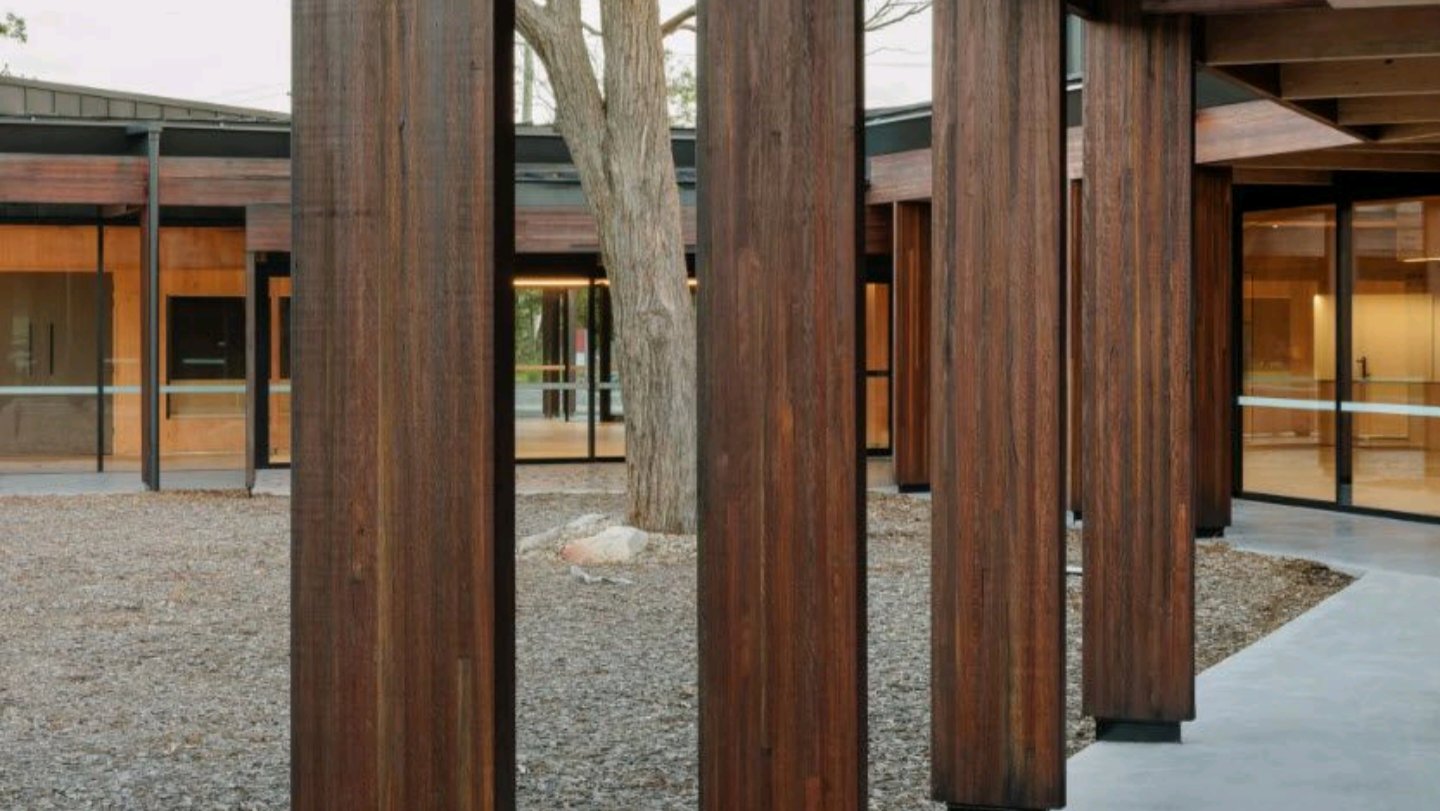
Once the challenging ground works concluded, the structural focus shifted to a highly sustainable timber framework. The building utilizes a combination of Cross-Laminated Timber (CLT) panels and Glued Laminated Timber (Glulam) structural beams, but it maintains structural steel in critical connections.
Sourced entirely within Australia from plantation pine and spotted gum, these timber components provide significant structural strength. The specified materials offer excellent durability and a much lighter weight alternative compared to traditional structural steel and concrete framing systems.
Overlapping timber beams form a distinctive pattern above the central communal space, which designers refer to as the community living room. Strategically positioned skylights break through the deep roof structure, although they primarily serve to mimic light filtering through branches.
Terroir resolved a highly complex brief by separating different functional spaces into individual interconnected pods. These distinct boxes are thoughtfully arranged in and amongst the existing native trees to completely avoid any tree removal, maintaining the original landscape aspect of the reserve.
An expansive metal sheet system covers the exterior of the pods, serving as a functional raincover for the facility. This unified outer skin is peeled back at key architectural moments to maximize the relationship between interior spaces and the outdoor park landscape.
A central foyer space links the enclosed functional areas together, transitioning into open verandahs and covered outdoor decks. The layout provides flexible, light-filled spaces designed to support a wide range of local activities, educational programs, and private community events.
The finished facility features four multi-purpose halls, including a dedicated dance studio, alongside two adaptable meeting rooms. A spacious event area is supported by multiple kitchen facilities, featuring a complete catering-grade kitchen to accommodate large-scale neighborhood gatherings.
Sustainability principles guided the choice of secondary building systems alongside the core mass timber elements. The facility incorporates 100-kilowatt solar panels, a 24,000-litre rainwater collection system, and efficient Light-Emitting Diode (LED) lighting to lower long-term operational costs.
Provisions for the future include built-in infrastructure to support Electric Vehicle (EV) charging stations within the refurbished western carpark. The layout includes 78 car parking spaces, with five designated as wheelchair-accessible, alongside a practical mini-bus drop-off zone.
Beyond its daily recreational function, the resilient structure is engineered to serve the wider New South Wales (NSW) region during emergencies. The building can immediately switch functions, if a local crisis requires a 24-hour emergency recovery centre or evacuation refuge.
The Development Application (DA) process for the project concluded with approval from the Sydney North Planning Panel. Funding contributions from local developers helped bring the multi-million dollar asset to completion, securing a modern, durable hub for the expanding regional population.
Comments (0)
Leave a Comment
No comments yet. Be the first to share your thoughts!