
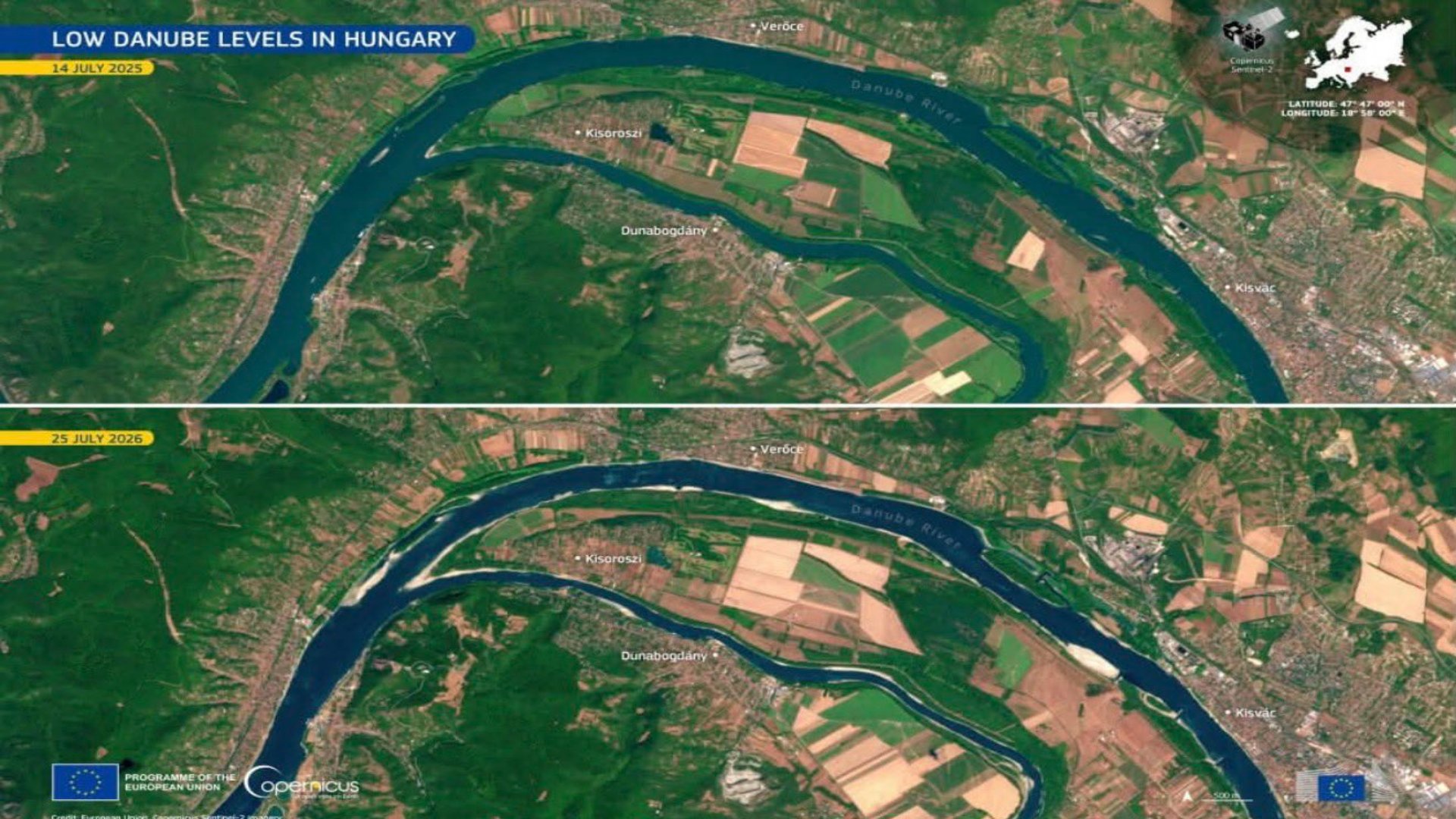

An intense heatwave and persistent drought across Central Europe have driven the Danube River to historic lows, creating an acute operational crisis for energy infrastructure along its banks. The reduced water volume has severely disrupted cooling intake operations for critical facilities.
Hungary is facing an unprecedented grid emergency after the Paks Nuclear Power Plant (PNPP) halted operations. Officials confirmed that the Danube River, Europe's second-longest waterway, dropped to levels that prevented intake systems from reliably drawing sufficient cooling water.
The facility progressively scaled back generation before executing a complete shutdown. This marks the first total operational halt in the facility's 44-year history caused purely by low river levels. Normally, PNPP supplies roughly 40 percent to 50 percent of the national electricity demand.
Engineers monitored the situation as water intake channels reached critically shallow depths, leaving suction pumps unable to maintain required flow rates. Without adequate surface water to dissipate thermal energy from the reactors, safety protocols mandated a systematic powering down of the units.
Regional grid operators have begun sourcing emergency power from neighboring transmission networks to balance supply deficits. The situation highlights the vulnerability of major thermal and nuclear generation facilities reliant on natural river systems for secondary cooling loops during extended climatic dry spells.
Authorities continue monitoring hydrological forecasts along the river basin. Power station managers confirmed that generation will remain suspended until water depths rise sufficiently to guarantee continuous, safe intake operations across all primary pumping stations.
Comments (0)
Leave a Comment
No comments yet. Be the first to share your thoughts!