
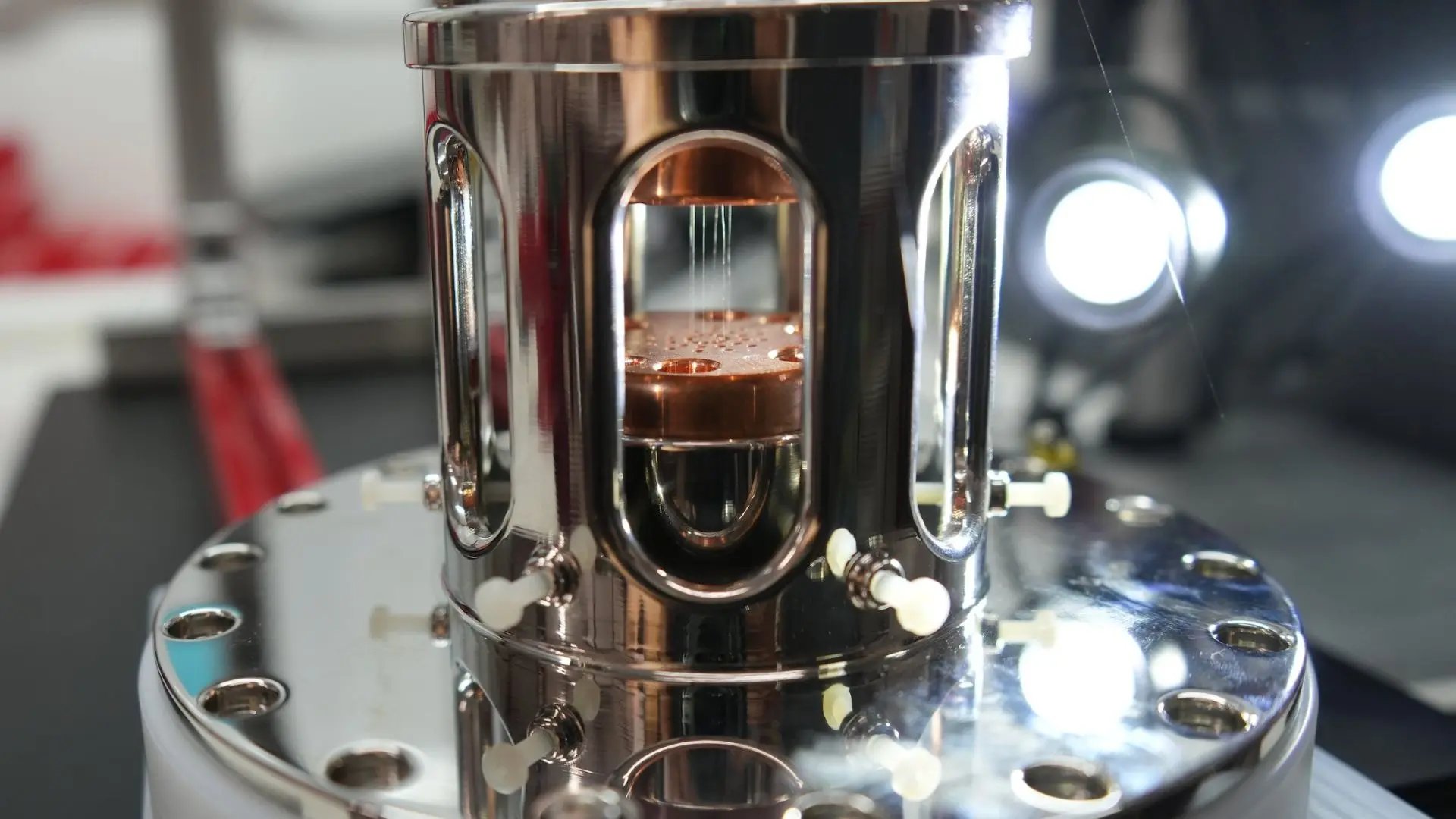

American fusion energy developer Fuse has secured a five-year Cooperative Research and Development Agreement (CRADA) with Mission Support and Test Services (MSTS), the primary management and operating contractor for the Nevada National Security Sites (NNSS).
The collaborative partnership links private sector commercial development directly into the broader network operated by the United States Department of Energy (DOE) and the National Nuclear Security Administration (NNSA).
Work executed under the framework aims to advance Magnetized-Liner Inertial Fusion (MagLIF) systems, build out domestic tritium handling capabilities, and scale up next-generation pulsed power technologies.
Engineers intend to increase neutron yields across dense plasma focus systems, establishing scalable hardware capable of supporting future energy networks.
By integrating private industry speed with federal laboratory resources, the initiative seeks to solve key engineering barriers surrounding commercial fusion deployment.
This latest deal builds upon existing agreements Fuse holds with Los Alamos National Laboratory (LANL) and Sandia National Laboratories (SNL).
The technical scope of the collaboration targets crucial engineering priorities:
* Validating next-generation pulsed power generators and hardware systems.
* Advancing domestic tritium production, processing, and containment capabilities.
* Enhancing neutron yield outputs within high-energy pulsed fusion platforms.
* Testing dense plasma focus designs to support energy and security infrastructure.
Field testing and experimental research will occur primarily at the NNSS facilities in Nevada. Standardizing pulsed power infrastructure serves a dual purpose, driving commercial power plant research while simultaneously providing specialized radiation testing for defense systems.
Developing reliable pulsed power hardware remains essential for transitioning experimental physics into practical infrastructure applications.
If successful, high-repetition generators could provide continuous baseline power while reducing the extreme capital costs traditionally associated with large-scale magnetic confinement devices.
Comments (0)
Leave a Comment
No comments yet. Be the first to share your thoughts!