
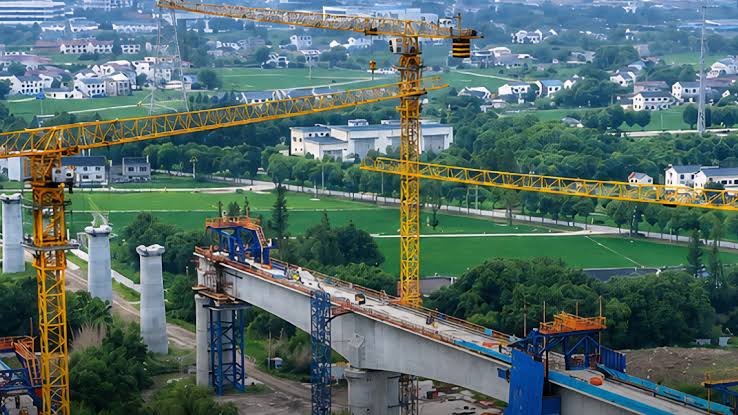

The Kenya Urban Roads Authority (KURA) initiated phased traffic diversions across central Nairobi, as contractors begin structural bridge works along major urban corridors. Engineering teams moved heavy equipment into position after state regulators approved temporary access adjustments across key transit routes.
Disruptions affect critical segments along Kenyatta Avenue, Valley Road, and Jakaya Kikwete Road. Municipal engineers confirmed that workers are clearing site boundaries, while construction crews prepare foundations for elevated overpass sections designed to separate local traffic from through-bound commuters.
Substantial civil works are also underway along Haile Selassie Avenue, where contractors are upgrading aging drainage spans and bridge supports. The project aims to eliminate severe bottlenecking, which frequently halts commercial transport during heavy rainy seasons.
Farther west on Ngong Road, engineering crews began installing twin concrete cross-culverts between Windy Ridge and Westwood Park Road. KURA officials noted that these heavy installations require short-term lane narrowing, but motorists can follow marked diversion routes managed by local traffic marshals.
City infrastructure managers stress that installing large pre-cast drainage elements along active corridors requires round-the-clock site oversight. Traffic police officers will assist flaggers at main junctions, when peak congestion risks spilling into adjacent commercial zones.
These targeted interventions coincide with larger arterial developments overseen by the Kenya National Highways Authority (KeNHA). Structural work on the Kenyatta Avenue and Upper Hill Viaduct continues, as authorities seek long-term solutions for bottlenecked grade intersections connecting residential neighborhoods to the Central Business District (CBD).
Transport analysts observe that retrofitting dense urban grids involves complex utility realignments before structural excavation starts. Water lines, power conduits, and fiber optic cables must be mapped accurately, so that heavy machinery does not disrupt essential city utilities during foundation piling.
Contractors operating across Nairobi are adopting pre-fabricated structural components to accelerate assembly schedules. Utilizing pre-cast concrete beams reduces on-site casting requirements, which minimizes total lane closure duration and cuts overall man-hours exposed to active roadway conditions.
The government continues to rely on the Public-Private Partnership (PPP) model to fund major highway projects and bypasses across the capital region. Private capital deployment allows state authorities to accelerate infrastructure delivery, although public oversight remains critical during structural compliance testing.
President Ruto has repeatedly emphasized the administration’s commitment to modernizing national transport networks to lower logistics costs for regional trade. Reliable urban arteries remain central to that vision, because freight delays within the capital directly impact supply chain efficiency across East Africa.
As bridge construction advances, road safety experts urge drivers to maintain reduced speeds within work zones. Site managers have installed reflective signage and solar lighting, but caution is necessary when heavy machinery maneuvers near narrow diversion lanes.
KURA confirmed that full access across affected sections will resume sequentially, as each structural phase satisfies engineering load specifications. Site inspections will occur weekly, ensuring that finished spans meet national standards for durability and safety.
Urban planners view these coordinated bridge and drainage upgrades as essential precursors to future rapid transit developments. Removing bottleneck points along primary arteries creates the physical space required, when dedicated bus lanes are integrated into the city grid.
Comments (0)
Leave a Comment
No comments yet. Be the first to share your thoughts!