
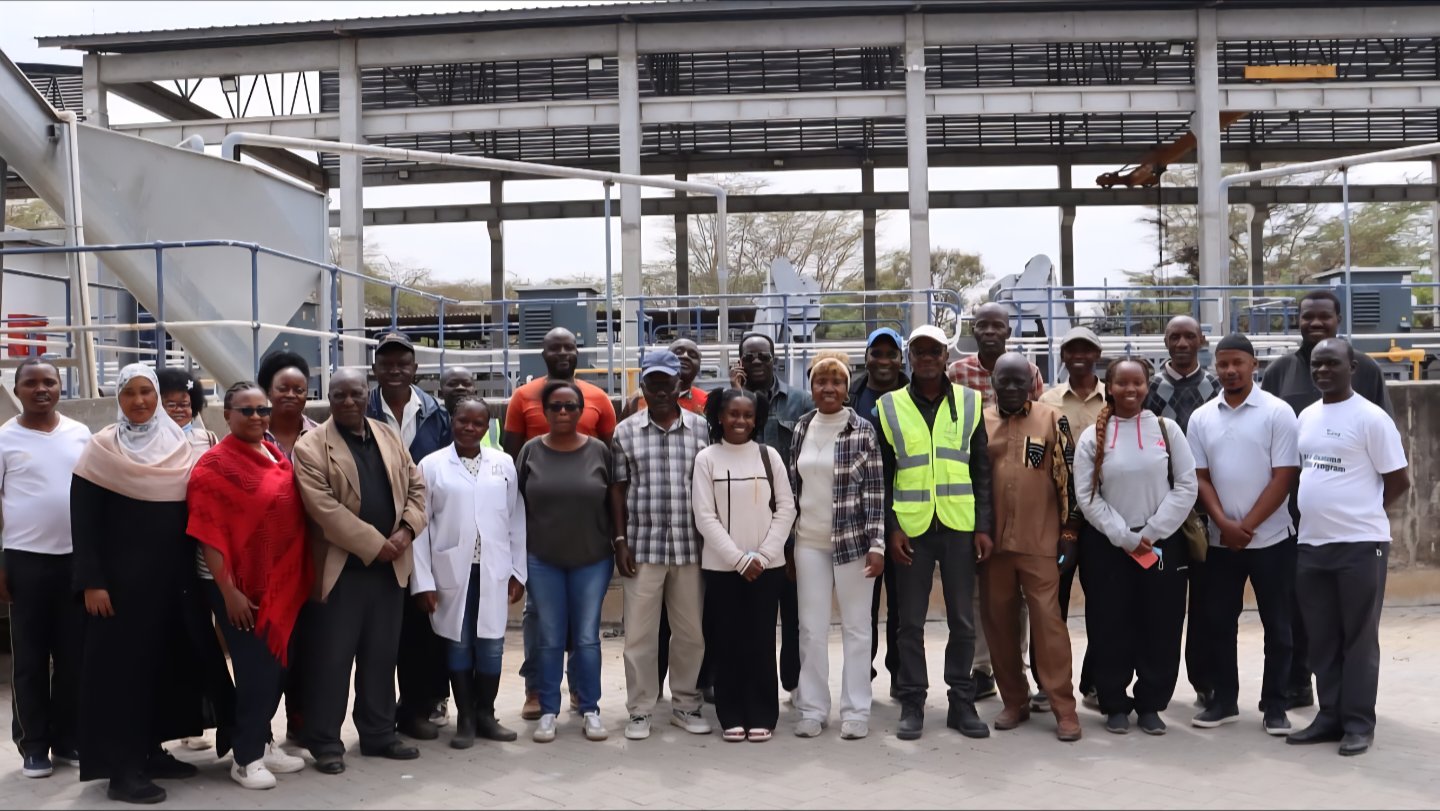

Nairobi City Water and Sewerage Company (NCWSC) opened its production and waste handling infrastructure to civic stakeholders during a technical tour on Saturday. Representatives from Kenya Alliance of Resident Associations (KARA) inspected operations stretching from supply dams to final discharge facilities.
The site delegation tracked the complete urban water lifecycle across multiple municipal sites. Technicians guided civil society delegates through primary intake structures, water treatment units, and end-stage processing facilities.
Engineers demonstrated the mechanical procedures required to process raw intake before distribution to consumers. Visitors observed chemical dosing stages, rapid gravity filtration, and quality monitoring protocols that ensure tap safety across the capital.
The inspection extended down the infrastructure chain to Dandora Estate Sewerage Treatment Works (DESTW) located in Ruai. Technical teams outlined daily operations at the four-thousand-acre facility, which handles the bulk of urban wastewater through natural stabilization ponds.
Plant operators explained physical screening processes that remove solid debris from incoming flows. Subsequent biological treatment relies on deep anaerobic basins, facultative ponds, and shallow maturation ponds that utilize sunlight to reduce organic loads and pathogens.
Resident representatives questioned engineering teams on current operational challenges and future scaling plans. Utility officials detailed routine maintenance schedules, effluent discharge standards, and ongoing efforts to expand overall treatment capacity alongside urban population growth.
Community oversight remains crucial for municipal service providers facing heavy demand pressures. Direct engagement allows neighborhood associations to evaluate operational constraints, while holding public utility managers accountable for service reliability and environmental compliance.
Utility managers emphasized the necessity of protecting catchment basins from human encroachment and pollution. Upstream protection directly affects downstream processing costs, which ultimately impacts consumer tariffs and distribution equity across urban settlements.
The delegation reviewed incoming raw water volumes alongside daily treatment figures. Officials highlighted how seasonal rainfall variation alters turbidity levels, which requires rapid adjustments in chemical treatment dosages at treatment plants.
Delegates examined the final effluent release channels entering the Nairobi River system. Technical staff verified that outflow testing occurs daily, which helps ensure compliance with national environmental standards before discharge.
Civic leaders highlighted persistent supply disruptions in several residential neighborhoods. Utility executives pledged closer collaboration with neighborhood committees, which will help address distribution bottlenecks and illegal sewer connections.
System losses through illegal tapping and leaking pipes continue to burden municipal networks. Addressing these unaccounted losses requires ongoing infrastructure upgrades, which demand sustained capital investment from both county and national governments.
Resident associations plan to compile a technical report based on observations gathered during the exercise. The document will outline policy recommendations for municipal leaders, when stakeholders convene for upcoming budget reviews.
NCWSC reaffirmed its commitment to public transparency through regular facility walkthroughs. Utility administrators noted that open dialogue with resident groups strengthens consumer trust, while fostering shared responsibility for urban infrastructure protection.
The technical walkthrough concluded with a joint assessment of emergency repair protocols. Both parties agreed to establish direct communication channels, which will accelerate responses to major pipe bursts and sewer blockages in residential estates.
The delegation departed after reviewing master planning documents for upcoming sanitation projects. Civil society leaders underscored that continuous oversight guarantees that public funds deliver durable, high-quality infrastructure for all residents.
Comments (0)
Leave a Comment
No comments yet. Be the first to share your thoughts!