
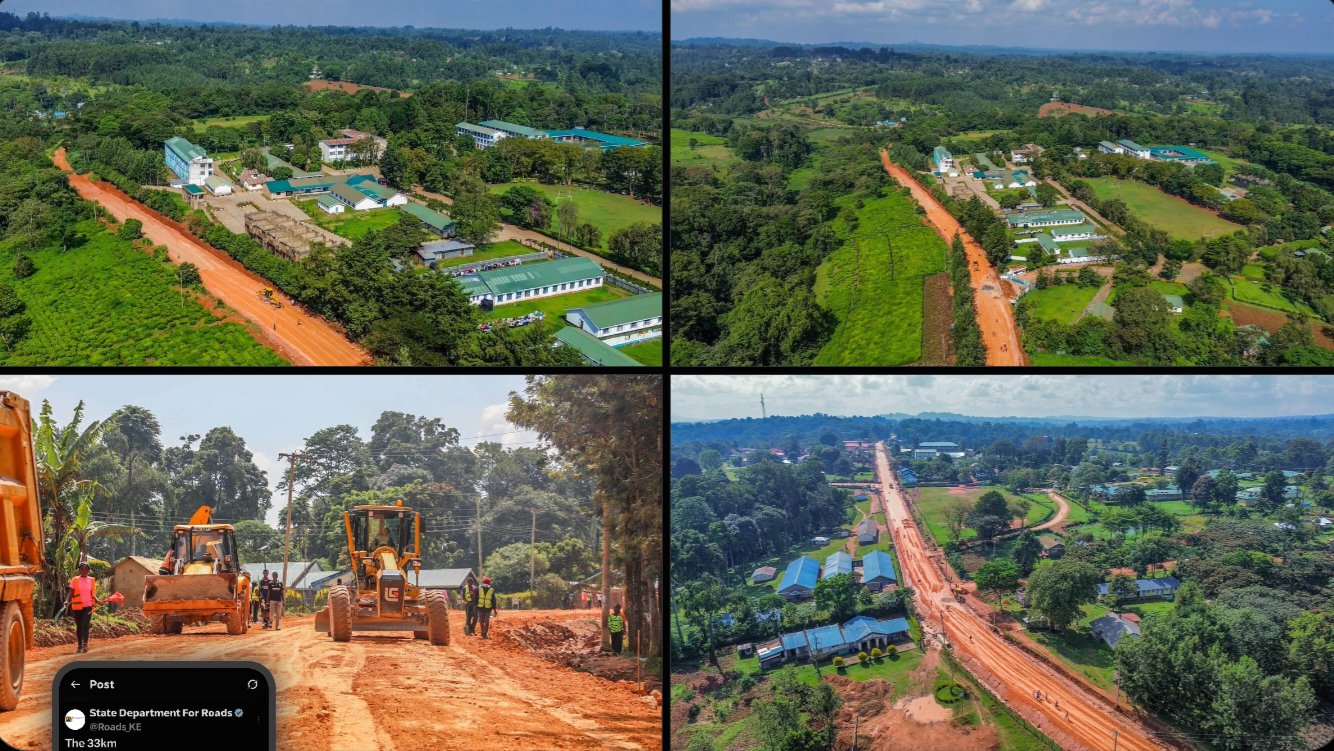

Heavy earthmoving equipment has intensified operations on the 33km Shamakhokho-Kaimosi-Mpaka-Museno road, marking a significant phase in upgrading the regional artery to bitumen standard.
The project traverses two counties in Western Kenya, cutting through vital agricultural zones and residential areas. Government agencies expect the upgraded road to overhaul transport and trade across Vihiga and Kakamega counties upon completion.
The Kenya Rural Roads Authority (KeRRA) oversees the execution of the project, which links key rural corridors to national highways. Field inspections reveal ongoing earthworks, grading, and site preparations across multiple stretches of the alignment.
Local communities along the construction route are preparing for enhanced mobility. The road serves farmers, students, and trade hubs across Hamisi, Sabatia, Shinyalu, and Ikolomani constituencies, where transportation of goods has historically faced challenges during wet weather.
Prior to these works, transporters struggled with unpaved sections that caused severe delays and drove up vehicle operating costs. Bitumen surfacing will create an all-weather corridor designed to support continuous heavy traffic and regional commerce.
Institutional access forms a central objective of the infrastructure upgrade. Route alignments pass through prominent educational and medical zones, including Kaimosi Friends University, local technical institutes, and community health institutions.
The State Department for Roads confirmed that civil engineering teams remain deployed on-site to ensure earthworks meet required structural standards before asphalt laydown begins. Contractors are currently utilizing heavy motor graders and tipper trucks to level sub-grade layers along the alignment.
Beyond local agricultural movement, the corridor creates a direct link between major arterial roads, including the A1 and B128 routes. This connectivity will streamline movement between Kakamega and Vihiga, reducing travel times for public service vehicles and commercial hauliers.
Contractors working under KeRRA management must maintain strict quality controls during site preparation. Earthworks along hilly sections require standard compaction and drainage installation to prevent erosion during rainy seasons.
Sub-grade compaction tests and drainage structure installations are proceeding in tandem with surface clearing. Engineers on the ground are prioritizing stable foundations to handle long-term commercial vehicular traffic.
The 33km road upgrade forms part of broader national government initiatives aimed at paving critical rural feeder networks across Western Kenya. By converting earth and gravel roads into bituminized highways, transport authorities seek to reduce maintenance backlogs and boost regional economic output.
Local traders in Hamisi and Shinyalu constituencies anticipate immediate benefits once surfacing is complete. Improved road conditions typically lower market transit times for fresh farm produce, minimizing post-harvest losses for smallholder farmers.
Resident engineers continue to monitor daily site progress along the Shamakhokho-Kaimosi-Mpaka-Museno route. Final bituminization will follow the completion of base course preparations and drainage structures across all four affected constituencies.
Comments (0)
Leave a Comment
No comments yet. Be the first to share your thoughts!