

A version of this article appeared on LinkedIn by Eng. Shaban Onyango PE.
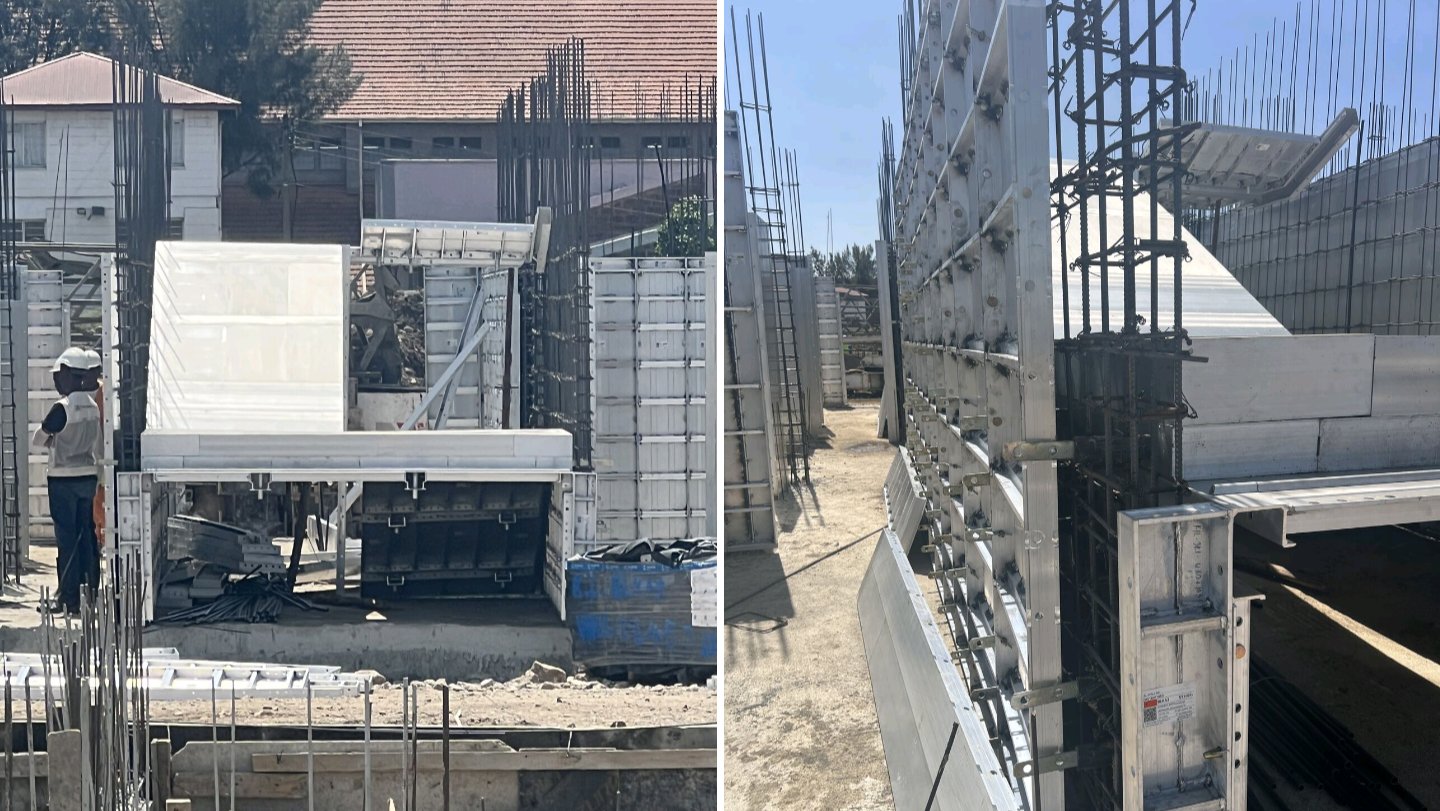
Kenya's building sector is witnessing a shift toward premium materials, as contractors prioritize long-term value over initial expenses. According to local industry observations, aluminium formwork is steadily gaining traction across various major urban project sites.
Licensed structural engineer and contractor, Eng. Shaban Onyango PE recently highlighted this market shift. He noted that the technology is expanding because of the distinct advantages, it delivers to modern structural projects.
While traditional timber remains popular for low-budget builds, it fails to match the precision of metallic alternatives. Adopting advanced systems represents a deliberate financial calculation for developers, who focus on scale and structural durability.
The initial acquisition cost of aluminium panels is significantly higher than wood, but the investment alters overall project expenses. Financial returns become apparent during the structural phase, when speed and structural efficiency begin to lower operational overheads.
One primary driver for this adoption is the exceptional finish left on cured concrete. The panels create perfectly smooth surfaces, completely eliminating the need for subsequent plastering work, which saves substantial material costs.
By removing the plastering phase, contractors eliminate expenses related to sand, cement, and extra masonry labor. This structural neatness accelerates interior finishing, as walls are immediately ready for skimming and painting, when the formwork is stripped.
Project duration is another critical factor where this technology excels. Experienced builders report that using these modular metal systems can reduce overall construction timelines by up to 70 percent, compared to conventional casting methods.
Such a drastic time reduction allows developers to hand over commercial or residential units much faster. Swift completion minimizes interest on construction loans, but it also enables quicker occupancy for clients.
The system offers exceptional repeatability, meaning the same set of components can be used hundreds of times. This durability ensures consistent quality across multiple floors, although traditional timber formwork must be discarded after just a few pours.
For high-rise residential blocks with repetitive layouts, repeatability becomes highly profitable. The panels maintain their exact dimensions throughout the cycle, which prevents structural warping, if the team follows standard assembly procedures.
Unlike heavy steel alternatives, aluminium components are remarkably lightweight and easy to handle manually. This characteristic reduces reliance on expensive tower cranes, which lowers site equipment rental bills, when managing mid-rise structures.
Manual handling also enhances structural safety and speed on-site. Workers can quickly pass panels vertically from floor to floor, which reduces the total man-hours required for structural framing.
The technology allows for monolithic pouring, where walls, beams, and floor slabs are cast in a single continuous concrete operation. This approach eliminates construction joints, but it also increases the overall structural integrity of the building.
Monolithic casting is particularly beneficial near Nairobi's Central Business District (CBD), where structural density demands robust engineering solutions. The uniform concrete mass provides superior resistance to structural stresses, when compared to traditional brickwork.
On-site waste is significantly reduced when using custom-engineered metal panels. Traditional wooden shuttering generates massive amounts of sawdust and timber scraps, but aluminium systems leave a clean, organized workspace.
A clean site minimizes safety hazards and reduces cleanup costs. Furthermore, aluminium is completely recyclable, meaning the panels retain high scrap value, when they eventually reach the end of their useful operational lifecycle.
Despite these clear operational benefits, widespread market adoption faces certain hurdles. The major obstacle remains the steep upfront capital investment, which deters smaller sub-contractors, who operate on tight cash flows.
Procuring custom systems requires detailed architectural drawings and early planning, which limits flexibility, if design changes occur late in the pre-construction phase. Any mid-project modification can become costly.
Nevertheless, as Kenyan urban centers experience a surge in high-density developments, efficiency demands are shifting. Financial institutions and institutional developers increasingly favor rapid building techniques, because quicker handovers improve capital rotation.
The choice between low initial costs and long-term value is defining modern site management. While timber remains viable for smaller projects, aluminium systems are carving out a permanent place in large-scale Kenyan infrastructure.
Comments (0)
Leave a Comment
No comments yet. Be the first to share your thoughts!